Kids in Delhi-NCR don’t wake up to birds anymore.
They wake up to AQI alerts.
Instead of rushing down to play in an open field, they shuffle from bed to sofa, from online class to OTT, from tablet games to mall food courts. Their lungs, hearts and brains are quietly fighting a battle against a toxic sky they did not choose.
On most winter days, Delhi’s air is officially unsafe for everyone – but it is especially dangerous for children. Recent bulletins from the Central Pollution Control Board (CPCB) and Delhi’s Air Quality Early Warning System show the capital swinging between “very poor” and “severe” with AQI readings frequently hovering around 390–420 in late November.
Smog has become the new season.
In the middle of this, there is one rare place where parents can literally watch their child’s breathing change – from shallow and rushed to deep and carefree. A place where the sky is open, the land is green, the animals are friendly, and the air feels like a different country.
That place is Sportsland Activity Farms – the best open space farmhouse in Noida.
Here, nature based play for kids isn’t a buzzword or a school project. It’s the default way of life. Children run barefoot on soft grass, splash in mud, feed rabbits and ducks, pedal cycles under clear blue skies, plant saplings in organic fields and fall asleep at night with tired bodies and peaceful minds.
This is not just a weekend getaway; it’s a health strategy, a parenting hack, and a long-term investment in your child’s body, brain and soul.
Why Delhi-NCR Children Need an Escape Route – Right Now
Let’s begin with the hard truth.
1.1 The air crisis that steals childhood
According to CPCB’s recent AQI bulletins and forecasts, Delhi’s air quality in late November 2025 has remained in the “very poor” to “severe” range, with average AQI values around 390–400 and PM2.5 levels up to 20 times higher than the World Health Organization’s recommended limit.
A study cited by the Centre for Research on Energy and Clean Air (CREA) shows Delhi’s annual population-weighted PM2.5 concentration crossing 100 µg/m³ – roughly 2.5 times India’s own “safe” standard and about 20 times WHO guidelines.
In simple language:
- Every breath in Delhi-NCR is heavier, dirtier and more dangerous than it should be.
- Children – who breathe faster and whose lungs are still growing – absorb far more of this toxic mix than adults. UNICEF notes that children inhale more air per kilogram of body weight, making them disproportionately vulnerable to air pollution.
Doctors across the city are seeing the result:
chronic cough, asthma, stunted lung growth, irritability, poor sleep, headaches, fatigue – even in children as young as four or five.
Now add to this reality the fact that many kids in high-rise apartments:
- Rarely play outdoors
- Spend 5–8 hours a day on screens
- Eat processed food as “treats” every weekend
- Have limited exposure to trees, soil and animals
This is not the childhood you wanted for your child.
It’s no surprise that more and more parents are searching for the best open space farmhouse in Noida as a way to offset the damage of city living – a place where nature based play for kids can happen safely, consistently and joyfully.
Childhood Inside Four Walls vs Childhood Under Open Skies
2.1 The apartment childhood: safe, convenient… and suffocating
Life in a Delhi-NCR apartment is convenient, but for a child’s body it can become a trap:
- Indoor confinement: Kids spend 85–90% of their time indoors, according to UN urban studies.
- Limited movement: Lifts, cars and couches replace walking, climbing and running.
- Screen-first entertainment: Tablets, phones, OTT and gaming become the default reward.
- Filter dependence: Parents rely on air purifiers instead of fresh, moving air.
Over time, this leads to:
- Weak muscles and poor stamina
- Eye strain and headaches
- Sleep disturbances, especially when screen use extends into the evening
- Emotional volatility – sudden tantrums, meltdowns, irritability
- Difficulty in focusing or sitting still without a device
Paediatricians in Delhi-NCR increasingly connect these issues to a lifestyle that is high on pollution + screens, and low on sunlight + outdoor play.
Children are biologically designed to climb trees, dig soil, chase butterflies, carry small buckets of water, jump over puddles and build things with their hands. When they can’t do any of this, the energy has to go somewhere – and it often shows up as anxiety or aggression.
2.2 The farmhouse childhood: messy, muddy and deeply healthy
Now picture a different weekend.
You arrive at Sportsland, the best open space farmhouse in Noida after a short drive on the expressway.
The first thing your child notices is silence. Not the silence of closed windows, but the soft quiet of open land – with birds, wind and the distant moo of cows.
Within minutes, their shoes are off.
They run across a field so wide that your camera cannot capture all of it. They squeal while feeding grass to cows, giggle when a rabbit twitches its nose, and laugh out loud as ducks waddle behind them.
By afternoon, they’re splashing in mud, kneeling in soil, planting seeds in a small patch that will soon become “their” garden. A few hours later, they are cycling down a farm lane, hair flying, face flushed, lungs full.
By evening, they’re calm. Hungry for real food. Sleepy in the car back home.
That’s what nature based play for kids looks like at the best open space farmhouse in Noida: unstructured, screen-free, deeply sensory and naturally regulating.
And science backs every bit of it.
What Science Says About Nature, Play and Children
3.1 WHO on movement: kids need at least 60 minutes a day
The World Health Organization’s guidelines on physical activity clearly recommend that children aged 5–17 years should get at least 60 minutes per day of moderate to vigorous physical activity, primarily through games, sports, running, cycling or active play.
This activity:
- Strengthens the heart and lungs
- Builds bone density
- Supports healthy weight
- Improves cognitive performance and academic outcomes
- Reduces symptoms of anxiety and depression
Now think honestly: how many days in a month does your child actually get one full hour of vigorous outdoor play?
At Sportsland, the best open space farmhouse in Noida, children easily cross this minimum in a single morning.
3.2 UNICEF and green spaces: nature is not decoration, it’s medicine
UNICEF’s recent brief on urban green spaces emphasises that green environments are “vital” to children’s physical, mental and social development. Kids who regularly access such spaces have:
- Better motor skills and physical health
- Stronger social connections and empathy
- Lower levels of stress and behavioural problems
- Enhanced attention, creativity and problem-solving abilities
In other words, the trees, fields and farms at the best open space farmhouse in Noida aren’t a pretty backdrop – they are active ingredients in your child’s development.
3.3 The “farm effect”: dirt builds defence
Several studies, including those from the US and Europe, show the “farm effect”: children who grow up on or near farms, regularly exposed to soil microbes and animals, have lower rates of asthma and allergies and generally stronger immune systems.
At Sportsland:
- Kids handle soil while gardening
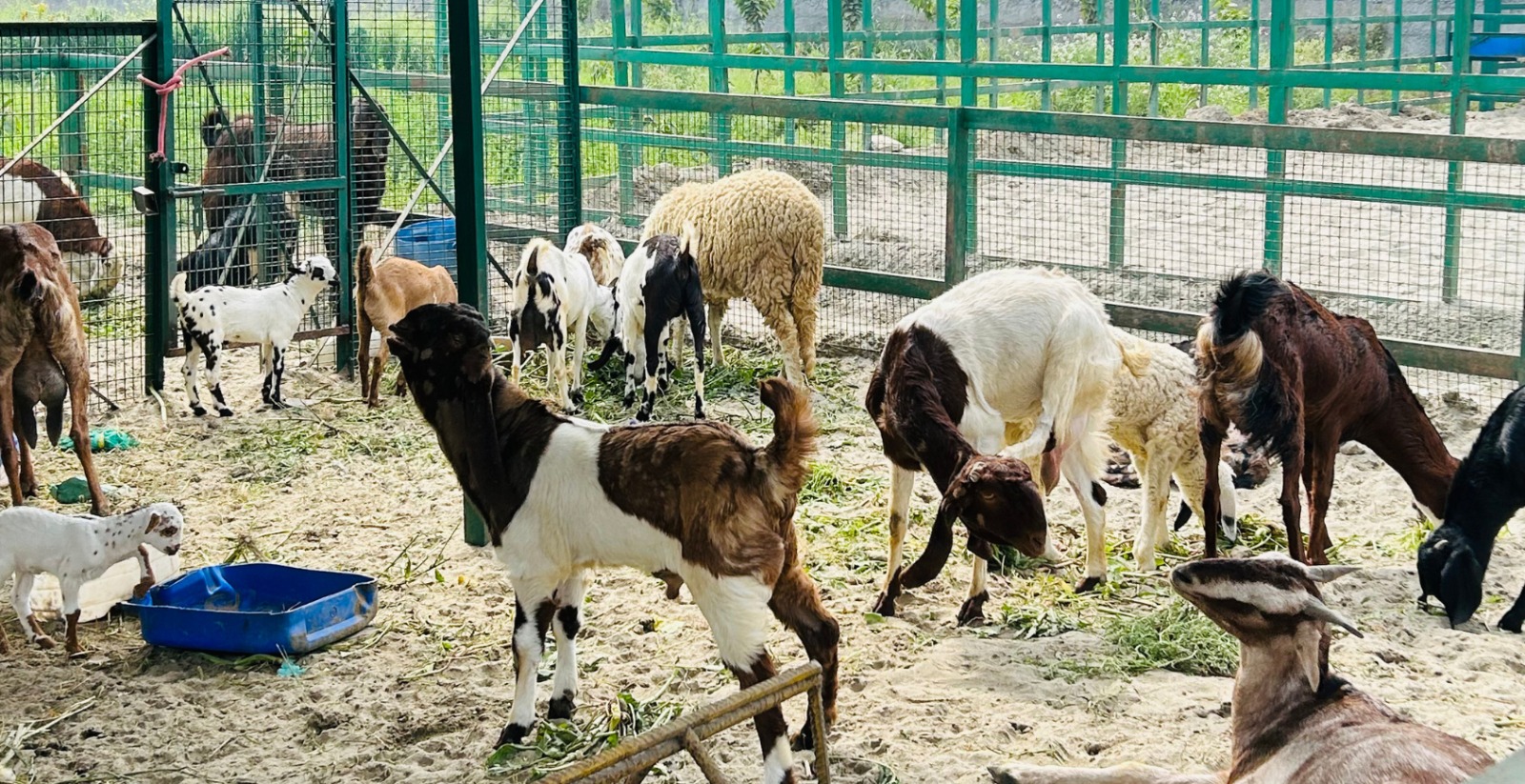
- They’re around cows, goats, ducks, rabbits and birds
- They play in mud without fear of “getting dirty”
This constant low-level exposure trains the immune system to react appropriately instead of overreacting, which is often what happens in hyper-sanitised, indoor-only urban childhoods.
3.4 Nature calms the mind and sharpens the brain
Research compiled by health organisations shows that regular time in natural settings:
- Reduces cortisol (the stress hormone)
- Lowers heart rate and blood pressure
- Improves executive function (planning, memory, focus)
- Helps children with ADHD symptoms to self-regulate better
This is why a child who is usually restless at home may appear remarkably calm after a day at the best open space farmhouse in Noida. Their nervous system has had a chance to reset.

How Sportsland Turns Science Into a Real Childhood
Let’s look at what actually happens at Sportsland on a typical family weekend, and how each experience ties into what experts recommend.
4.1 Open fields & cycling tracks: the original gym
At the best open space farmhouse in Noida, children are not restricted to tiny parks. They have access to huge open fields and safe internal paths where they can:
- Run free without dodging traffic
- Ride bicycles without honking cars behind them
- Play real games – football, frisbee, cricket, tag
- Roll down grassy slopes, jump over small ridges, chase each other for fun
All of this counts as vigorous physical activity – exactly the kind WHO advocates for daily child health.
Parents often notice that even kids who “hate sports” in school love running and exploring at Sportsland because it doesn’t feel like forced exercise; it feels like freedom.
4.2 Animal interactions: building empathy, responsibility and courage
Meeting animals is often a highlight for children visiting the best open space farmhouse in Noida:
- Feeding grass to cows and buffaloes
- Watching ducks paddle in water
- Holding or gently petting rabbits
- Observing turtles and birds
These interactions:
- Teach empathy – kids learn to be gentle and respectful
- Encourage responsibility – they enjoy helping with feeding or cleaning tasks
- Reduce fear – children who were once scared of animals become more confident
Therapy programmes around the world use animal-assisted interaction for exactly these outcomes; at Sportsland, they emerge naturally as part of farm life.
4.3 Organic backyards: hands-on environmental education
Every plot in Sportsland comes with space that can be turned into an organic backyard. Families grow:
- Tomatoes, brinjals, bottle gourd, lady’s finger
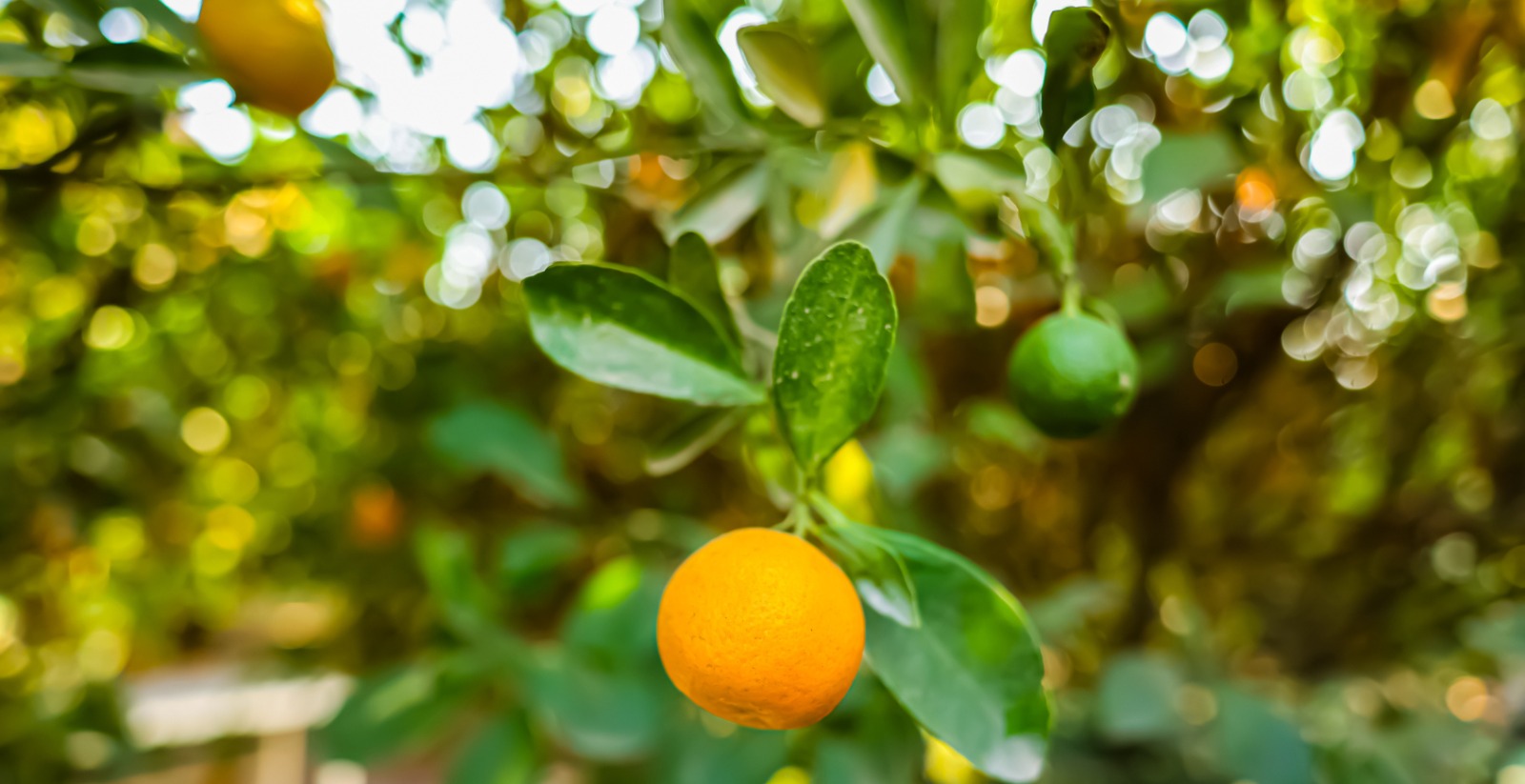
- Mint, coriander, lemongrass and other herbs
- Seasonal flowers and fruit trees
Children at the best open space farmhouse in Noida learn:
- How a tiny seed becomes food on their plate
- Why earthworms are friends, not pests
- What composting means
- How seasons affect what grows and when
This aligns with India’s National Education Policy (NEP) 2020, which emphasises experiential, hands-on learning and environmental awareness from early grades.
Here, your child isn’t just reading about photosynthesis in a book – they’re watering the plant that proves it.
4.4 Mud and water play: sensory therapy disguised as fun
Sensory integration – the way children process touch, sound, movement, balance, sight and smell – is crucial for development. Many urban kids, constantly indoors and on screens, end up with sensory overload from artificial stimuli but very little grounding from real textures.
At the best open space farmhouse in Noida, mud and water are always available:
- Kids stomp in puddles
- They make mud pies and pretend kitchens
- They sculpt shapes in wet soil
- They feel the squish of mud between their toes and fingers
Occupational therapists often create artificial versions of this in clinics; at Sportsland, the entire environment acts like a natural sensory gym.
The Pollution Gap: Why Sportsland’s Location Matters
One of the biggest reasons parents look for the best open space farmhouse in Noida is the radical difference in air quality.
5.1 Why rural green belts breathe easier
CPCB and various environmental studies show that areas with high tree cover, agricultural land and low traffic naturally have:
- Lower PM2.5 and PM10 concentrations
- Better wind flow to disperse pollutants
- Cooler temperatures, reducing ground-level ozone formation
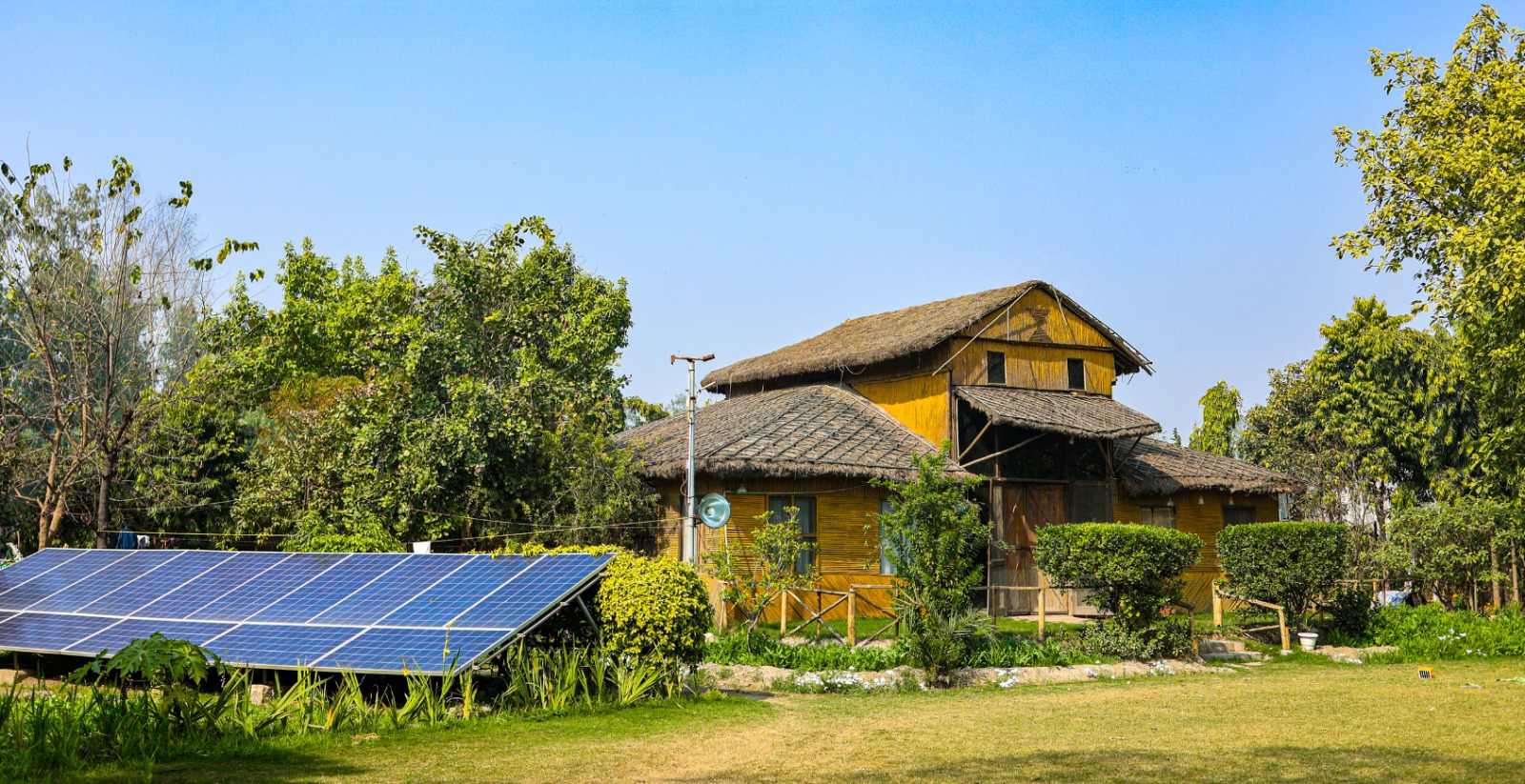
Sportsland falls within such a green pocket – surrounded by farms, trees and open land instead of factories, dense traffic and construction.
While it can never be completely insulated from wider regional pollution, on many days its AQI is significantly lower than central Delhi or even high-rise clusters of Noida and Ghaziabad.
Parents report visible differences:
- Kids cough less
- Throats don’t feel as scratchy
- Breathing feels easier
- Outdoor play doesn’t trigger the same wheezing or eye irritation
5.2 Why this matters even before birth
Doctors quoted in recent Delhi-NCR health reports stress that air pollution can start harming a child even before they are born, affecting fetal development, birth weight and later susceptibility to respiratory issues.
For expecting families and parents of toddlers, escaping regularly to the best open space farmhouse in Noida offers not just fresh air today but a protective buffer for future health.
The Emotional Payoff: How Families Change After Regular Nature Weekends
Numbers and citations are important, but the most powerful proof comes from what families feel.
Parents who spend regular weekends at the best open space farmhouse in Noida often share similar experiences:
- “My child sleeps an extra hour on Sundays after a day here.”
- “She asks for story time instead of the phone at night.”
- “They eat dal-sabzi happily after playing outside – I don’t have to beg.”
- “We have actual conversations as a family instead of everyone being on separate screens.”
What’s happening here is simple:
- Nature tires the body in a healthy way → better sleep
- Less screen time → fewer dopamine spikes, more stable mood
- Physical play improves appetite → fewer meal battles
- Shared family experiences outdoors → deeper bonding and emotional security
Delhi-NCR’s pace doesn’t leave much time for such memories. That’s why many families choose to formalise the ritual by investing in the best open space farmhouse in Noida instead of treating nature as an occasional luxury.
Why a Farmhouse Is More Than a Lifestyle Purchase – It’s a Legacy
Real estate advisors often talk about location, appreciation and returns. Those matter. In fact, several global property consultants note that green, low-density, wellness-oriented communities are becoming some of the most resilient and sought-after assets worldwide.
But when you consider the best open space farmhouse in Noida, you’re not just comparing price per square foot.
You’re comparing:
- Your child learning to ride a bicycle on a cramped basement ramp
vs on a safe, sunlit farm trail. - Your weekend budget going into fast food, movie tickets and parking
vs going into a place where your child’s lungs heal and memories grow. - A future where your child says, “We spent our childhood in malls”
vs “We grew up running through fields, feeding animals and planting trees.”
A farmhouse like Sportsland becomes:
- A backup plan when schools close due to pollution (as policymakers are starting to recommend when AQI exceeds 300).
- An emergency breathing space in peak smog weeks
- A holiday home without hotel bookings
- A pet paradise for families who want animals to be part of their children’s world
- A long-term asset that future-proofs both health and wealth
You are not just buying land.
You are buying a different childhood.
FAQs
1. Why do Delhi-NCR parents urgently need a place like the best open space farmhouse in Noida?
Delhi-NCR’s AQI regularly enters the “poor to severe” category, especially during winter months. This means children are inhaling harmful pollutants every time they play outside in the city. Paediatricians report more cases of asthma, cough, allergies, sleep disturbances and weakened immunity in urban kids.
A farmhouse community like Sportsland offers a low-pollution green zone, open fields, fresh air and safe outdoor play — the very things children are not getting in city apartments. It becomes an essential weekly detox from the toxic air and closed spaces.
2. Is nature based play for kids really better than indoor activities or mall play zones?
Absolutely. Nature-based play provides full-body sensory stimulation, something no mall or indoor play zone can replicate. Mud, soil, water, grass, trees and animals create experiences that improve motor skills, attention span, immunity, emotional regulation and creativity.
Unlike malls, nature doesn’t overstimulate children — it balances them. Kids who play outdoors sleep better, eat better and behave more calmly. This is why global bodies like WHO and UNICEF strongly advocate daily outdoor time.
3. Is Sportsland safe for young children?
Yes. Sportsland Activity Farms — the best open space farmhouse in Noida — is designed as a controlled, family-friendly community. Children can explore freely within a safe boundary, cycle on internal paths, play on soft ground, and interact with animals under supervision.
There are no busy roads, no vehicles speeding by, no mall crowds, no unsafe commercial distractions. It’s nature with a safe, curated structure that makes parents feel confident while allowing children to enjoy independence.
4. What if my child is not used to mud, soil or animals? Will nature-based play overwhelm them?
Most children adapt quickly — usually within minutes. When they see other kids running free, touching soil, feeding rabbits or climbing small mounds, their natural curiosity awakens.
Gentle exposure works wonders. A child who is initially hesitant often becomes the most enthusiastic nature explorer by the end of the day. At Sportsland, nature based play for kids is introduced organically — no pressure, no rush, just joyful discovery.
5. Does outdoor play really improve appetite and sleep?
Yes — significantly. Studies from Harvard Health and PubMed show that outdoor physical activity balances hormones, improves digestion, reduces screen-induced overstimulation, and stabilises sleep patterns.
Parents at Sportsland say their children:
- eat proper meals without negotiation,
- fall asleep faster, and
- sleep more deeply after a day of outdoor play.
This is because sunlight, physical movement, soil microbes and fresh air work together to regulate the body’s natural rhythms.
6. How is the AQI at the farmhouse better than the city when the region shares the same environment?
Rural green belts like Sportsland have:
- fewer vehicles,
- fewer construction sites,
- natural wind corridors, and
- dense tree cover.
These factors dramatically reduce PM2.5 and PM10 levels even when regional pollution is high.
Families often report that their kids cough less, breathe easier, and stay outdoors longer at the best open space farmhouse in Noida compared to their city homes. The difference is not theoretical — it’s felt instantly.
7. Is this only useful in winter, or is a farmhouse beneficial year-round?
It’s beneficial across all seasons.
- Winters: Escape the smog and give your child clean-air weekends.
- Spring & Monsoon: Enjoy lush greenery, outdoor sports, gardening, puddle play and animal interaction.
- Summer: Open spaces, shaded trees and natural breeze make mornings and evenings perfect for outdoor play.
A farmhouse becomes a 365-day wellbeing space, not just a seasonal escape.
8. Is Sportsland only for families who want to buy a farmhouse?
No. Many families start with weekend visits, seasonal stays, farm activities or trial experiences before deciding to purchase.
But once they see the impact of nature on their child’s breathing, behaviour, mood and health, they prefer having permanent access to the best open space farmhouse in Noida.
Owning a farmhouse here becomes a long-term childhood investment — not a short-term trip.
9. Will a farmhouse be too far for regular weekend visits?
Not at all. Sportsland is strategically located — close enough for spontaneous drives, yet far enough to offer clean air and peace. Most families treat it as an easy, predictable 1-hour escape from city pollution.
Parents often say:
“Once we reach Sportsland, the drive feels worth every minute.”
10. How does owning a farmhouse actually benefit my child’s future?
A farmhouse offers far more than real estate value:
- A healthy lung foundation
- A calmer nervous system
- A space to disconnect from screens
- Room to build resilience, creativity and social skills
- A nature-rich environment for holistic growth
- A family legacy that children emotionally attach to
The memories, habits and health benefits created here shape your child’s adulthood — physically, mentally and emotionally.
Childhood Needs More Grass, Less Glass
One day your child will grow up and look back on these years.
They won’t remember which model of phone you used.
They won’t remember which mall had which food court.
They won’t remember which animated movie was released in which year.
They will remember:
- Running barefoot across a cold winter field while mist rose from the grass
- Feeding a cow and being surprised by its warm breath
- Falling in mud and laughing instead of crying
- Planting a seed and returning weeks later to see it become a plant
- Sitting with you under a tree, asking questions you finally had time to answer
That’s what Sportsland Activity Farms, the best open space farmhouse in Noida, can offer: not just clean air today, but a lifetime of memories that smell of earth and sound like freedom.
In a city where the sky often looks like a grey ceiling, choosing the best open space farmhouse in Noida is more than an upgrade in lifestyle – it’s an act of love, protection and rebellion.
Love, because you’re giving your child what their body and soul truly need.
Protection, because you’re building a shield against the invisible harm of polluted air.
Rebellion, because you refuse to accept that childhood must happen indoors under toxic skies.
If your heart has been telling you that your child deserves more trees and less concrete, more grass and less glass, more mud and less malls – listen to it.
Come experience nature based play for kids the way it was meant to be.
Come breathe at Sportsland Activity Farms – the best open space farmhouse in Noida.
Your child’s lungs, heart and future self will thank you.