RERA Delays vs Real Ownership: Why NCR Families Are Moving from Flats to a Sustainable Farmhouse in Noida Sector 151
In Delhi-NCR, “I booked a home” often doesn’t mean “I can move in.” For a growing number of families, it means living in limbo—paying rent and EMIs together, delaying school decisions, postponing family plans, and watching years slip by while waiting for possession. The emotional cost is real: every festival spent in a rented apartment, every birthday celebrated in a temporary home, every promise of “next quarter” that quietly becomes “next year.”
And that’s why the conversation in NCR is shifting from paper ownership to real ownership. When a home is delayed, life is delayed. When possession is uncertain, stability becomes a luxury. This is where the appeal of a sustainable farmhouse in Noida Sector 151 enters—less as a lifestyle fantasy and more as a practical decision rooted in control, clarity, and long-term security.
This blog breaks down what the law says, what official portals show, what government audit reports highlight, and why families are increasingly choosing a sustainable farmhouse in Noida Sector 151 over high-density apartment living. We’ll keep it factual, grounded in verified sources, and focused on what matters most: certainty for your family.
The NCR Reality: When “Homeownership” Turns Into a Waiting Period
Ask any NCR homebuyer what delayed possession actually looks like, and you’ll hear a pattern:
- Paying EMIs on a property you can’t live in
- Paying rent because you still need a roof today
- Pushing children’s school admissions because you don’t know where you’ll be living
- Living with constant uncertainty, emails, follow-ups, and legal stress
This isn’t about one bad project. The reason RERA exists is because issues like these became widespread enough to demand structural reform. The Ministry of Housing and Urban Affairs describes RERA’s intent clearly: transparency, accountability, citizen-centric processes, fair transactions, and timely delivery—supported by dispute resolution frameworks.
But even with reforms, families still experience a gap between policy intent and lived reality—especially when projects face execution problems, cash flow constraints, or administrative bottlenecks.
So buyers are quietly asking a sharper question now:
“If I can’t predict possession, can I call it ownership?”
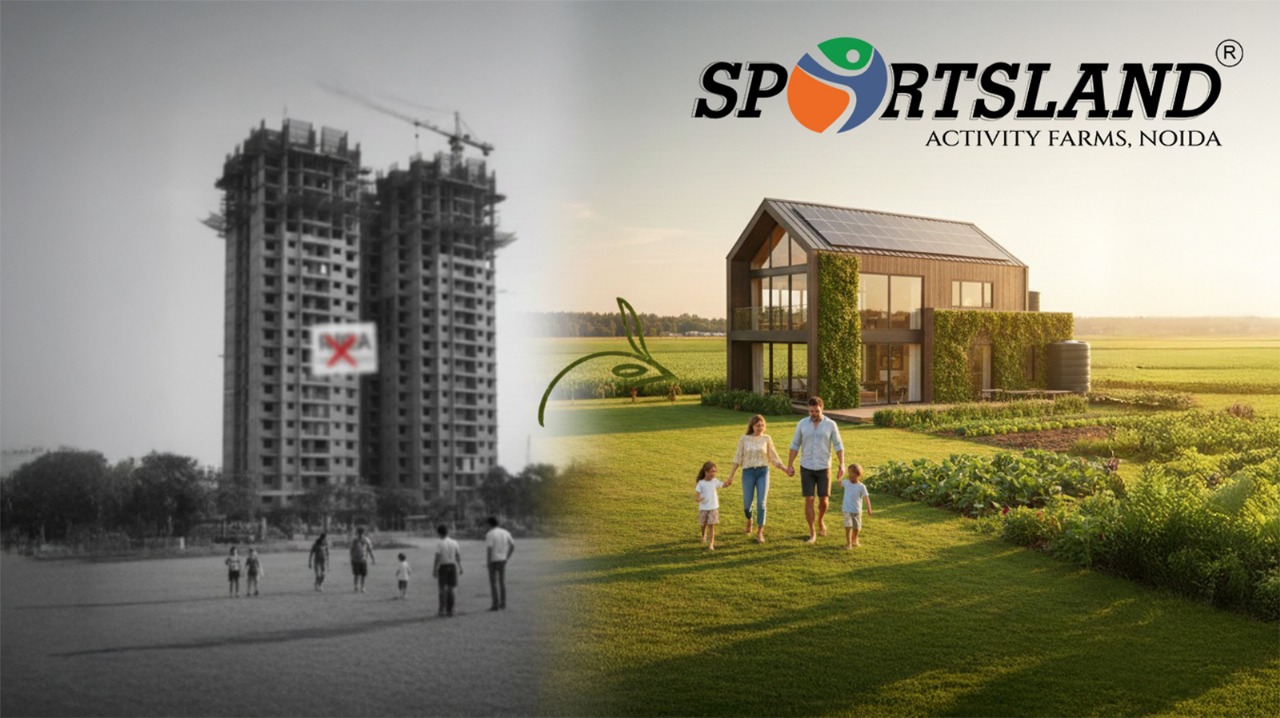
For many, the answer is “not really.” That’s why options that feel more tangible—like a sustainable farmhouse in Noida Sector 151—start to look like real ownership, not deferred ownership.
A sustainable farmhouse in Noida Sector 151 is, at its core, a land-led decision. It’s not merely “bigger space.” It’s a different risk profile: fewer layers of dependency, fewer moving parts, and a stronger feeling of control over your future.
The Law That Changed the Conversation: What RERA Section 18 Actually Gives Homebuyers
If there is one provision every NCR buyer should understand, it’s Section 18 of the Real Estate (Regulation and Development) Act, 2016.
Section 18 is the homebuyer’s legal anchor when possession is delayed. In simple terms:
- If the promoter fails to give possession as per the agreement, the allottee can withdraw and claim refund + interest + compensation.
- If the allottee does not withdraw, the promoter must pay interest for every month of delay until possession is handed over.
That’s the law on paper.
Now here’s the truth families live with: even when the law is clear, the process can be slow. Refunds may take time. Orders may take time. Recoveries may take time. And in the middle of all of that, life continues to demand certainty—schooling, aging parents, work routines, health, and mental peace.
So while Section 18 strengthens a buyer’s legal position, it doesn’t automatically guarantee a buyer’s timeline.
And when timelines are what families need most, many prefer shifting towards ownership models that minimize delay risk—like a sustainable farmhouse in Noida Sector 151, where land-led possession and usability feel more immediate and more controllable.
A sustainable farmhouse in Noida Sector 151 is not an escape from law—it’s a choice that reduces the probability of being forced to use law as a coping tool.
“Compensation” Can’t Replace Time: Why Delays Hurt Families Beyond Money
RERA recognizes financial harm, but families also face invisible losses that compensation rarely heals:
1) Double burden: EMIs + rent
Many buyers stretch budgets assuming a handover date. When that date slips, the strain becomes long-term.
2) Children’s routines and mental health
Children don’t experience “delayed possession” as a legal term. They experience it as instability—changing homes, changing neighborhoods, changing access to play.
3) Senior citizen needs
For parents and grandparents, delayed stability is not just inconvenient—it can affect mobility, medical continuity, and overall well-being.
4) Decision paralysis
Families stop upgrading furniture, stop planning renovations, stop settling—because they’re waiting. Life becomes “on hold.”
This is exactly why people begin exploring alternatives that feel more present and more real—like a sustainable farmhouse in Noida Sector 151, where the psychological benefits of low-density, open-air living combine with the practical benefit of ownership clarity.
A sustainable farmhouse in Noida Sector 151 is increasingly seen as a way to reclaim time. Not in a poetic sense—in a very practical sense: fewer delays, fewer dependencies, and fewer “maybe next month” emails.
Government Portals Confirm the Focus: RERA Was Built to Improve Timely Delivery and Accountability
When MoHUA describes RERA as a reform for timely delivery, fair transactions, and quality construction through adjudication, it is indirectly acknowledging what the market had become before RERA: buyer vulnerability and delayed delivery risks.
The official UP-RERA portal further frames RERA as a protective mechanism for homebuyers and a structure for regulation and promotion of real estate.
This matters for your blog because it establishes a key argument:
- Delays are not “rare events.”
- Delays are significant enough that Parliament passed a national law to address them.
So when families move away from high-density flats and toward a sustainable farmhouse in Noida Sector 151, it isn’t irrational. It’s a rational reaction to a well-documented risk category—delivery uncertainty.
A sustainable farmhouse in Noida Sector 151 becomes a “certainty-seeking asset” in an environment where delivery certainty has historically been inconsistent across many pockets of NCR.

Audit Reports Add Another Layer: Why System-Level Delays Impact Everyday Buyers
One of the strongest trust signals you can use in a fact-based NCR real estate blog is a government audit report. Audits don’t sell; they scrutinize.
The Comptroller and Auditor General (CAG) published a performance audit report on the working of the Yamuna Expressway Industrial Development Authority (YEIDA).
Why should a homebuyer care?
Because large development ecosystems often involve multiple layers: authority planning, infrastructure readiness, allocations, project execution, compliance, and institutional processes. When any system is inefficient, delays become more likely—and buyers feel the consequences downstream.
This is not to say every project is delayed, or every authority is the same. But audits serve one important purpose in your blog:
They validate that process gaps and delays can exist at institutional scale, and that long-term buyers should evaluate risk, not just brochures.
This is one reason why land-led formats like a sustainable farmhouse in Noida Sector 151 can feel more secure—because the path to use and enjoyment can be simpler compared to construction-heavy, high-dependency models.
A sustainable farmhouse in Noida Sector 151 reduces the number of third-party dependencies that decide your family’s timeline.
“Real Ownership” Means Control: Why Land-Led Living Changes the Risk Equation
Apartments are often a packaged promise:
- Construction completion
- Occupancy approvals
- Handover schedules
- Society readiness
- Amenities commissioning
In a perfect scenario, it’s smooth.
But when a single component slows down, the entire delivery timeline shifts—often beyond a buyer’s control.
A sustainable farmhouse in Noida Sector 151 flips that equation in two ways:
- The ownership is more tangible
Land and low-density formats typically feel more direct and physical. Buyers don’t feel like they’re waiting for a tower to become “livable.” - The life can start earlier
Many families don’t buy only for resale or weekend use—they buy to begin a lifestyle: open air, green routines, outdoor movement, family time, and calmer living.
That’s why a sustainable farmhouse in Noida Sector 151 is increasingly framed as “real ownership,” not “contractual ownership.”
A sustainable farmhouse in Noida Sector 151 is not just an investment; it is a timeline decision.
The Family Health Factor: Why Flats Are Losing Ground to Low-Density Living
Beyond delays, there’s another reason families are shifting: health—especially for children and seniors.
When families evaluate a home today, they don’t ask only:
- “How far is it from work?”
They also ask:
- “Will my child play outside daily?”
- “Will my parents get sunlight and walking space?”
- “Can we reduce screen time naturally?”
- “Can we live calmer, not tighter?”
The World Health Organization emphasizes the importance of physical activity and reducing sedentary behavior for overall health outcomes across age groups.
(And yes—parents don’t need a medical paper to know what constant indoor living does to a child’s energy and mood.)
A sustainable farmhouse in Noida Sector 151 answers these needs structurally: it is designed around space, greenery, and low-density living. For many families, outdoor time becomes a default—not a scheduled effort.
A sustainable farmhouse in Noida Sector 151 supports a lifestyle where children can be children again—running, cycling, exploring, and living off screens without forced rules.
And for seniors, a sustainable farmhouse in Noida Sector 151 can enable slow routines: walking, gardening, breathing cleaner air, and spending time outdoors—things that feel limited in crowded apartment setups.
Why Noida Sector 151 Is Becoming a Serious Choice (Not Just a “Weekend Idea”)
Farmhouse living used to be categorized as:
- weekend-only, or
- luxury-only, or
- far-away-only
But Noida’s growth corridors have changed the geography of practical living.
A sustainable farmhouse in Noida Sector 151 sits in a zone that many families consider viable because:
- it stays connected to NCR work zones while reducing exposure to dense, congested living
- it aligns with a “work hard, live healthier” mindset
- it allows families to choose long-term stability over short-term convenience
The result: a sustainable farmhouse in Noida Sector 151 is no longer only about escape—it is about upgrade, especially for families seeking predictable living environments.
A sustainable farmhouse in Noida Sector 151 can feel like the middle path between urban access and nature-based stability.
The New Buyer Mindset: “I Don’t Want More Amenities. I Want More Certainty.”
For years, apartment marketing sold “club lifestyle” as the dream:
- pool
- gym
- clubhouse
- high-rise views
But families have started to prioritize something simpler:
Time + space + peace + predictability
And that’s where a sustainable farmhouse in Noida Sector 151 wins emotionally and practically.
Because an apartment’s biggest risk isn’t just the builder; it’s the entire dependency stack:
- contractor
- approvals
- cashflow
- occupancy readiness
- society operations
By contrast, a sustainable farmhouse in Noida Sector 151 is often perceived as:
- more usable earlier
- more lifestyle-driven
- more controllable
- more legacy-friendly
A sustainable farmhouse in Noida Sector 151 is a way of saying:
“I’m done waiting to start my life.”
What “Sustainable” Should Actually Mean (So You Don’t Buy a Buzzword)
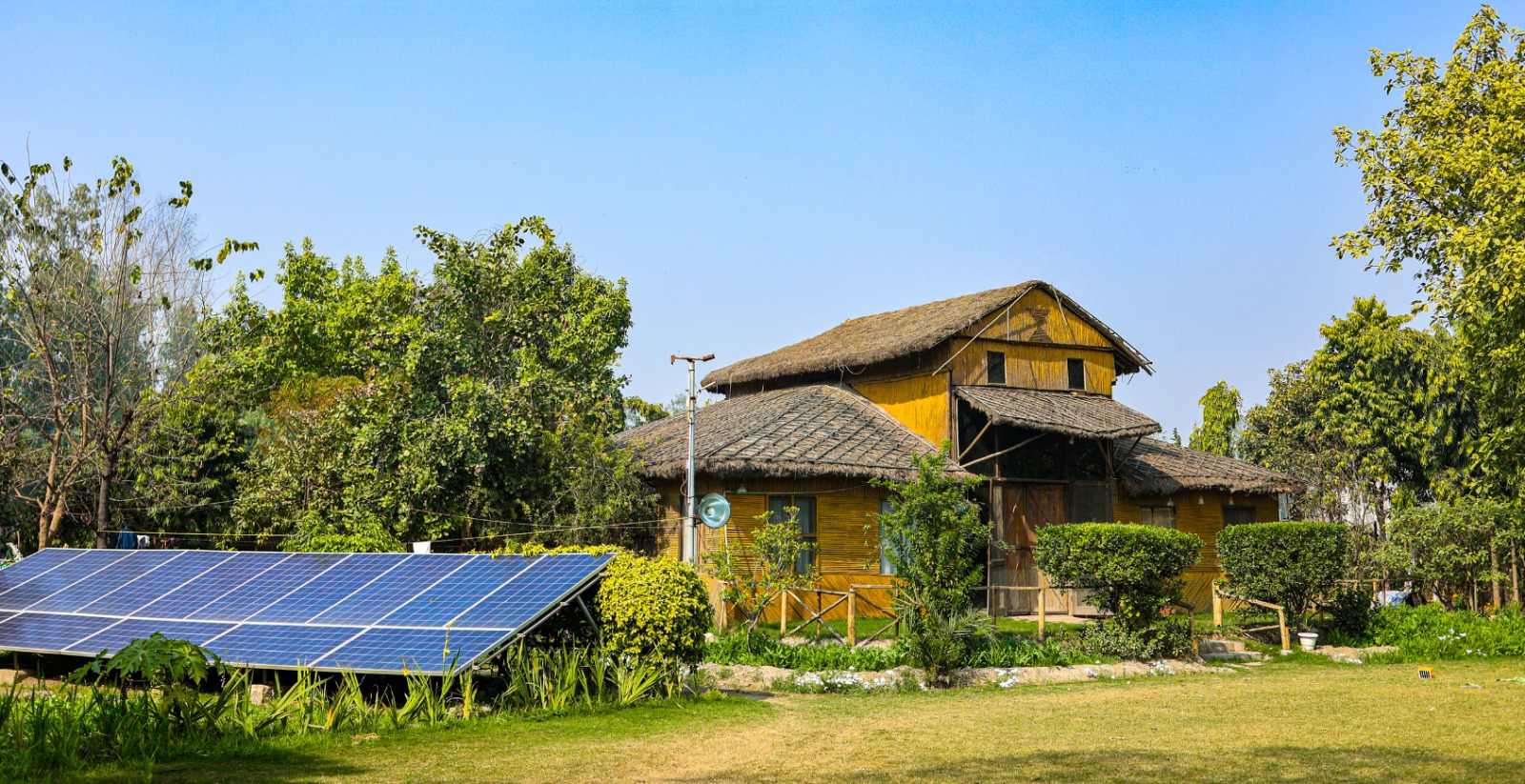
Not every farmhouse marketed as “green” is truly sustainable. A genuinely sustainable farmhouse in Noida Sector 151 should be evaluated on real-world indicators like:
1) Water planning
Rainwater harvesting, recharge methods, sensible landscaping.
2) Green cover preservation
Not just lawns—real trees, real shade, real biodiversity.
3) Organic and soil-forward design
Spaces that support kitchen gardens, composting, and non-toxic living patterns.
4) Low-density planning
Sustainability isn’t only what you build—it’s how crowded the community becomes.
This is where a sustainable farmhouse in Noida Sector 151 can stand out: it can represent a community format that respects land as a living asset, not just a plot with walls.
A sustainable farmhouse in Noida Sector 151 is sustainability when it improves daily living—air, food, movement, and community—not just aesthetics.
RERA Is Still Essential—But Your Goal Should Be Not Needing It
Let’s be clear: RERA is vital. It empowers buyers and creates accountability. MoHUA’s RERA portal highlights its role in citizen-centric reform, transparency, and discipline.
And Section 18 is one of the most buyer-protective provisions in Indian real estate law.
But if your family’s stability depends on legal recourse, that is not a comfortable way to live.
The healthiest buyer strategy is:
- Understand RERA
- Use RERA when necessary
- But choose an ownership model where you’re less likely to need it
That’s the logic behind choosing a sustainable farmhouse in Noida Sector 151. It is not “anti-flat.” It is “pro-certainty.”
A sustainable farmhouse in Noida Sector 151 is often chosen by families who want fewer court dates and more family dinners.
The Legacy Angle: Why Families See Farmhouses as “Generational Living,” Not Just Property
Flats are often planned for:
- 5–10 year utility
- resale cycles
- upgrades as life changes
A sustainable farmhouse in Noida Sector 151 is often planned as:
- a legacy asset
- a family base
- a place where children grow up with nature
- a space where parents age with dignity
This is why so many buyers describe the farmhouse decision in emotional terms:
“It’s not just a second home. It’s our family’s future rhythm.”
A sustainable farmhouse in Noida Sector 151 becomes a place where grandparents can garden, kids can run, and families can reconnect—without waiting for a builder to hand over “permission to live.”
A sustainable farmhouse in Noida Sector 151 is often perceived as a future-proof format because it’s built around fundamentals: land, air, space, and routine.
A Practical Checklist: Is a Sustainable Farmhouse in Noida Sector 151 Right for You?
Choose a sustainable farmhouse in Noida Sector 151 if:
- You want predictability more than prestige
- You’re tired of “handover next quarter” cycles
- You want your kids to naturally spend time outdoors
- You want healthier, calmer routines for parents and grandparents
- You value legacy living and long-term stability
- You prefer ownership that feels real, not delayed
If your life stage is about raising children, supporting aging parents, and building long-term emotional security, a sustainable farmhouse in Noida Sector 151 aligns with those priorities.
A sustainable farmhouse in Noida Sector 151 is the choice of families who measure value in lived experience, not just square footage.
FAQ
1. What does RERA say about delayed possession of flats in Delhi-NCR?
Under the Real Estate (Regulation and Development) Act, 2016, delayed possession is addressed under Section 18. If a developer fails to deliver possession as per the agreement for sale, the buyer has two options:
- Withdraw from the project and claim a refund with interest and compensation, or
- Continue with the project and receive interest for every month of delay until possession is handed over.
This provision was introduced to protect homebuyers from prolonged uncertainty, which became widespread across NCR markets before RERA.
2. If RERA provides compensation, why are buyers still unhappy with delayed flats?
While RERA provides financial remedies, it cannot compensate for lost time. Families face:
- Years of paying rent + EMIs simultaneously
- Delayed school admissions and disrupted routines
- Mental stress and legal follow-ups
Money refunded years later does not restore stability. This is why many families now prefer ownership formats with lower delivery risk, such as a sustainable farmhouse in Noida Sector 151, where land-led possession offers more certainty and control.
3. How common are possession delays in NCR according to official records?
The scale of possession-related disputes is one of the primary reasons RERA authorities exist. State RERA portals, including UP-RERA, regularly publish complaint data and orders related to delayed possession and refund claims.
The volume of cases itself indicates that delayed delivery is not isolated to one or two projects but is a systemic issue that affected enough buyers to require regulatory intervention.
4. What do government audit reports say about real estate delays in NCR?
The Comptroller and Auditor General of India (CAG) has released performance audit reports examining urban development authorities and large-scale planning bodies in NCR regions.
These audits highlight issues such as:
- Planning and execution delays
- Infrastructure readiness gaps
- Process inefficiencies
Such reports validate buyer concerns and explain why project timelines can stretch unpredictably—making land-led formats like a sustainable farmhouse in Noida Sector 151 feel less risky to many families.
5. How is a sustainable farmhouse in Noida Sector 151 different from buying a flat?
A flat purchase is typically construction-linked, meaning possession depends on:
- Project completion
- Occupancy certificates
- Handover schedules
A sustainable farmhouse in Noida Sector 151 is usually land-led, which means:
- Physical ownership is more tangible
- Fewer third-party execution dependencies
- Greater control over development timelines
This difference in ownership structure is a major reason families view farmhouses as real ownership rather than promised ownership.
6. Is choosing a farmhouse mainly a lifestyle decision or a risk-management decision?
It is increasingly both—but for many families, risk management comes first.
A sustainable farmhouse in Noida Sector 151 appeals because it:
- Reduces dependency on long construction cycles
- Lowers exposure to possession delays
- Provides usable space earlier
The lifestyle benefits—open air, greenery, low density—then become added advantages rather than the sole motivation.
7. Why are families concerned about children’s health in apartment living?
Global health bodies such as the World Health Organization (WHO) emphasize the importance of:
- Daily physical activity
- Reduced sedentary (screen-heavy) lifestyles
- Access to outdoor environments
High-density apartment living often limits spontaneous outdoor play. A sustainable farmhouse in Noida Sector 151 structurally supports movement, open space, and nature exposure, making healthier routines easier to maintain.
8. Is Noida Sector 151 suitable for long-term living or only weekend use?
Noida Sector 151 is increasingly viewed as suitable for long-term residential living because it:
- Maintains connectivity with NCR work hubs
- Avoids extreme urban congestion
- Supports low-density planning
This balance allows a sustainable farmhouse in Noida Sector 151 to function not just as a retreat, but as a practical family base for everyday life.
9. What should buyers check before choosing a “sustainable” farmhouse?
“Sustainable” should go beyond marketing language. Buyers should look for:
- Water management systems (rainwater harvesting, recharge)
- Genuine green cover, not just lawns
- Low-density planning norms
- Soil-friendly and organic living provisions
A sustainable farmhouse in Noida Sector 151 should improve daily living conditions—not just appear eco-friendly on brochures.
10. Is RERA still important if someone chooses a farmhouse over a flat?
Yes. RERA remains essential for buyer awareness, transparency, and accountability across the real estate ecosystem.
However, many families prefer ownership models where they are less likely to rely on legal remedies in the first place. A sustainable farmhouse in Noida Sector 151 is often chosen because it reduces dependency on prolonged construction timelines—making RERA a safeguard, not a necessity.
When Ownership Is Delayed, Life Is Delayed
RERA exists because delayed possession became a national-level consumer risk. Section 18 gives buyers clear rights, and MoHUA frames RERA as a major reform for transparency and timely delivery.
But even strong laws cannot refund time.
That’s why NCR families are increasingly choosing ownership formats that deliver control and clarity—not only compensation. A sustainable farmhouse in Noida Sector 151 has emerged as a logical answer to two realities at once:
- the uncertainty of delayed possession cycles, and
- the growing need for healthier, open, family-forward living.
A sustainable farmhouse in Noida Sector 151 is not merely a property decision. It’s a life decision—about space, time, peace, and legacy.
If you’re evaluating your next step in NCR—ask yourself one question first:
Do you want to own a promise, or do you want to own a life you can start living now?
A sustainable farmhouse in Noida Sector 151 can be that start.