Jewar Airport 2026: Why Sector 151 Noida Is Emerging as NCR’s Smart Farmhouse Investment Zone
When Airports Don’t Just Move People — They Move Cities
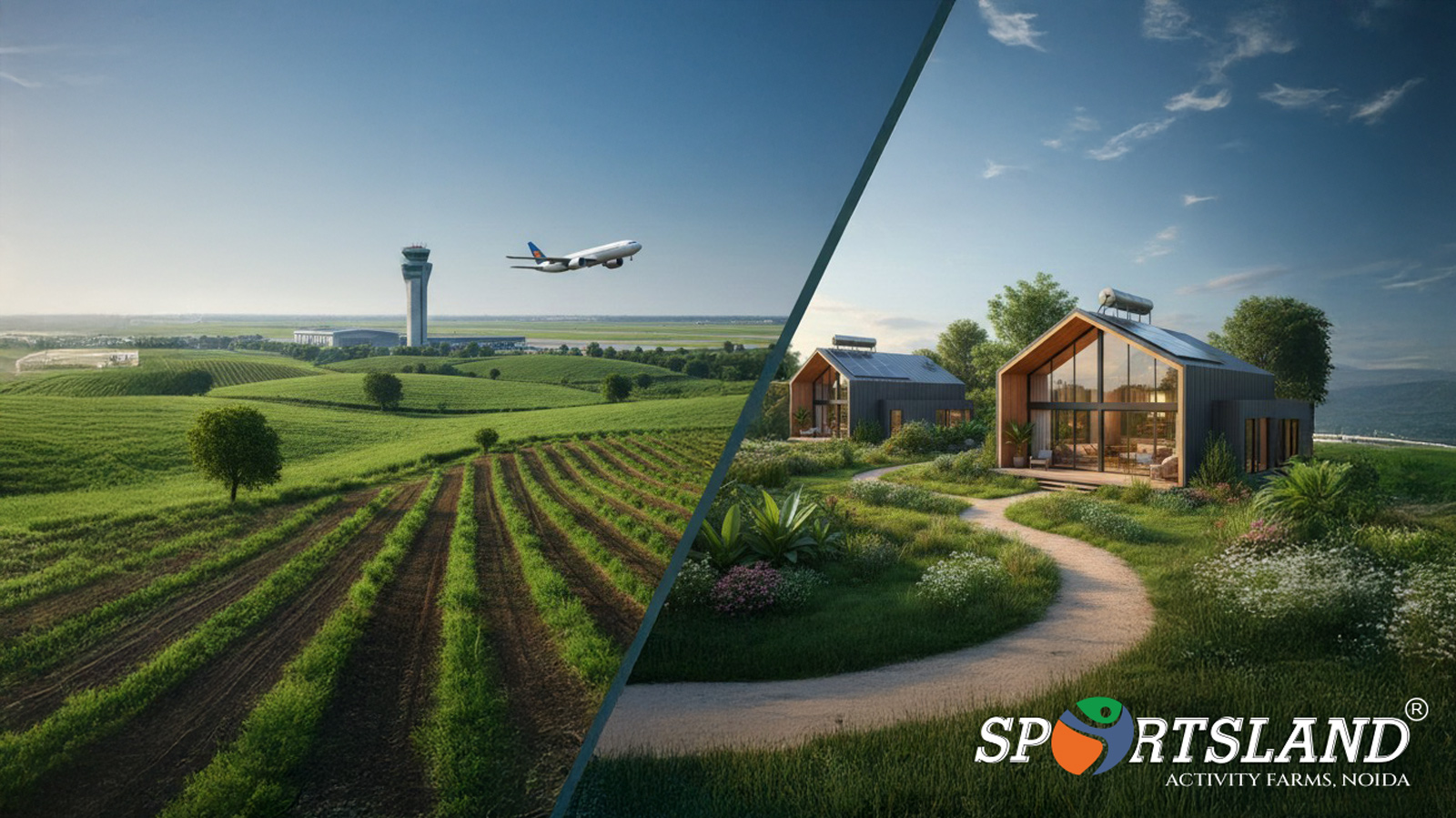
Airports have always been far more than transit infrastructure. They are economic engines that quietly redraw maps, reroute capital, and reshape how people choose to live. Globally, from Heathrow to Istanbul Airport, the areas that benefit most are not the ones packed closest to the runways—but those positioned strategically beyond the noise, congestion, and high-density pressure.
India is now witnessing this transformation at scale with the Noida International Airport at Jewar.
As we enter 2026, Jewar Airport is no longer a speculative headline or a distant promise. It is a functioning, policy-backed reality with defined timelines, active construction phases, and institutional capital already flowing into the region. And with this shift, buyer behaviour across NCR is changing rapidly—especially among those exploring farmhouse investment near Jewar Airport.
What’s notable is this:
The most informed buyers are no longer chasing “closest to airport” locations. Instead, they are looking for strategic residential buffers—zones that benefit from airport-driven growth while preserving low density, environmental quality, and long-term livability. This is precisely why Sector 151 Noida is emerging as one of the most intelligent farmhouse investment destinations near Jewar Airport in 2026.
This article breaks down government policy, infrastructure planning, zoning regulations, and real buyer trends to explain why farmhouse investment near Jewar Airport, particularly in Sector 151, is not just a lifestyle choice—but a calculated, future-proof real estate decision.

Jewar Airport 2026: What the Government Has Officially Confirmed
The Noida International Airport (NIA) project is being developed under the supervision of the Ministry of Civil Aviation, the Government of Uttar Pradesh, and the Yamuna Expressway Industrial Development Authority (YEIDA). Unlike earlier airport projects in India, Jewar has been designed as the anchor of a larger aerotropolis model, integrating logistics, industry, hospitality, and residential planning.
According to official government disclosures:
- Phase 1 operationalisation: 2025–26
- Initial passenger capacity: 12 million passengers per year
- Ultimate planned capacity: 70+ million passengers annually
- Total development area: 1,300+ hectares
- Multi-runway development in phased execution
- Dedicated cargo, logistics, and MRO (Maintenance, Repair & Overhaul) zones
The Uttar Pradesh government has publicly stated that Jewar Airport will act as a long-term economic nucleus, similar to Hyderabad and Bengaluru airports—but at a much larger scale. This clarity significantly reduces execution risk, making farmhouse investment near Jewar Airport less speculative and more structurally sound.
Airport-Centric Urbanisation: A Global Playbook India Is Now Following
To understand why farmhouse investment near Jewar Airport makes sense in 2026, it’s important to step back and look at global development patterns.
Hyderabad: India’s First Aerotropolis Lesson
After the operationalisation of Rajiv Gandhi International Airport, residential zones located 15–25 km away from the airport saw more stable appreciation than areas directly adjacent to it. Low-density villa and plotted developments consistently outperformed apartments over a 10–12 year cycle.
Istanbul Airport Corridor
Istanbul’s new airport led to the creation of planned residential buffers where farm-style homes and villas gained stronger value retention compared to dense urban housing.
Dubai South
Dubai’s airport-led development deliberately prioritised villa communities, plotted developments, and nature-integrated living—creating one of the world’s most stable real estate corridors.
The conclusion is consistent worldwide:
Airports generate economic gravity, but people prefer to live slightly away from intensity. This is where farmhouse investment near Jewar Airport aligns perfectly with proven global models.
Yamuna Expressway vs Sector 151 Noida: Two Growth Paths, Two Outcomes
Most investors initially view everything near Jewar as one homogeneous opportunity. In reality, Yamuna Expressway and Sector 151 Noida represent two very different futures.
Yamuna Expressway: Speed, Industry, and Density
The Yamuna Expressway corridor is being positioned as:
- An industrial backbone
- A logistics and warehousing hub
- A high-density residential and commercial zone
Strengths:
- Aggressive infrastructure development
- High institutional investment
- Faster short-term appreciation cycles
Challenges:
- Rising density
- Heavy commercial traffic
- Long-term noise and congestion
- Industrial spillover risks
Sector 151 Noida: The Strategic Residential Buffer
Sector 151 falls under Noida Authority jurisdiction, not YEIDA’s industrial zoning framework.
Key advantages:
- Residential-first planning
- Lower FSI and controlled density
- Better civic infrastructure
- Cleaner governance mechanisms
- Strong alignment with plotted and farmhouse developments
For buyers focused on farmhouse investment near Jewar Airport, Sector 151 offers something rare: airport-driven appreciation without airport-driven disruption.
Why Farmhouse Living Is the Real 2026 Demand Story
The Indian real estate market has undergone a structural shift since 2020. Apartments are no longer the default aspiration for upper-middle and affluent buyers.
According to Knight Frank India:
- Plotted development demand grew by 20%+ year-on-year
- Second homes are increasingly used as semi-primary residences
What Buyers Are Actively Seeking in 2026
- Clean air and open space
- Private land ownership
- Organic farming opportunities
- Pet-friendly environments
- Wellness-led, low-noise living
- Flexibility for remote and hybrid work
This explains the surge in farmhouse investment near Jewar Airport. Buyers are not merely investing capital—they are reallocating lifestyle priorities.
Government Zoning, Regulations & Legal Clarity for Farmhouse Buyers
One of the biggest risks in farmhouse investment is illegal land subdivision. Understanding zoning and jurisdiction is non-negotiable.
YEIDA Jurisdiction
- Focused on industrial, logistics, and infrastructure uses
- Residential permissions are tightly regulated
Noida Authority Jurisdiction (Sector 151)
- Clear residential land-use classification
- Better road, drainage, and civic provisioning
- Easier compliance for plotted developments
For long-term safety, any farmhouse investment near Jewar Airport must prioritise authority-approved, legally compliant developments.
Infrastructure Beyond the Airport That Sustains Appreciation
Airports create attention. Infrastructure sustains value.
Key supporting developments around Jewar include:
- Metro and Rapid Rail proposals connecting Noida and Delhi
- Multi-modal logistics corridors
- Expressway upgrades
- Healthcare, education, and retail expansion
This layered infrastructure strengthens the case for farmhouse investment near Jewar Airport as a stable, long-term asset class rather than a speculative bet.
Who Should Invest in Farmhouse Property Near Jewar Airport in 2026?
This opportunity is ideal for:
- End-users seeking nature-first living
- HNIs diversifying beyond apartments
- Professionals with flexible work models
- Families planning generational assets
It is not suitable for:
- Short-term flippers
- High-risk speculators
- Buyers ignoring zoning compliance
Farmhouse investment near Jewar Airport rewards patience, planning, and perspective.
Why Sportsland Aligns Naturally With the 2026 Investment Thesis
Sportsland Activity Farms was designed around principles the market is only now valuing:
- Low-density plotted layouts
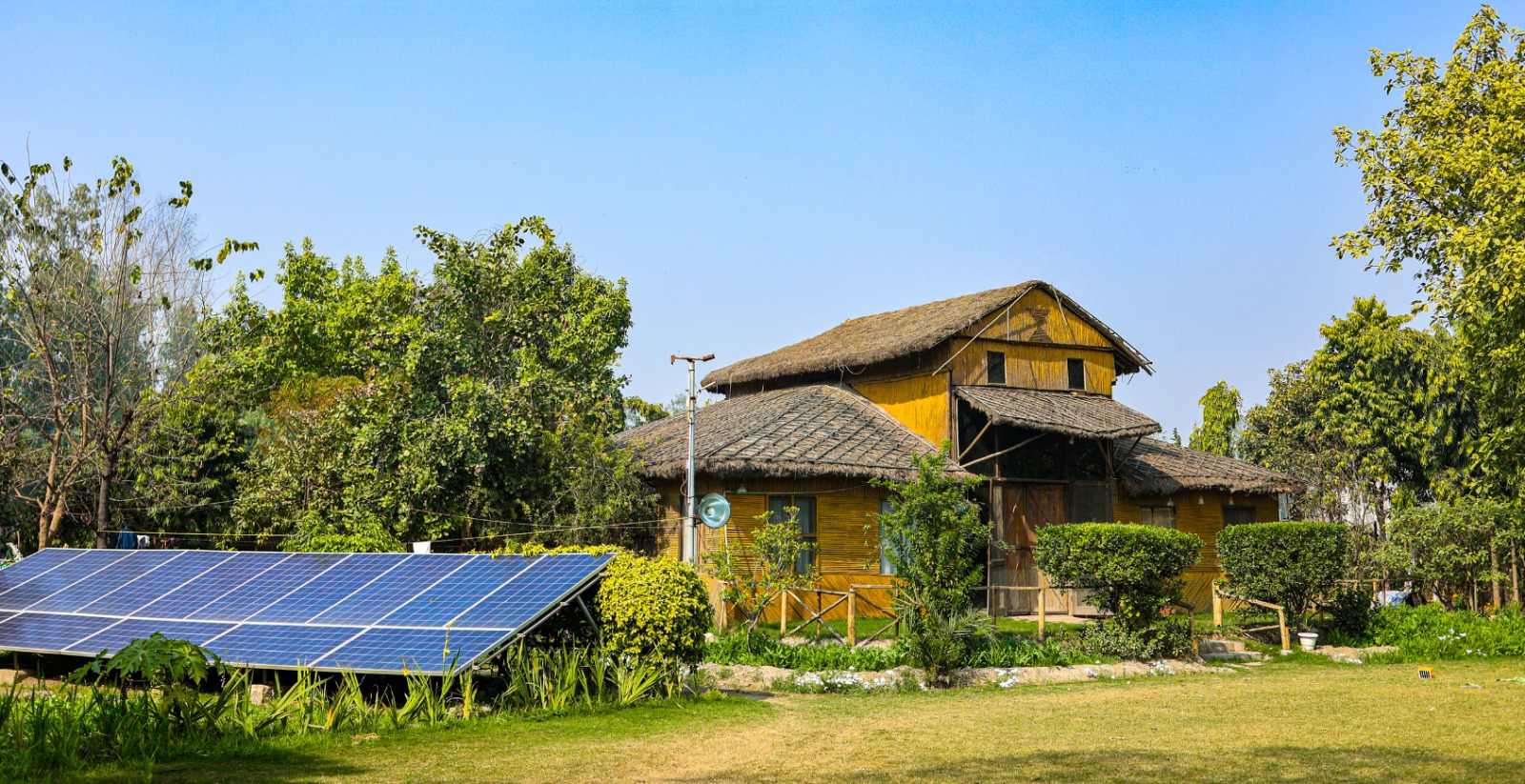
- Organic farming and private backyards
- Open-air wellness infrastructure
- Pet-friendly, community-led living
- Long-term sustainability over short-term hype
In the broader context of farmhouse investment near Jewar Airport, Sportsland represents a ready, compliant ecosystem, not an improvised development reacting to trends.
Risks, Reality Checks & How Smart Buyers Protect Capital
Every growth corridor attracts misinformation.
Smart buyers:
- Verify land titles and approvals
- Avoid roadside subdivisions
- Choose governance-backed developments
- Think in 10–20 year horizons
This discipline separates regret from legacy.
FAQ
1. Is Jewar Airport fully operational in 2026?
Yes. As per official government announcements, Phase 1 of Noida International Airport (Jewar) is scheduled to be operational by 2025–26, with commercial passenger services commencing in stages. The airport is being developed as India’s largest greenfield airport with long-term expansion planned up to 70 million passengers annually.
2. Why is farmhouse investment near Jewar Airport gaining popularity in 2026?
Farmhouse investment near Jewar Airport is rising due to a combination of airport-driven infrastructure growth, policy-backed urban planning, and a post-pandemic lifestyle shift toward low-density living. Buyers now prioritise clean air, private land ownership, and long-term livability over crowded urban housing.
3. Is Sector 151 Noida legally safe for farmhouse investments?
Yes. Sector 151 falls under Noida Authority jurisdiction, which has clearer residential zoning, better civic governance, and stricter land-use enforcement compared to loosely regulated peripheral zones. This makes it one of the safer micro-markets for farmhouse investment near Jewar Airport, provided buyers choose authority-compliant projects.
4. How is Sector 151 different from Yamuna Expressway for farmhouse buyers?
While the Yamuna Expressway is being developed as a high-density industrial and logistics corridor, Sector 151 Noida functions as a residential buffer zone. It offers lower density, reduced industrial spillover, and better suitability for plotted and farmhouse developments—making it more livable in the long term.
5. What government policies support real estate growth around Jewar Airport?
The Uttar Pradesh government has adopted an airport-centric urbanisation model, encouraging logistics hubs, hospitality zones, and planned residential buffers. These policies reduce speculative risk and support sustainable appreciation, especially for farmhouse investment near Jewar Airport.
6. Are farmhouse properties near Jewar Airport good for long-term investment?
Yes. Farmhouse investment near Jewar Airport is considered a long-term, low-volatility asset, particularly in legally compliant, low-density zones. Unlike apartments, land-based assets benefit from scarcity, zoning protection, and growing lifestyle demand.
7. What legal checks should buyers do before investing in farmhouse land?
Buyers should verify:
- Land-use classification (residential/agricultural)
- Authority approvals
- Registry and mutation status
- Access roads and civic provisioning
Skipping these checks is the biggest risk in farmhouse investment near Jewar Airport.
8. How will infrastructure beyond the airport impact land value?
Infrastructure such as metro extensions, expressway upgrades, logistics corridors, and social infrastructure plays a critical role in sustaining appreciation. Jewar Airport is only one part of a larger connectivity ecosystem that enhances the value of farmhouse investments in surrounding residential buffers.
9. Who should avoid farmhouse investment near Jewar Airport?
This investment may not suit:
- Short-term speculators
- Buyers seeking rental yields
- Investors ignoring zoning laws
- Those unwilling to hold for 8–10 years
Farmhouse investment near Jewar Airport rewards patience and compliance, not quick exits.
10. Why are wellness-led communities like Sportsland relevant in 2026?
Modern buyers want more than land—they want planned ecosystems with sustainability, organic living, and community design. Developments like Sportsland align with global wellness real estate trends and reduce risk for farmhouse investment near Jewar Airport by offering structure, governance, and long-term vision.
The Question Smart Buyers Are Asking in 2026
Jewar Airport will grow.
Density will follow.
Land values will rise.
But the real question isn’t whether your investment appreciates.
It’s whether your land will still:
- Feel peaceful
- Feel usable
- Feel like home
That is why farmhouse investment near Jewar Airport, especially in strategic residential buffers like Sector 151 Noida, is emerging as one of NCR’s most intelligent real estate decisions of 2026.
Not because it’s loud.
But because it’s lasting.’
The Right Time to Act Is When Clarity Replaces Noise
By 2026, the conversation around Jewar Airport has moved beyond speculation. The airport is operational. Infrastructure timelines are visible. Government policies are defined. And land values are beginning to separate planned growth zones from over-hyped ones.
What this means for buyers is simple:
The opportunity is no longer about being early—it’s about being right.
If you are exploring farmhouse investment near Jewar Airport, the smartest decisions today are being made by buyers who are looking beyond price appreciation alone. They are asking deeper questions:
- Will this land remain livable as development intensifies?
- Is the zoning legally secure and future-proof?
- Does the community support wellness, sustainability, and long-term use?
- Can this investment serve both lifestyle and legacy goals?
These are the questions that define intelligent land ownership, not impulsive buying.
Why Long-Term Buyers Are Choosing Planned Farm Communities Over Isolated Plots
Across India, institutional reports show a clear shift toward low-density, plotted developments that are:
- Authority-approved
- Infrastructure-supported
- Designed for long-term habitation
According to Knight Frank India, plotted and land-led developments are outperforming speculative apartment markets in terms of value retention and buyer satisfaction.
Similarly, ANAROCK highlights that buyers increasingly prefer gated, planned land communities over fragmented farmland subdivisions:
This shift explains why structured, wellness-led communities are emerging as the safer route for farmhouse investment near Jewar Airport—especially in residential buffer zones like Sector 151 Noida.
Where Sportsland Fits Into the 2026 Investment Reality
Sportsland Activity Farms was not created as a reaction to the Jewar Airport boom. It was planned years earlier around principles that the market is only now recognising as valuable:
- Low-density plotted living
- Clear land titles and compliance
- Organic farming and private green spaces
- Open-air wellness infrastructure
- Pet-friendly, community-first planning
- Long-term sustainability over short-term hype
In a region where many projects are still adjusting to new zoning rules and infrastructure pressure, Sportsland represents a ready, legally compliant ecosystem—built for people who want their land to be usable, peaceful, and relevant even a decade from now.
Before You Invest, Educate Yourself First
Smart real estate decisions begin with understanding—not urgency.
Before finalising any farmhouse investment near Jewar Airport, buyers should independently review:
An informed buyer is always in control—regardless of market cycles.
A Thoughtful Next Step (Without Pressure)
If you are at a stage where you want to:
- Understand how planned farm communities work
- Compare isolated farmland vs structured developments
- Explore legally compliant options near Jewar Airport
- Evaluate whether this fits your long-term lifestyle or legacy goals
You can begin by learning more, not committing more.
Jewar Airport will transform NCR.
But not every piece of land around it will age gracefully.
The real value in 2026 lies in choosing where growth meets balance—where infrastructure supports life instead of overwhelming it.
That is the difference between buying land
and building a legacy.