Khadar Land & Sustainable Development in India (2026): Legal Reality, Environmental Risks, and What Responsible Farm Communities Must Understand
Search interest around farmhouses, eco-farms, and nature-based communities in India has surged in recent years. Queries such as “Is Khadar land safe?”, “Are farmhouses legal on floodplain land?” “Can sustainable farms exist legally in India?”, and “What is khadar land used for?” reflect a growing concern among individuals who want to reconnect with nature, without stepping into legal or environmental trouble.
At the heart of these questions lies one complex but increasingly important subject: Khadar Land Sustainable Development in India.
Khadar land has often been misunderstood. Some see it purely as fertile agricultural land, while others fear it as risky, flood-prone, or unsuitable for any development. In reality, khadar land occupies a critical ecological position in India’s geography and climate system. As India moves toward climate resilience, sustainable tourism, and eco-conscious land use, understanding khadar land sustainable development in India is no longer optional — it is essential.
This article is written to educate, clarify, and build trust. It does not promote or sell any project. Instead, it answers what people are actually searching for online and explains how responsible land use works in practice.
What Is Khadar Land? A Scientific and Legal Explanation
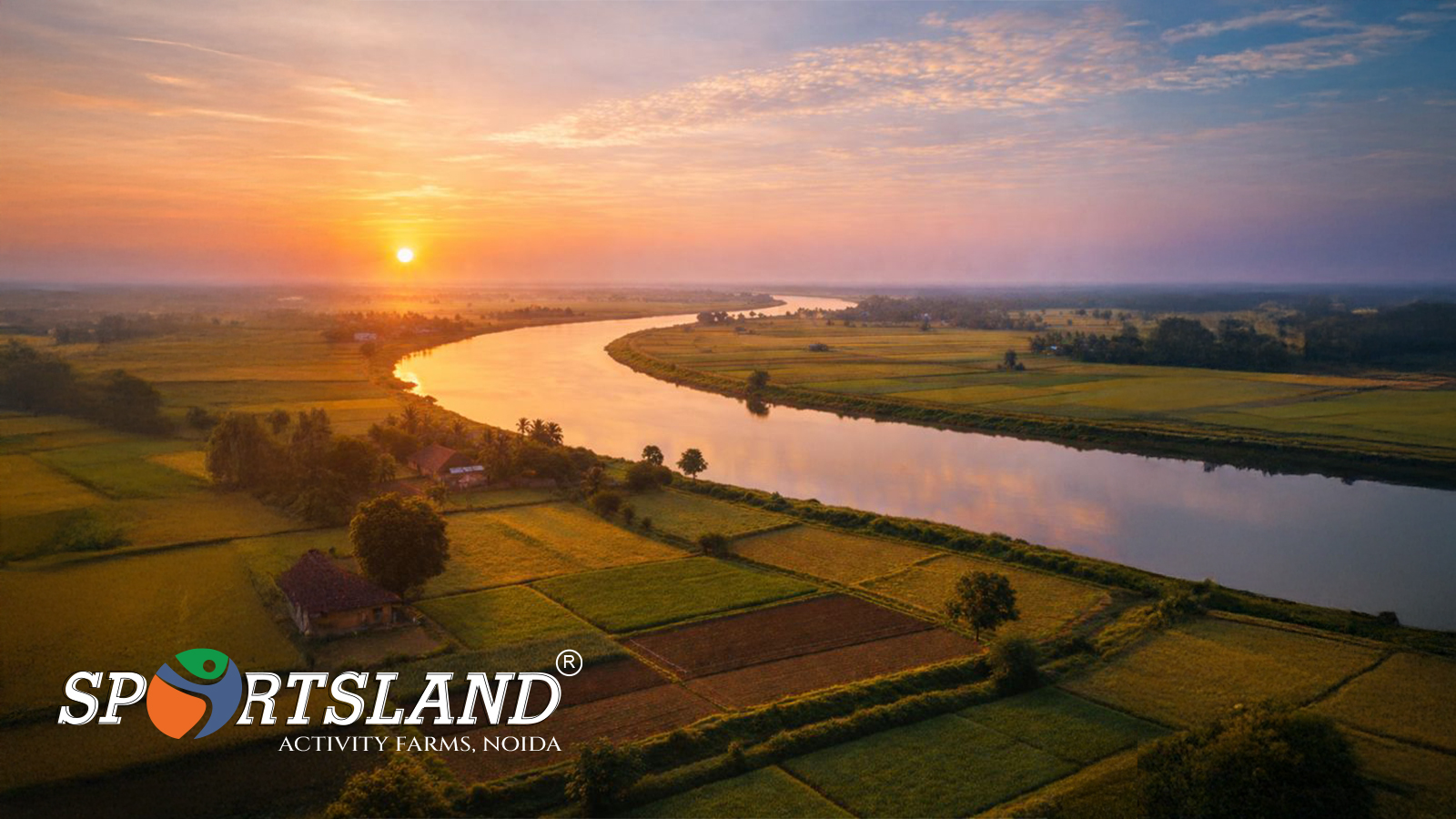
Khadar land refers to low-lying floodplain areas formed by the recent deposition of alluvial soil by rivers. These lands are typically found along riverbanks and are renewed every year through seasonal flooding. Because of this natural process, khadar land is exceptionally fertile and has historically supported agriculture across northern India.
In Indian geography, khadar land is commonly contrasted with bangar land, which is formed from older alluvial deposits and lies at a higher elevation. While bangar land is more stable, khadar land is dynamic, shaped continuously by water flow, sediment movement, and seasonal change.
From an ecological perspective, khadar land plays a crucial role in:
- Flood control
- Groundwater recharge
- Soil regeneration
- Biodiversity preservation
This natural importance explains why Khadar land sustainable development in India must be approached with care. Development that ignores these characteristics often leads to environmental damage, flooding disasters, and legal complications.
Why Khadar Land Is Environmentally Sensitive
Floodplains are not vacant land waiting to be built upon. They are living ecosystems that respond to rainfall, river flow, and seasonal climate patterns. Khadar land absorbs excess water during monsoons, reducing flood pressure on nearby cities and villages.
Problems arise when:
- Natural drainage paths are blocked
- Land is artificially elevated
- Permanent concrete structures are introduced
- Soil permeability is reduced
Climate change has intensified these risks. Increased rainfall variability and extreme weather events mean that floodplains today behave differently than they did even a decade ago. This is why modern conversations around Khadar land sustainable development in India increasingly focus on resilience rather than resistance.
Environmental research consistently shows that restricting floodplains worsens flooding rather than preventing it.
Is Khadar Land Legal for Development in India?
One of the most searched questions online is whether khadar land is legal or illegal. The answer is nuanced.
Khadar land itself is not illegal. What matters is:
- Land classification
- Approved land use
- Zoning regulations
- Environmental permissions
In most states, khadar land is classified as agricultural land. Construction laws depend on state-specific land revenue codes, floodplain zoning rules, and environmental regulations. While permanent residential construction is usually restricted, agriculture-linked activities and low-impact usage may be permitted.
Understanding Khadar Land Sustainable Development in India means recognising that legality is conditional, not absolute.
Farmhouses on Khadar Land: Why Confusion Exists
Searches such as “Are farmhouses legal on khadar land?” often oversimplify a complex issue. The term farmhouse is loosely used to describe very different structures.
In legal terms, many farmhouses are treated as residential buildings, which triggers stricter regulations — especially on floodplain land. Issues arise when:
- Permanent foundations are built
- Water flow is obstructed
- Land elevation is altered
- Infrastructure load increases
This is why many disputes around khadar land sustainable development in India involve farmhouses that were designed like villas rather than agriculture-linked structures.
Activity Farms and Eco-Based Projects: A Different Model
Unlike traditional farmhouses, activity farms and eco-based land-use models focus on engagement rather than residence. These projects typically emphasise:
- Open landscapes
- Temporary or semi-permanent structures
- Agriculture-based learning
- Seasonal adaptability
From a regulatory perspective, these models align more closely with the principles of Khadar Land Sustainable Development in India because they respect the land’s natural behaviour rather than imposing permanence.

What Sustainable Development Means on Khadar Land
Sustainable development on floodplain land is not about building more — it is about building differently.
Responsible Khadar Land Sustainable Development in India follows key principles:
Low-Impact Construction
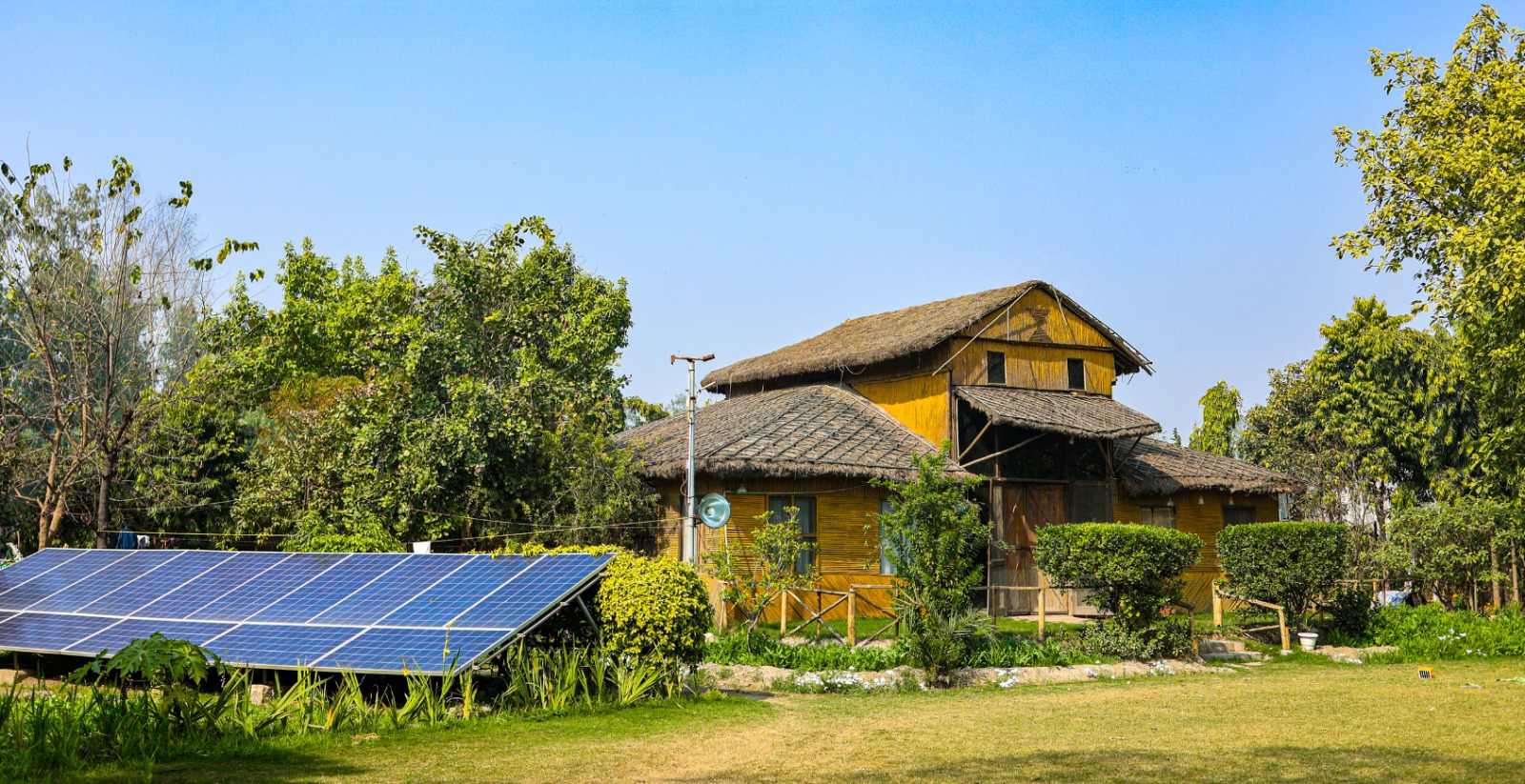
Materials such as bamboo, timber, mud composites, and modular structures reduce long-term environmental stress and can be adapted or removed during extreme conditions.
Natural Drainage Preservation
Projects that respect natural slopes and water channels minimise flood risk and soil erosion.
Seasonal Design
Rather than resisting floods, sustainable projects adapt to seasonal cycles.
Soil and Water Conservation
Rainwater harvesting, organic farming, and groundwater recharge systems are central to sustainability.
Legal and Environmental Compliance
Clear land records, local authority permissions, and ecological assessments build long-term viability.
These practices are increasingly recognised by environmental planners as essential to khadar land sustainable development in India.
Why Sustainable Activity Farms Are Growing in India
Urban populations are increasingly searching for:
- Nature-based experiences
- Outdoor recreation
- Environmental education
- Community-driven spaces
As a result, searches related to eco-farms, agro-tourism, and activity-based land use have increased significantly. These trends support Khadar land development in India when implemented responsibly.
Sustainable activity farms serve multiple purposes:
- Environmental education
- Physical wellness
- Community engagement
- Rural livelihood support
Myths About Khadar Land (Debunked)
Myth 1: All khadar land is illegal
Reality: Legality depends on land use and compliance.
Myth 2: Nothing can be built on khadar land
Reality: Low-impact, compliant structures may be allowed.
Myth 3: Floods destroy everything on the khadar land
Reality: Poor planning causes damage, not floods alone.
Myth 4: Khadar land development is only for investors
Reality: Communities, schools, and families benefit most from responsible use.
Understanding these myths is critical to informed decisions about Khadar land sustainable development in India.
What to Check Before Associating With Any Farm or Land Project
Before visiting, investing in, or associating with a farm-based project, consider:
- Land classification and zoning
- Flood resilience planning
- Environmental permissions
- Sustainability practices
- Community impact
These checks protect individuals while encouraging ethical khadar land sustainable development in India.
FAQ
1. What is khadar land, and why is it considered environmentally sensitive in India?
Khadar land refers to low-lying floodplain areas formed by recent alluvial deposits from rivers. These lands are naturally fertile and play a crucial role in flood management, groundwater recharge, and soil regeneration. Because khadar land is shaped by seasonal river flow, it behaves differently from stable upland areas. This is why Khadar Land Sustainable Development in India requires careful planning that respects natural water movement rather than obstructing it.
Unplanned construction on khadar land can disrupt drainage patterns, increase flood risk, and damage ecosystems. Environmental sensitivity is the primary reason why development on such land is regulated rather than banned outright.
2. Is khadar land legal for development in India?
Khadar land itself is not illegal. However, its use is regulated under land revenue laws, environmental regulations, and floodplain zoning policies. In most Indian states, khadar land is classified as agricultural land, and any form of development must align with approved land use.
Permanent residential construction is often restricted, while agriculture-related, temporary, or low-impact activities may be permitted with proper approvals. Understanding Khadar Land Sustainable Development in India means recognizing that legality depends on how the land is used, not merely where it is located.
3. Are farmhouses allowed on khadar land?
In most cases, farmhouses — especially those designed as permanent residential structures — face strict limitations on khadar land. This is because such buildings can obstruct natural flood flows and increase environmental risk. Many legal disputes arise when farmhouses resemble luxury residences rather than agriculture-linked structures.
That said, regulations vary by state, and certain non-residential or agriculture-supporting structures may be allowed. Responsible Khadar Land Sustainable Development in India prioritises land behaviour over lifestyle construction.
4. What is the difference between khadar land and bangar land?
Khadar land consists of newer alluvial soil deposited annually by rivers, making it fertile but flood-prone. Bangar land, on the other hand, contains older alluvial deposits and lies at a higher elevation, making it more stable for construction.
From a sustainability and planning perspective, khadar land requires adaptive and low-impact land use, while bangar land offers greater structural stability. This distinction is central to understanding khadar land sustainable development in India and why regulations differ between the two.
5. Can sustainable or eco-friendly projects exist on khadar land?
Yes, sustainable and eco-friendly projects can exist on khadar land when they are designed around ecological principles. Such projects typically avoid permanent construction, preserve natural drainage, and use materials that allow seasonal adaptability.
In fact, many experts argue that khadar land sustainable development in India is best achieved through low-impact, nature-aligned activities rather than conventional construction. These models support both environmental protection and community engagement.
6. Why is floodplain zoning important for khadar land?
Floodplain zoning ensures that land prone to flooding is used in a way that minimises human and environmental risk. Without zoning regulations, construction on khadar land can worsen flooding in surrounding areas by blocking water flow.
Floodplain zoning is a cornerstone of khadar land sustainable development in India because it balances development needs with ecological safety. Ignoring zoning laws often leads to long-term environmental and legal consequences.
7. Does climate change increase the risk of development on khadar land?
Yes. Climate change has intensified rainfall patterns, increased river unpredictability, and raised the frequency of extreme weather events. These changes make floodplain land more dynamic than ever before.
As a result, Khadar land sustainable development in India must now factor in climate resilience, adaptive design, and long-term environmental impact rather than relying on historical land behaviour alone.
8. What should people check before associating with a farm or land project on khadar land?
Before visiting, investing in, or associating with any project on khadar land, individuals should verify:
- Land classification and zoning status
- Environmental clearances
- Flood resilience measures
- Sustainability practices
- Long-term land use intent
These checks help protect individuals while encouraging responsible khadar land sustainable development in India.
9. Is khadar land only useful for agriculture?
While agriculture is the most common use of khadar land, it is not the only one. When managed responsibly, khadar land can support educational farms, eco-tourism, outdoor activity spaces, and community learning environments.
Such uses align with Khadar Land Sustainable Development in India by generating social and environmental value without compromising ecological balance.
10. What is the future of Khadar land sustainable development in India?
The future of khadar land lies in adaptive, science-based planning rather than rigid construction. As India faces climate uncertainty, floodplains will become increasingly important for resilience and water management.
Khadar land sustainable development India will likely focus on low-impact land use, community-driven initiatives, environmental education, and sustainable agriculture — setting a model for how development and ecology can coexist.
The Future of Khadar Land Sustainable Development in India
The future of Khadar land sustainable development in India will be defined not by how much construction happens on floodplain land, but by how intelligently land use adapts to natural systems. As India faces rising climate uncertainty, water stress, and rapid urban expansion, khadar land is no longer viewed merely as agricultural terrain — it is increasingly recognised as a critical ecological asset.
Historically, floodplains were seen as risky zones to be controlled or reclaimed. Today, planners, environmentalists, and policymakers are beginning to acknowledge that floodplains like khadar land are essential for climate resilience, water management, and sustainable living. This shift in understanding is already shaping the future direction of Khadar Land Sustainable Development in India.
Climate Change Will Redefine Land Use Priorities
Climate change is one of the most significant factors influencing the future of khadar land sustainable development in India. Increasingly erratic monsoon patterns, extreme rainfall events, and river swelling have exposed the dangers of rigid, permanent construction on floodplains.
Future development models will prioritise:
- Adaptive land use rather than fixed infrastructure
- Seasonal flexibility instead of year-round permanence
- Designs that accept flooding as a natural process
Rather than attempting to “control” rivers, sustainable planning will focus on working with natural flood cycles, allowing khadar land to perform its ecological role while supporting human activity in a non-disruptive way.
Policy and Regulation Will Become More Environment-Focused
Government policy around land use is gradually shifting from expansion-driven growth to environment-sensitive planning. Floodplain zoning, environmental impact assessments, and land classification reforms are expected to become stricter in the coming years.
For Khadar Land Sustainable Development in India, this means:
- Greater scrutiny of construction permissions
- Stronger enforcement of floodplain zoning laws
- Increased emphasis on ecological impact over commercial value
Future projects that align with sustainability principles will find it easier to gain regulatory support, while speculative or non-compliant developments will face mounting resistance.
Shift From Ownership to Experience-Based Land Use
Another defining trend in the future of Khadar land sustainable development in India is the shift away from land ownership for luxury or residential purposes toward experience-based, community-oriented land use.
Instead of private farmhouses, the focus is likely to move toward:
- Educational farms
- Activity-based eco spaces
- Nature learning hubs
- Community agriculture initiatives
This shift reflects changing societal values. People increasingly seek access to nature, not possession of land. Sustainable activity farms and experiential spaces allow khadar land to be used productively without compromising its ecological function.
Technology Will Support Smarter Floodplain Management
Technology will play a growing role in khadar land sustainable development in India. Tools such as:
- GIS mapping
- Flood modelling systems
- Soil health monitoring
- Climate risk assessment software
will enable planners to better understand land behaviour before any intervention. These technologies reduce uncertainty and support decision-making that respects floodplain dynamics rather than ignoring them.
In the future, responsible projects will rely on data-driven planning, not assumptions — ensuring that khadar land remains productive and resilient.
Community-Centric Development Will Gain Importance
Sustainable development on khadar land cannot succeed without community involvement. Local knowledge about river patterns, seasonal changes, and soil behaviour is invaluable. The future of khadar land sustainable development in India will therefore emphasise:
- Local participation
- Traditional ecological knowledge
- Shared stewardship models
When communities are involved, land is protected not just by laws but by collective responsibility. This approach reduces conflict, increases compliance, and strengthens long-term sustainability.
Education and Awareness Will Shape Responsible Choices
One of the biggest challenges today is misinformation. Many issues surrounding khadar land arise not from malice but from misunderstanding. As awareness improves, individuals will make more informed decisions about where and how they engage with land-based projects.
In the coming years, education around:
- Floodplain ecology
- Sustainable land use
- Legal frameworks
will play a key role in shaping public attitudes toward khadar land sustainable development in India.
A Balanced Path Forward
The future of Khadar land sustainable development in India is neither about banning human activity nor allowing unchecked construction. It lies in balance — respecting ecological limits while enabling meaningful human engagement with nature.
Khadar land will continue to serve as:
- A buffer against floods
- A reservoir of fertile soil
- A space for learning and community
- A model for climate-resilient development
Projects that embrace this balanced approach will define the next generation of sustainable land use in India.
Why This Future Matters
As India urbanises rapidly, the choices made today will shape environmental outcomes for decades. Khadar land sustainable development in India represents an opportunity to correct past mistakes and build a future where development strengthens — rather than weakens — natural systems.
The floodplains of India are not obstacles to progress. They are foundations for a more resilient, sustainable future.