Rethinking Home and Health: The Case for Sustainable Farmhouses in Sector 151 Noida
For decades, residential growth around major cities followed a familiar pattern: build upward, build faster, compress more people into smaller spaces, and promise comfort through convenience. For a long time, that model worked. Careers were growing, cities were aspirational, and time spent outdoors was a luxury reserved for holidays.
But somewhere along the way, a quiet shift began.
Today, across boardrooms, family offices, political circles, and NRI communities, conversations around housing are no longer only about location or price. They are about quality of daily life, longevity, health resilience, and intergenerational value. This is precisely why sustainable farmhouses in Sector 151 Noida are no longer viewed as niche lifestyle assets. They are increasingly being recognised as a new residential benchmark for people who think long-term.
This article explores—without selling, without exaggeration, and without judgement—why sustainable farmhouses in Sector 151 Noida are gaining serious attention, how active living is shaping residential choices, and why this shift is rooted in evidence rather than trend.
The Changing Definition of “A Good Home” in Modern India
A generation ago, a good home was defined by proximity to work, schools, and markets. Then it evolved into gated security, elevators, clubhouses, and amenities. Today, a good home is increasingly defined by something more fundamental: how it supports everyday life over 20, 30, or even 50 years.
For families in the 35–75 age bracket—especially HNIs, NRIs, policymakers, and investors—the question has shifted from “How impressive is this address?” to “How sustainable is this lifestyle?”
This is where sustainable farmhouses in Sector 151 Noida enter the discussion—not as indulgences, but as deliberate lifestyle choices that prioritise space, air, movement, and time.
Active Living: From Health Advice to Residential Design Principle
Active living is often misunderstood. It is not about intense workouts or disciplined fitness routines. According to global public health frameworks, including the World Health Organization (WHO), active living refers to integrating movement into everyday life—walking, light physical activity, outdoor time, and reduced sedentary behaviour.
WHO guidelines recommend adults engage in at least 150–300 minutes of moderate physical activity per week, along with regular movement across the day rather than long periods of sitting.
What matters here is not the guideline itself, but the environment that enables it.
Dense urban housing often makes daily movement inconvenient. Long corridors, elevators, traffic noise, poor air quality, and a lack of open space discourage walking or outdoor activity. Over time, movement becomes a conscious effort rather than a natural part of life.
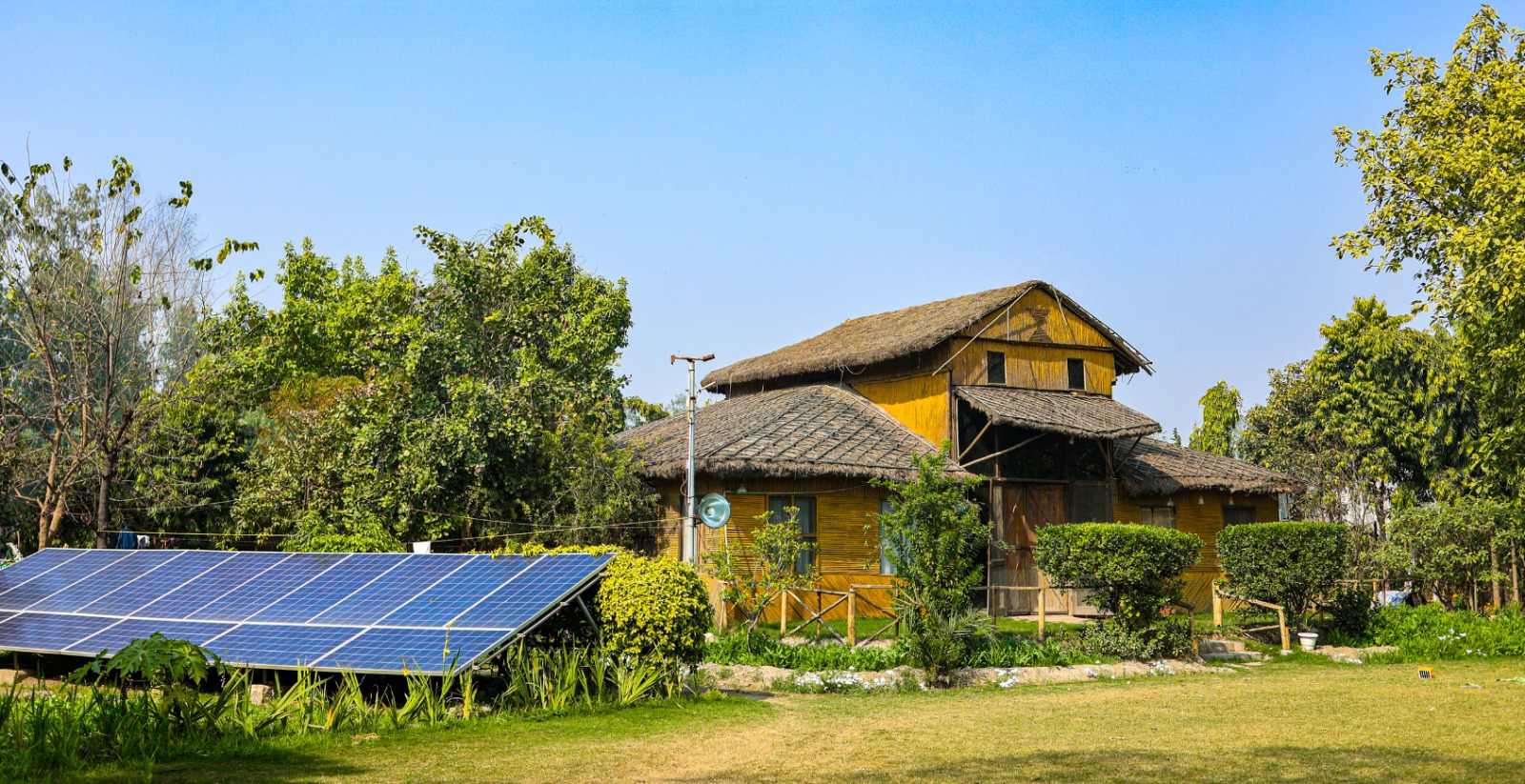
In contrast, sustainable farmhouses in Sector 151 Noida are designed around horizontal living spaces where walking, gardening, outdoor routines, and open-air leisure are part of the home itself. This structural difference is central to why active living is easier to sustain in such environments.
Why Low-Density Living Supports Health Across Life Stages
One of the defining features of sustainable farmhouses in Sector 151 Noida is low residential density. This has implications far beyond aesthetics.
Low-density environments typically allow:
- Wider internal pathways and walkable layouts
- Reduced noise and visual congestion
- Better air circulation
- More usable green and open space per household
Urban health studies increasingly highlight that low-density, well-planned residential areas support more consistent physical activity and better mental well-being than overcrowded neighbourhoods
This is why sustainable farmhouses in Sector 151 Noida, appeal to families thinking beyond immediate comfort—especially those planning for ageing parents, growing children, or extended stays away from city centres.
The Role of Green Space in Everyday Wellbeing
Green space is often marketed as a luxury feature. In reality, it is increasingly understood as functional infrastructure for health.
Research across urban planning and public health shows strong associations between access to green spaces and:
- Increased walking and light activity
- Reduced stress markers
- Improved mood and cognitive restoration
- Greater likelihood of outdoor social interaction
While green space alone does not guarantee health, it lowers the barrier to healthy behaviour.
This insight is critical to understanding the appeal of sustainable farmhouses in Sector 151 Noida. These are not homes where greenery is ornamental. In many cases, it is usable land—for walking, sitting, gardening, growing food, or simply being outdoors without planning.
Systematic reviews on green space and wellbeing continue to reinforce this relationship.
Air Quality Awareness and Lifestyle Decisions
Air quality has become a daily concern for families across NCR. While it is important to avoid exaggerated claims, it is equally important to acknowledge that people now factor air exposure into residential decisions.
Government platforms such as the Central Pollution Control Board (CPCB) provide real-time AQI data across India.
What many families seek is not perfection, but relative improvement through environment—less congestion, more open land, and fewer high-density emission sources nearby.
This is one reason sustainable farmhouses in Sector 151 Noida are increasingly seen as lifestyle buffers—spaces where outdoor activity feels more feasible, and time spent outside does not feel constantly compromised.
Active Living Across Generations: Why Space Matters More Than Amenities
A major advantage of sustainable farmhouses in Sector 151 Noida is how they accommodate different age groups simultaneously.
For Seniors
Flat walking paths, open courtyards, sunlight exposure, and calm surroundings support gentle mobility and routine movement—critical for ageing populations.
For Children
Outdoor play, unstructured exploration, and physical freedom are increasingly rare in dense cities. Farmhouse environments restore this naturally.
For Working Adults
Short outdoor breaks, walking meetings, evening strolls, and gardening become natural stress regulators rather than weekend luxuries.
This multigenerational adaptability is why sustainable farmhouses in Sector 151 Noida are often chosen not just as second homes, but as long-term family anchors.
Sustainability Beyond the Label: What Actually Matters
The word “sustainable” is often overused. For sustainable farmhouses in Sector 151 Noida, sustainability must translate into operational reality, not branding.
Key indicators include:
Water Management
Rainwater harvesting, efficient irrigation, and responsible groundwater usage are essential for long-term viability.
Soil and Landscape Planning
Healthy soil, native plantation, organic inputs, and shaded landscapes improve usability across seasons.
Energy Conscious Design
Natural light, cross-ventilation, and reduced dependency on artificial cooling improve comfort and efficiency.
Waste and Maintenance Systems
Clear segregation, composting practices, and structured upkeep protect community standards over time.
The strongest sustainable farmhouses in Sector 151 Noida are those where sustainability reduces effort rather than adding complexity.

Food, Soil, and the Quiet Return to Everyday Self-Reliance
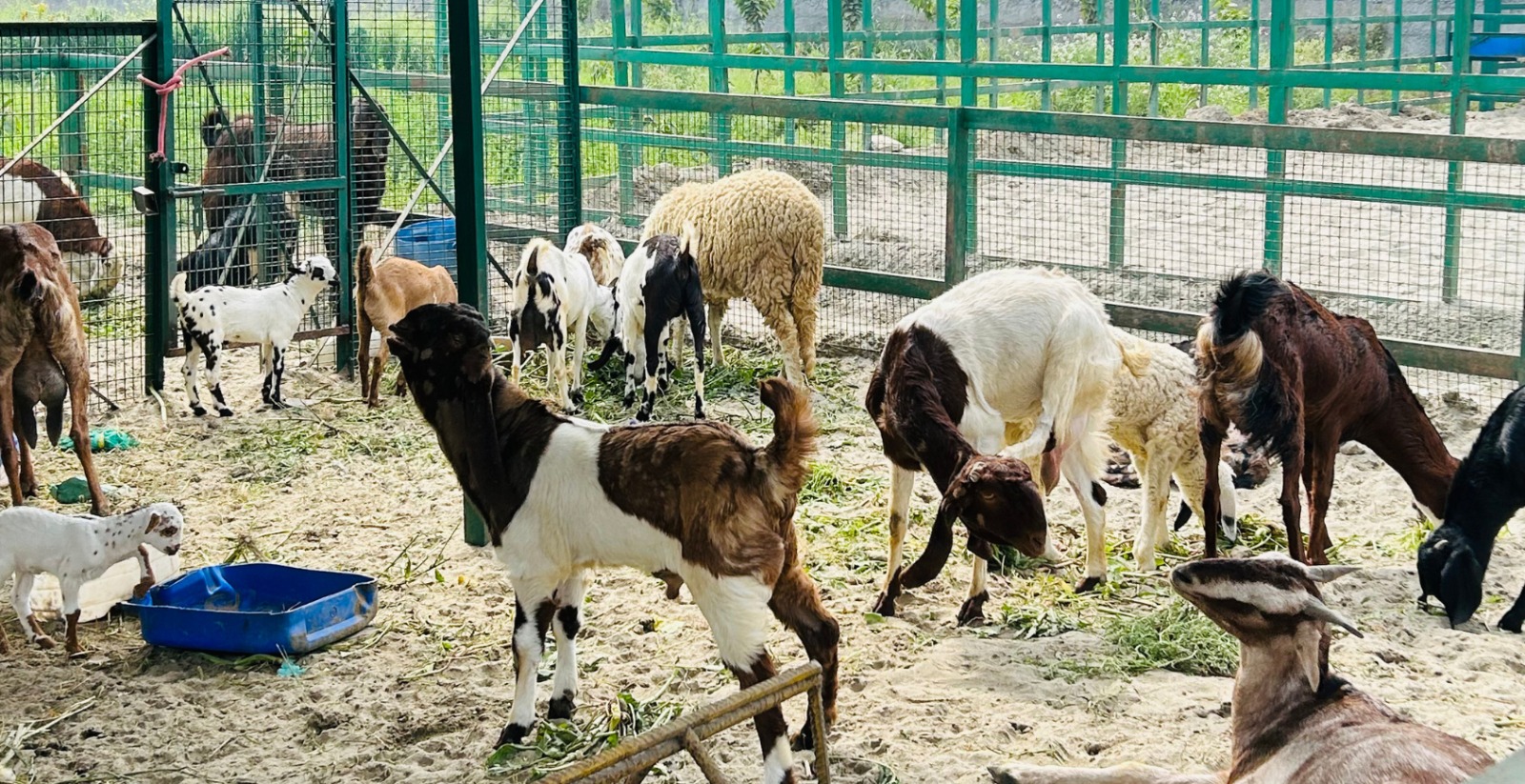
One of the most underestimated benefits of sustainable farmhouses in Sector 151 Noida is the reconnection with food systems.
Even limited backyard growing:
- Encourages outdoor activity
- Builds awareness of seasonal eating
- Reduces dependence on ultra-processed food
- Creates meaningful engagement for children and seniors
This is not about self-sufficiency in an extreme sense. It is about reintroducing rhythm and responsibility into daily life.
For many families, this quiet lifestyle shift is more valuable than any luxury feature.
Long-Term Perspective: Why Investors Are Paying Attention
From an investment standpoint, sustainable farmhouses in Sector 151 Noida represent a different asset philosophy.
Rather than short-cycle speculation, they appeal to:
- Long-horizon capital
- Lifestyle-backed land value
- Intergenerational ownership
- Tangible use alongside appreciation
Land-centric assets with lifestyle relevance often hold emotional and functional value even during market fluctuations. This is why seasoned investors increasingly view sustainable farmhouses in Sector 151 Noida as stability-oriented holdings rather than purely transactional real estate.
A Midway Reflection: Community Models Emerging in Sector 151
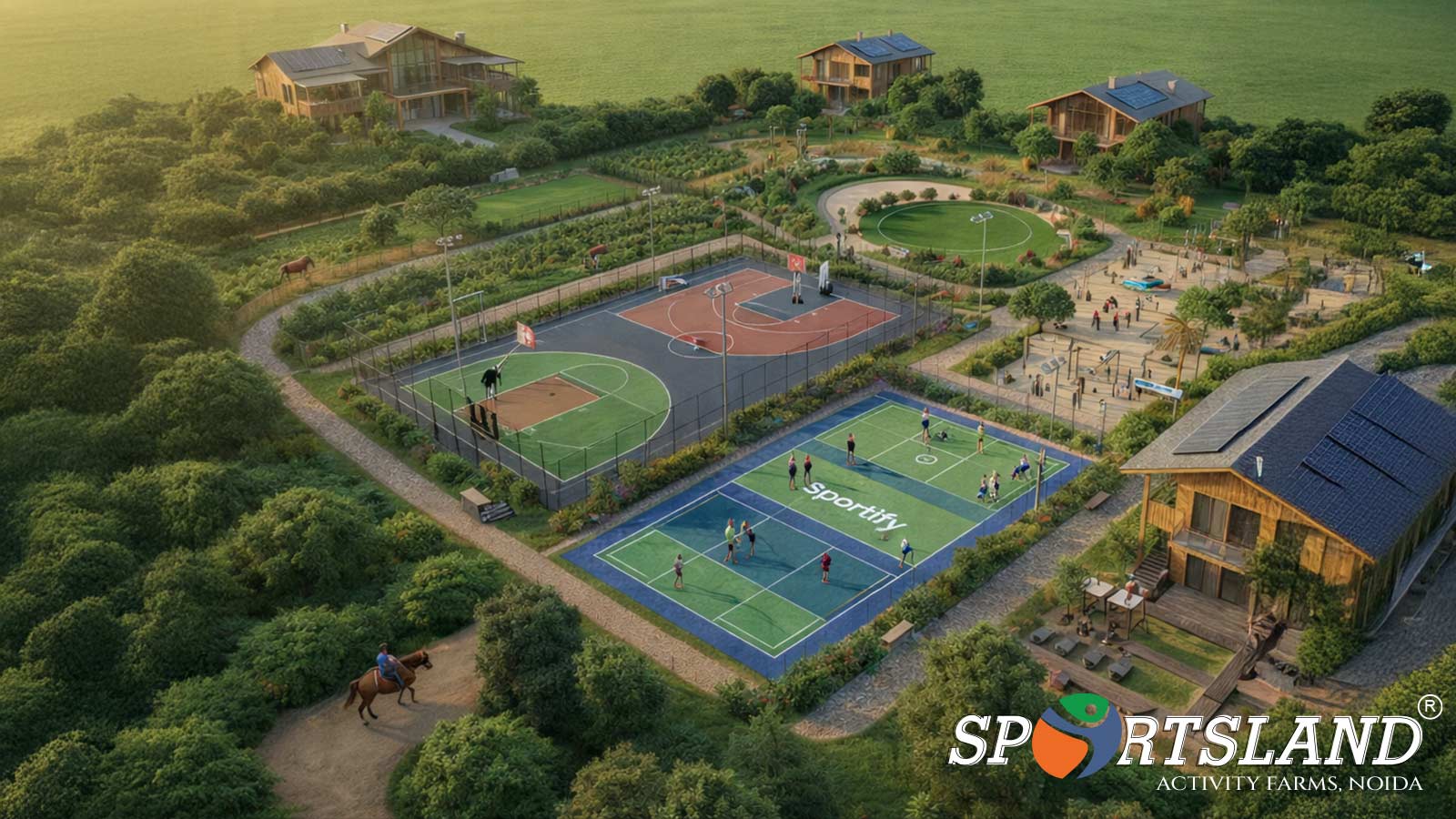
As interest in sustainable farmhouses in Sector 151 Noida grows, certain community-led developments have begun aligning design, ecology, and lifestyle planning more intentionally. One such example often referenced in discussions around active living and green community design is Sportsland Activity Farms, which integrates open-air movement, sports-oriented layouts, and nature-led planning into its residential framework—illustrating how this housing model can evolve beyond standalone plots.
Choosing Wisely: A Practical Evaluation Framework
Before committing to sustainable farmhouses in Sector 151 Noida, long-term thinkers often evaluate:
- Usability of outdoor space across seasons
- Internal walkability and safety
- Maintenance governance and standards
- Water and soil resilience
- Accessibility without over-urbanisation
- Community culture and rules
- Long-term adaptability for ageing residents
These criteria matter more than short-term visual appeal.
FAQ
1. What does “active living” actually mean in the context of sustainable farmhouses in Sector 151 Noida?
Active living refers to integrating physical movement into daily routines rather than relying solely on structured exercise. In the context of sustainable farmhouses in Sector 151 Noida, active living includes walking within the community, gardening, outdoor leisure, natural play for children, and reduced sedentary time. According to the World Health Organization, consistent low-to-moderate physical activity spread across the day is one of the most effective ways to support long-term health, particularly as people age.
2. Why are sustainable farmhouses in Sector 151 Noida being preferred over high-density urban housing?
The preference for sustainable farmhouses in Sector 151 Noida is largely driven by lower density, greater access to open land, and environments that support daily outdoor activity. Urban planning research consistently shows that low-density, well-designed residential areas encourage more walking, reduce stress, and improve overall quality of life compared to overcrowded neighbourhoods. This shift is structural, not trend-based.
3. How do sustainable farmhouses in Sector 151 Noida support healthy ageing?
Healthy ageing depends heavily on mobility, sunlight exposure, and reduced environmental stress. Sustainable farmhouses in Sector 151 Noida typically offer flat walking paths, outdoor seating areas, gardens, and quieter surroundings, all of which support gentle daily movement for seniors. Public health studies confirm that environments enabling regular low-impact movement significantly reduce age-related mobility decline.
4. Is green space really linked to better lifestyle habits?
Yes. Multiple studies indicate strong associations between access to green spaces and increased physical activity, improved mental well-being, and reduced stress. Sustainable farmhouses in Sector 151 Noida provide functional green areas—lawns, gardens, walking loops—that make outdoor activity more likely and more enjoyable. Green space works as a behavioural enabler rather than a decorative feature.
5. How does air quality influence the appeal of sustainable farmhouses in Sector 151 Noida?
While no residential location can control regional air conditions entirely, people increasingly choose sustainable farmhouses in Sector 151 Noida for their relatively open layouts, reduced traffic congestion, and higher green cover. These factors can make outdoor activity more comfortable and feasible. Families often use government AQI platforms to track exposure and make informed lifestyle choices.
6. What makes a farmhouse truly “sustainable” beyond marketing claims?
For sustainable farmhouses in Sector 151 Noida, sustainability should be visible in practical systems: water management, soil health, landscape planning, natural ventilation, and waste handling. Government and global sustainability frameworks emphasise that true sustainability reduces long-term resource strain rather than increasing operational complexity.
7. Are sustainable farmhouses in Sector 151 Noida suitable for families with children?
Yes. One of the strongest advantages of sustainable farmhouses in Sector 151 Noida is the opportunity for daily outdoor play, exploration, and physical development. Child development research consistently highlights the importance of unstructured outdoor activity for cognitive and physical growth—something increasingly difficult to access in dense urban housing.
8. How does everyday food growing add value to sustainable farmhouse living?
Small-scale food growing—such as kitchen gardens—encourages outdoor time, light physical activity, and awareness of seasonal eating. In sustainable farmhouses in Sector 151 Noida, this practice often becomes part of daily life rather than a hobby. Agricultural and nutrition studies link such engagement with healthier dietary habits and improved mental wellbeing.
9. From an investment perspective, why are sustainable farmhouses in Sector 151 Noida attracting long-term capital?
Long-term investors often value assets that combine land ownership with lifestyle relevance. Sustainable farmhouses in Sector 151 Noida offer tangible use, intergenerational appeal, and resilience against short-term market volatility. Economic research suggests that land-based assets with real utility tend to retain value across cycles, particularly when aligned with demographic and lifestyle shifts.
10. What should buyers evaluate before choosing sustainable farmhouses in Sector 151 Noida?
Before investing in sustainable farmhouses in Sector 151 Noida, buyers should assess long-term usability rather than short-term aesthetics. Key factors include water security, soil quality, community maintenance standards, walkability, seasonal comfort, and governance structure. Planning authorities and urban research bodies consistently advise evaluating environmental resilience and infrastructure sustainability for long-term residential value.
Why This Shift Is Structural, Not Trend-Driven
Real estate trends tend to announce themselves loudly—through marketing language, price spikes, and short-lived enthusiasm. Structural shifts, however, move quietly. They take shape over years, often driven by demographic realities, public health data, economic recalibration, and changes in how people live and work. The growing interest in sustainable farmhouses in Sector 151 Noida belongs firmly to the second category.
This shift is not being led by impulse buyers or speculative demand. It is being shaped by individuals and families who think in decades—those who plan for ageing, succession, health resilience, and capital preservation. Several long-term forces are converging to make sustainable farmhouses in Sector 151 Noida increasingly relevant.
1. Demographic Maturity and the Longevity Lens
India’s population is ageing, and with that comes a deeper awareness of how environments influence long-term mobility, independence, and wellbeing. Global health research consistently highlights that environments enabling regular, low-impact movement and outdoor exposure significantly improve quality of life as people age.
Sustainable farmhouses in Sector 151 Noida respond to this reality by offering space, walkability, sunlight, and calm—factors that cannot be retrofitted into high-density housing later in life.
2. Work Has Decoupled from Geography
Remote and hybrid work models are no longer exceptions. For many senior professionals, consultants, entrepreneurs, and policymakers, daily presence in a central business district is no longer mandatory. This decoupling has shifted residential priorities from proximity to offices toward environments that support focus, health, and balance.
As a result, sustainable farmhouses in Sector 151 Noida are being evaluated not as weekend retreats, but as serious long-stay or hybrid living options—places where professional productivity and personal wellbeing can coexist.
3. Health Is Now Viewed as an Asset, Not an Afterthought
Public health frameworks increasingly emphasise prevention over intervention. Regular physical activity, reduced sedentary behaviour, access to green space, and cleaner everyday environments are now recognised as foundational to long-term health.
This mindset has changed how people evaluate homes. Sustainable farmhouses in Sector 151 Noida are seen as environments that lower the effort required to live well by embedding movement and outdoor time into daily routines rather than demanding discipline.
4. Capital Is Becoming More Patient
Among seasoned investors and family offices, there is a growing preference for assets that offer use-value alongside appreciation. Land-centric, lifestyle-backed assets—particularly those with intergenerational relevance—are increasingly favoured over purely transactional holdings.
Economic research consistently shows that land assets with real utility and long-term relevance tend to demonstrate resilience across market cycles.
This is why sustainable farmhouses in Sector 151 Noida are being considered not just as real estate, but as stores of lifestyle value—places that remain meaningful even when market conditions fluctuate.
5. Planning Philosophy Is Slowly Catching Up
Urban planning bodies globally are acknowledging the limits of hyper-density. Concepts such as low-rise development, walkable communities, and integrated green space are being revisited as essential to urban resilience.
Within this broader planning evolution, sustainable farmhouses in Sector 151 Noida represent an early alignment with future-forward residential thinking—where space, ecology, and human scale matter as much as connectivity.
Taken together, these forces explain why this shift is not temporary. The growing preference for sustainable farmhouses in Sector 151 Noida is a rational response to long-term social, economic, and health realities—not a passing lifestyle experiment.
Redefining Success Through Space and Time
For much of modern history, success was measured vertically—higher floors, faster lives, tighter schedules, and constant motion. Homes were symbols of achievement, but often poor supporters of everyday living. That definition is now being quietly rewritten.
Today, success is increasingly measured horizontally:
- Do you have space to move without planning it?
- Can your children play outdoors daily?
- Can your parents walk safely and independently?
- Does your home restore energy instead of consuming it?
These questions sit at the heart of why sustainable farmhouses in Sector 151 Noida are gaining thoughtful attention.
What makes these environments powerful is not extravagance, but ease. Ease of movement. Ease of breathing. Ease of routine. Over time, these small advantages compound into something far more valuable than convenience—they compound into wellbeing.
Homes rooted in land and nature also offer something rare in modern life: continuity. They become places where generations overlap, where memories are layered rather than replaced, and where time feels less compressed. This is why many families view sustainable farmhouses in Sector 151 Noida as legacy assets—not because they are grand, but because they endure.
Within this broader landscape, certain community-led developments have begun to translate these principles into lived reality. Sportsland Activity Farms, for instance, reflects this philosophy through an emphasis on open-air movement, green planning, and everyday activity as part of residential life—illustrating how structured communities can still preserve space, ecology, and long-term thinking.
As India’s residential future evolves, the homes that will matter most will not be the ones that chase trends, but the ones that quietly support life—year after year, generation after generation. In that sense, sustainable farmhouses in Sector 151 Noida are less about escaping the city and more about returning to balance.
They remind us that real success is not how fast we live, but how well our spaces allow us to live—over time.