Farmhouse With Outdoor Space in Noida: The Science of Green Play vs Screen Time for Kids
If you’re a parent in NCR today, you’ve probably noticed a quiet shift in childhood. Play is no longer something that “just happens.” It’s planned, scheduled, and often squeezed into a tight routine. Meanwhile, screens—phones, tablets, TVs, laptops—have become the easiest default for learning, entertainment, and even peace at home. None of this makes anyone a “bad parent.” It simply reflects the reality of modern living.
But here’s the practical question many families are now asking: What happens when screens don’t just add to a child’s day, but replace the parts that made childhood physically active and emotionally expansive? That’s where the idea of a farmhouse with outdoor space in Noida begins to feel less like a luxury concept and more like a lifestyle tool—especially for families who want to rebuild outdoor play into a child’s routine in a way that feels natural, enjoyable, and repeatable.
This blog is not about blaming technology. Screens are part of education, communication, and the world in which kids are growing up. Instead, this is a fact-based look at what research and public health guidance say about movement, outdoor time, screen habits, and how green play can influence physical health, sleep, attention, and even eyesight. Along the way, we’ll explore what “good outdoor space” actually means for kids, how families can build a weekend rhythm that sticks, and why many parents are searching for a farmhouse with outdoor space in Noida as a practical solution to a very modern problem.
The real issue isn’t screens—it’s what screens replace
It’s easy to discuss screen time as a number—two hours, three hours, six hours—but the bigger issue is often displacement. A day has only so many hours. When a child’s leisure time shifts heavily toward screens, it often replaces:
- Unstructured outdoor play (running, climbing, chasing, exploring)
- Daylight exposure and time in the open air
- Physical movement that builds stamina, coordination, and strength
- Social play that naturally teaches negotiation, sharing, patience, and resilience
- “Boredom time” that fuels imagination and creativity
Even in families that care deeply about health, screen time can creep up because it’s convenient and culturally normal. But many parents eventually notice a pattern: when kids spend long periods indoors, they may become more restless, less physically engaged, and harder to settle into sleep. This is one reason why families begin actively looking for environments that make outdoor play easier—like a farmhouse with outdoor space in Noida, where movement doesn’t have to be planned like an “activity,” because it becomes the backdrop of the day.
Importantly, the American Academy of Pediatrics (AAP) recommends focusing not only on time limits but also on content quality, boundaries, and family routines—including creating a family media plan. That approach encourages balance, not fear. You can explore AAP’s guidance.
What health bodies actually recommend for children (the basics most families miss)
When families ask, “How much movement does my child really need?” the answer is surprisingly clear.
The World Health Organization (WHO) provides global guidance on physical activity and sedentary behaviour for children and adolescents. The message is consistent: children should move more and sit less, and activity should be part of daily life—not occasional bursts. WHO guidance.
The US Centers for Disease Control and Prevention (CDC) offers a straightforward benchmark for children aged 6–17: at least 60 minutes of moderate-to-vigorous physical activity daily. This can include running, cycling, sports, fast walking, and active play. CDC guidance.
This isn’t a “fitness culture” recommendation. It’s a preventive health standard linked to long-term outcomes: cardiovascular health, stronger bones, healthier body composition, improved mood, better motor skills, and stronger self-confidence.
In a typical weekday routine—school, homework, commuting, tuition, indoor leisure—many children struggle to consistently meet this 60-minute benchmark. That’s why a farmhouse with outdoor space in Noida can act as a practical environment shift: it doesn’t force children to “exercise.” It simply makes movement easy, because open space invites activity the way a screen invites scrolling.
Green play and the brain: what research suggests about attention, mood, and self-regulation
Parents often describe a simple observation: When kids spend more time outdoors, they seem calmer and more focused. While individual experiences vary, research is increasingly exploring how nature exposure can affect cognition.
A meta-analysis examining nature-based interventions in children and adolescents found positive associations with outcomes related to attention and executive functions—skills that influence planning, self-control, switching tasks, and resisting distractions. While effects can be modest and depend on context, the overall direction supports a valuable idea: exposure to nature and green spaces may support mental performance and emotional regulation. You can explore this research.
Why might this happen?
- Outdoor environments offer varied stimuli without the intense, fast-paced attention capture of apps and games.
- Natural settings may reduce mental fatigue and help restore focus.
- Movement increases blood flow, improves mood-related neurochemistry, and reduces stress.
This is where the design of outdoor environments matters. A farmhouse with outdoor space in Noida is not useful simply because it’s “outside”—it’s useful if it allows children to explore, move, and engage in activities that feel meaningful: running, gardening, climbing, cycling, helping adults with small outdoor tasks, or playing sports.
Also worth noting: social dynamics outdoors tend to be richer. When children play together in open spaces, they negotiate rules, deal with conflict, cooperate, and develop leadership naturally. Indoors, entertainment is often individualized; outdoors, play becomes shared.

The sleep connection: why outdoor time often improves bedtime without fights
Sleep is one of the first areas parents notice changing when a child’s day becomes more outdoor-oriented.
The relationship between screens and sleep is complex and varies by child. But many experts emphasize that screens late in the evening can disrupt routine for some children, especially if the content is stimulating or if screen time replaces wind-down habits. That’s part of why the AAP recommends a structured family media plan rather than letting screens spill across every part of the day.
Outdoor time can support sleep in multiple ways:
- Daylight exposure helps regulate circadian rhythms (the body’s sleep-wake cycle).
- Physical activity increases healthy fatigue.
- Reduced evening restlessness comes from a more complete day—movement + play + social engagement.
- Natural wind-down happens more easily after active outdoor hours.
If a child spends a weekend at a farmhouse with outdoor space in Noida, the bedtime shift often comes from the day itself: outdoor play makes sleep feel like the natural conclusion, not a forced command.
The American Academy of Child and Adolescent Psychiatry (AACAP) also provides practical family guidance around screen use that can help reduce conflict, especially when paired with outdoor routines.
Eyesight and myopia: why ophthalmologists keep pointing to outdoor time
One of the most compelling, high-authority reasons parents talk about outdoor time today is myopia (short-sightedness).
The American Academy of Ophthalmology (AAO) includes outdoor time and lifestyle balance as part of broader myopia control discussions for children. Outdoor exposure is not presented as a “magic cure,” but it is frequently discussed as a helpful strategy to reduce risk and slow progression when combined with clinical care, when needed. AAO overview.
Evidence reviews have found that more outdoor time is associated with reduced risk of myopia onset and may help with myopic shift, although outcomes depend on multiple factors (genetics, near work, environment, and more). One evidence-based article in the journal Ophthalmology (AAO journal) can be explored.
From a practical parenting perspective, the point is simple: children’s eyes benefit from varied distances and daylight exposure, which outdoor environments naturally provide. Indoor screen use often involves prolonged near focus, which is why balance and breaks matter.
This is another reason the search for a farmhouse with outdoor space in Noida has grown in relevance: it enables a day that naturally includes daylight, movement, and visual variety—without parents constantly negotiating “put the phone down.”
What actually counts as “good outdoor space” for children?
Not all outdoor spaces support meaningful play. A parking lot is outdoors. A balcony is outdoors. But neither is the same as a space where a child can experience “green play.”
When families consider a farmhouse with outdoor space in Noida, it helps to understand what features truly matter for children:
1) Space for free movement (not just sitting)
Children need room for spontaneous running, jumping, and games without feeling restricted or “in the way.”
2) Natural textures and sensory elements
Grass, soil, plants, uneven surfaces, and trees offer sensory experiences that indoor spaces cannot replicate. Sensory play supports emotional regulation and learning.
3) Variety zones
A well-used outdoor environment often includes:
- A running/playing patch
- A shaded sit-out or reading corner
- A walking loop or pathway
- A small sports area (badminton, football, etc.)
- A gardening corner (even simple planting is powerful)
4) Safety + visibility
Parents relax when they can see kids playing without hovering constantly.
5) A culture of outdoor use
The most important factor is consistency. Outdoor spaces matter when families actually spend time there.
UNICEF also highlights the importance of outdoor play for children’s physical and mental development and offers helpful ideas to support it.
Research on outdoor environments and child outcomes continues to grow. For deeper reading on how outdoor play environments connect with child well-being, this systematic review can be useful.
Green play vs screen time: building a balanced routine without turning home into a battlefield
Parents often feel stuck between two extremes:
- “No screens at all” (unrealistic for most families)
- “Unlimited screens” (which often becomes a habit loop)
A better approach is designing the day so screens don’t become the default.
The key is not punishment. It’s rhythm.
The outdoors-first rule (simple, workable)
Instead of arguing about screen time, create a basic order:
- Outdoor time comes first
- Screens come after outdoor play and responsibilities
- Evening screens are limited, especially close to bedtime
This approach aligns with the AAP’s focus on creating a family media plan.
“When families create access to consistent outdoor space, whether through parks, community areas, or a farmhouse with outdoor space in Noida, this outdoors-first rhythm becomes far easier.”
The “Weekend Reset Blueprint”: a practical plan that actually sticks
If there’s one section you can save, it’s this one. Many families don’t need a major lifestyle overhaul. They need a repeatable template—something that creates outdoor time without constant planning.
Here’s a practical blueprint that works well in a setting like a farmhouse with outdoor space in Noida:
Step 1: The 3-hour outdoor block (in two parts)
Morning (90 minutes): Active play
- Cycling
- Running games
- Badminton/football
- Nature walk
- Simple obstacle play
Late afternoon (90 minutes): Mixed outdoor time
- Gardening (watering, planting, harvesting basics)
- Animal interaction (if present)
- A slower walk + conversation
- Outdoor chores that children enjoy (small, safe tasks)
Even if you can’t do three hours, the principle matters: make outdoor play long enough for the child to fully “settle into it.” Many kids resist being outdoors for the first 10–15 minutes, then become absorbed once play begins.
Step 2: Add one “skill game” (20–30 minutes)
This could be:
- Toss/catch
- Skipping
- Balance games
- Simple sport drills
- Family relay races
This builds coordination and confidence.
Step 3: Screens become an evening option, not a default
When children feel physically satisfied and socially connected, they are far less likely to fight for screens.
For families that want an India-context reference for youth fitness considerations, Fit India’s youth fitness protocols can be a useful resource.
Step 4: Repeat the rhythm every weekend
This is where real change happens: children begin to expect outdoor play as normal.
Over time, the child’s identity quietly changes from:
“I need a screen to feel engaged.”
to
“I feel good when I move and play.”
Why this matters beyond childhood: the habits that quietly shape adulthood
The most important reason to take outdoor play seriously isn’t just today’s mood or today’s bedtime. It’s habit formation.
Children who grow up with consistent physical activity and outdoor play are more likely to:
- maintain active lifestyles as adults
- experience lower lifestyle disease risk
- develop better emotional resilience
- build confidence through physical competence
- create healthier relationships with technology
This is why a farmhouse with outdoor space in Noida can serve a deeper purpose for families: not as a “weekend luxury,” but as a structured environment where active habits become normal again.
And while public health guidance, like the WHO’s, focuses broadly on physical activity and reducing sedentary time, families can translate that guidance into lived routines through environmental design. WHO guidance again.
FAQs
1) How much physical activity do children actually need every day?
According to the Centers for Disease Control and Prevention (CDC), children aged 6–17 should get at least 60 minutes of moderate-to-vigorous physical activity daily. This includes running, cycling, active sports, and energetic play. Regular movement supports heart health, bone strength, mental well-being, and healthy growth patterns.
The World Health Organization (WHO) also recommends reducing sedentary time and incorporating movement throughout the day, not just in short bursts.
For families who struggle to fit daily movement into urban schedules, spending weekends at a farmhouse with outdoor space in Noida can help children naturally reach activity benchmarks through open-air play, walking trails, cycling paths, and sports areas.
2) Is screen time always harmful for children?
Screen time itself is not automatically harmful. The American Academy of Pediatrics (AAP) emphasizes balance rather than strict prohibition. What matters most is:
- The type of content
- The timing (especially before bedtime)
- Whether screen time replaces sleep, movement, or family interaction
AAP encourages families to create a Family Media Plan to structure screen habits without turning it into a constant battle.
A weekend routine at a farmhouse with outdoor space in Noida often reduces excessive screen reliance simply because outdoor alternatives become more engaging and accessible.
3) Can outdoor time really improve a child’s focus and attention?
Research increasingly suggests that exposure to green environments may support improvements in attention and executive functioning in children. A meta-analysis examining nature-based interventions found positive associations with attention-related outcomes.
Natural settings may reduce mental fatigue and provide restorative cognitive benefits compared to overstimulating digital environments.
Spending regular time at a farmhouse with outdoor space in Noida allows children to engage in varied outdoor stimuli—trees, open fields, natural textures—which can support balanced cognitive development.
4) Does outdoor time help reduce the risk of myopia (short-sightedness)?
Yes, increased outdoor time has been associated with a reduced risk of developing myopia in children. The American Academy of Ophthalmology (AAO) includes outdoor exposure as part of myopia management discussions.
Studies suggest that daylight exposure and varied visual distances outdoors may help delay or reduce the onset of myopia.
For children who spend long hours on near-focused tasks (books, screens), time at a farmhouse with outdoor space in Noida offers visual relief through open-distance viewing and natural light exposure.
5) How does outdoor play support emotional well-being in children?
Outdoor play encourages social interaction, cooperative games, risk assessment, and independent decision-making. UNICEF highlights that outdoor play supports physical, mental, and emotional health by promoting resilience and social skills.
When children regularly visit a farmhouse with outdoor space in Noida, they engage in unstructured play that strengthens confidence, independence, and emotional regulation.
6) What is better for children: structured sports or free outdoor play?
Both are valuable. Structured sports improve discipline, teamwork, and skill development. Free play, on the other hand, fosters creativity, problem-solving, and social negotiation.
A balanced outdoor setting—such as a farmhouse with outdoor space in Noida—can accommodate both. Open lawns allow free play, while dedicated areas can support sports like badminton, football, or cricket.
The goal is consistency rather than perfection.
7) Can outdoor activity improve sleep patterns in children?
Outdoor activity contributes to healthier sleep by:
- Increasing physical fatigue
- Supporting circadian rhythm through daylight exposure
- Reducing pre-bedtime screen stimulation
While sleep is influenced by many factors, children who spend active days outdoors often fall asleep more easily.
Families who integrate regular visits to a farmhouse with outdoor space in Noida into their weekend routine frequently notice smoother bedtime transitions due to increased physical engagement during the day.
8) How much outdoor time is ideal on weekends?
There is no universal number, but many child health experts suggest aiming for 2–3 hours of cumulative outdoor activity on non-school days. This allows children to fully immerse themselves in physical play and exploration.
A farmhouse with outdoor space in Noida makes it easier to reach this threshold without planning structured activities every hour.
For additional youth fitness guidance in the Indian context, refer to Fit India protocols.
9) What features should parents look for in a farmhouse with outdoor space in Noida for children?
When evaluating a farmhouse with outdoor space in Noida, parents should consider:
- Safe and visible open lawns
- Shaded areas for rest
- Walking paths or cycling space
- Natural greenery (trees, plants)
- Designated play zones
- Low traffic and controlled access
Outdoor design influences how frequently children use the space. Research suggests that environmental quality and diversity of outdoor features impact children’s engagement levels.
10) Can outdoor play reduce lifestyle disease risks later in life?
Physical inactivity in childhood is associated with higher risks of obesity, cardiovascular disease, and metabolic conditions later in life. WHO emphasizes that increasing physical activity early helps build lifelong healthy habits.
A lifestyle that includes regular movement—such as spending time at a farmhouse with outdoor space in Noida—supports long-term preventive health outcomes by embedding active routines during formative years.
Childhood today is not lacking intelligence, opportunity, or exposure. What it is quietly lacking in many cases is space—space to run without being told to slow down, space to fall and get up, space to negotiate rules without adult mediation, space to feel sunlight on the face instead of LED light on the eyes. The research is clear that children need movement. Public health bodies recommend daily physical activity. Ophthalmologists discuss outdoor time in relation to myopia. Pediatric experts emphasize balanced screen routines. None of these recommendations are extreme. They all point toward the same principle: children thrive when their days include consistent, meaningful outdoor engagement.
This is not about eliminating screens. Technology is part of education, creativity, and the modern world. The goal is balance. But balance rarely happens accidentally. It is shaped by routine, and routine is shaped by environment. When outdoor space is limited, play becomes scheduled. When outdoor space is abundant and accessible, play becomes spontaneous again.
Over time, these small shifts compound. A child who runs freely builds stamina. A child who plays outdoors with peers develops social resilience. A child who experiences daylight and movement sleeps better. A child who spends time in green surroundings learns to associate relaxation with nature rather than only with digital distraction. These are not dramatic overnight transformations. They are steady, long-term habit formations that quietly influence adolescence and adulthood.
For families seeking to restore that rhythm, the question is not whether screens will disappear—they won’t. The question is whether outdoor time can reclaim its rightful place in the daily and weekly pattern of life. A farmhouse with outdoor space in Noida can serve as one practical way to make that rhythm achievable—not through strict rules, but through environment-led living where movement feels natural again.
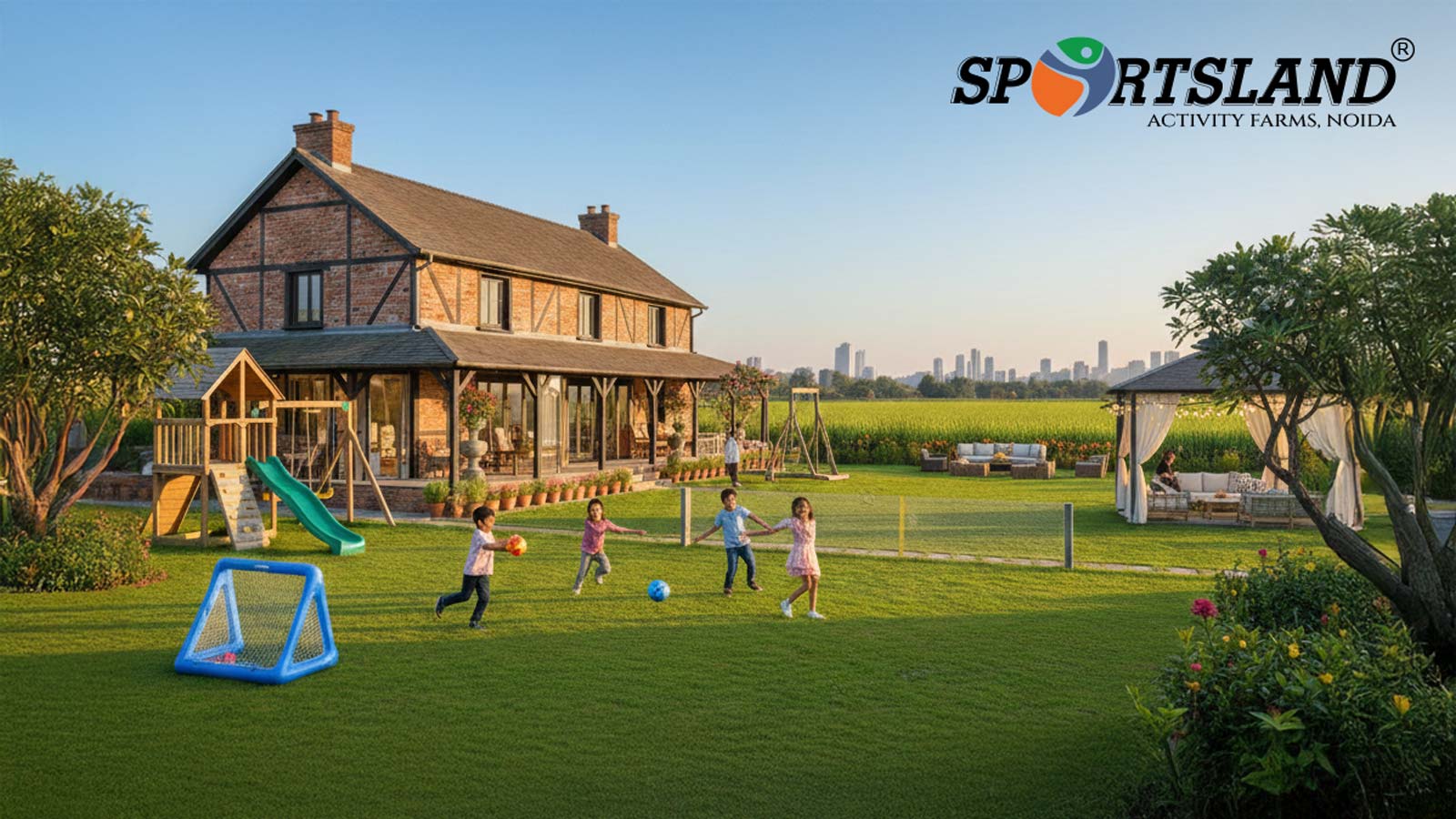
For those exploring greener, open-air community lifestyles near NCR, Sportsland Activity Farms represents one such setting where outdoor-first living is not an afterthought, but part of the foundation.