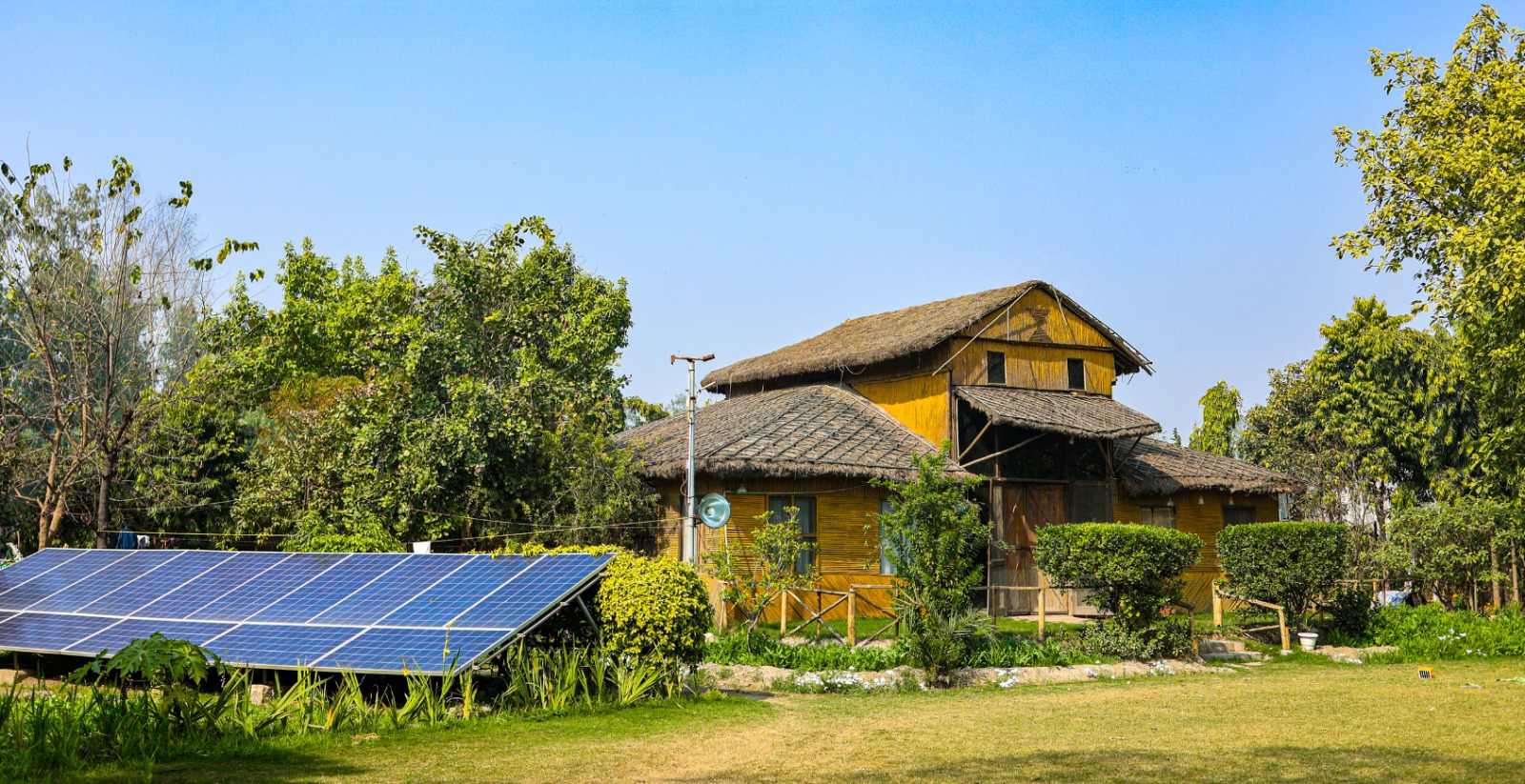
Organic Farming in Sector 151 Noida: How Soil-Based Living Is Reducing Urban Lifestyle Disorders in NCR
There was a time when growing your own food was not a lifestyle choice—it was simply how life worked. Today, in the fast-moving ecosystem of Delhi–NCR, that rhythm has changed. Food is delivered, time is compressed, and movement is often limited to what fits between meetings. Yet, quietly and steadily, a renewed interest in soil-based living is emerging among senior professionals, entrepreneurs, NRIs, policymakers, and long-term investors.
At the centre of this shift is Organic farming in Sector 151 Noida—not as a trend, not as an aesthetic, and certainly not as a rejection of modernity—but as a rational response to modern living. For many families, Organic farming in Sector 151 Noida represents a structured way to bring balance back into daily routines: healthier food defaults, consistent movement, better stress regulation, and intergenerational engagement.
This article explores Organic farming in Sector 151 Noida, through a research-driven lens. It connects public health data, lifestyle trends, environmental realities, and long-term planning perspectives to explain why soil-based living is increasingly relevant in 2026 and beyond.
No exaggeration. No medical claims. No hard selling. Only a thoughtful, evidence-backed conversation designed for readers who value depth and clarity.
The Urban Health Context: Why Lifestyle Design Matters
Noncommunicable diseases (NCDs) such as diabetes, hypertension, cardiovascular conditions, and obesity are not sudden phenomena. They are cumulative outcomes shaped by diet quality, physical activity, stress exposure, sleep patterns, and environmental context.
The World Health Organization (WHO) identifies insufficient physical activity as one of the leading risk factors for NCDs and highlights the broad physical and mental health benefits of regular movement.
Similarly, WHO emphasizes that healthy diets—rich in fruits, vegetables, and minimally processed foods—are protective against NCD risks.
In urban NCR environments, the challenge is rarely awareness. Most educated households understand nutrition and exercise principles. The issue is environmental design. When daily life revolves around desk work, traffic, digital dependency, and convenience-based food systems, even informed individuals drift toward suboptimal routines.
This is where Organic farming in Sector 151 Noida enters the conversation—not as a health campaign, but as an environmental reset.
Organic farming in Sector 151 Noida alters the physical layout of daily living. It brings food production closer to home, integrates outdoor movement into routine tasks, and reintroduces natural cycles into structured urban lives.
For families and investors evaluating long-term living ecosystems, Organic farming in Sector 151 Noida becomes less about nostalgia and more about strategic lifestyle architecture.
Environment Shapes Behaviour More Than Intention
Behavioural science consistently shows that habits are shaped more by environment than by willpower. People tend to choose what is visible, accessible, and convenient.
If packaged snacks are visible, they are consumed.
If screens are within reach, they are used.
If movement requires scheduling, it is postponed.
But when fresh produce grows outside your door, when walking paths are part of your surroundings, when tending to soil becomes a daily rhythm, the defaults begin to shift.
This is one of the most powerful aspects of Organic farming in Sector 151 Noida: it restructures convenience.
In Organic farming in Sector 151 Noida, the convenient option becomes:
- Checking plants in the morning.
- Harvesting herbs before dinner.
- Spending 15 minutes outdoors in natural light.
- Walking rather than remaining seated.
These actions are not dramatic, but they are consistent. And consistency, over the years, defines outcomes.
For high-net-worth individuals and global families evaluating lifestyle assets, Organic farming in Sector 151 Noida represents something measurable: a system that encourages repeatable healthy behaviour without requiring extreme discipline.
Food Quality: From Supply Chain to Soil
Modern food systems are efficient but distant. Produce often travels long distances, undergoes storage cycles, and passes through multiple handling stages before consumption. This is not inherently negative, but it does disconnect individuals from the food cycle.
Organic farming in Sector 151 Noida shortens that distance.
When families engage in Organic farming in Sector 151 Noida, they experience:
- Greater visibility into how food grows.
- Reduced dependence on highly processed options.
- Increased appreciation for seasonal eating.
- Direct understanding of soil quality and nutrient cycles.
WHO guidance on healthy diets consistently emphasizes increased fruit and vegetable intake as protective against NCD risks.
By making vegetables and herbs physically present in daily life, Organic farming in Sector 151 Noida increases the likelihood that such foods are consumed regularly.
Importantly, this is not about eliminating dining out or rejecting modern food systems. Organic farming in Sector 151 Noida works as a complementary layer—raising the proportion of whole, minimally processed foods within the overall diet.
For decision-makers and investors, this shift is subtle but strategic: dietary quality improves not through restriction, but through proximity.
Movement Without Gym Dependency
Many urban adults attempt to counter sedentary lifestyles with intense weekend workouts. While structured exercise is valuable, WHO underscores that consistent physical activity across the week offers protective benefits against chronic disease.
Organic farming in Sector 151 Noida, embeds movement into daily life in manageable increments:
- Walking between plots.
- Watering and carrying light loads.
- Bending, squatting, and pruning.
- Compost management.
- Harvesting.
This is low-to-moderate intensity movement—precisely the type that can be sustained across decades.
For individuals aged 35 to 75, particularly those balancing professional responsibilities or public life, Organic farming in Sector 151 Noida provides functional movement without requiring gym attendance.
The value lies in repeatability. A 20-minute gardening routine performed five days a week often has more long-term health impact than sporadic, intense workouts.
From a longevity perspective, Organic farming in Sector 151 Noida aligns with evidence-based principles of consistent, moderate activity.
Stress Regulation and Nature Exposure
Chronic stress is increasingly recognized as a systemic issue, affecting sleep, metabolic health, mood stability, and overall resilience.
Research syntheses examining horticultural interventions suggest associations between gardening activities and improvements in psychological well-being indicators.
Additional systematic reviews discuss horticultural therapy in relation to stress markers and mental health outcomes.
While these findings do not imply that gardening replaces medical care, they support the idea that structured engagement with soil and plants can contribute positively to mental well-being.
In Organic farming in Sector 151 Noida, daily soil contact, sunlight exposure, and visible plant growth create grounding experiences.
For senior professionals and policymakers accustomed to high-pressure environments, Organic farming in Sector 151 Noida offers a practical decompression ritual—15 to 30 minutes that shifts the nervous system from cognitive overload to physical engagement.
This is not escapism. It is rhythm restoration.

Air Quality Awareness: A Balanced Perspective
NCR’s air quality fluctuates seasonally. Responsible outdoor living requires data awareness rather than assumption.
The Central Pollution Control Board (CPCB) provides real-time Air Quality Index (AQI) monitoring.
When evaluating Organic farming in Sector 151 Noida, the intelligent approach is flexibility:
- Check AQI before extended outdoor tasks.
- Adjust duration on high-pollution days.
- Prefer lighter activities when air quality dips.
This approach ensures that Organic farming in Sector 151 Noida remains aligned with evidence and safety rather than sentiment.
Balanced decision-making strengthens credibility—particularly among investors and policymakers who prioritize regulatory awareness and environmental data.
Intergenerational Value
One of the overlooked benefits of Organic farming in Sector 151 Noida is intergenerational engagement.
Children exposed to soil-based routines develop:
- Food literacy.
- Patience.
- Ecological awareness.
- Practical responsibility.
Older adults benefit from:
- Light daily activity.
- Structured outdoor time.
- Purpose-driven routines.
Family systems often strengthen around shared cultivation tasks. For NRIs maintaining Indian roots, Organic farming in Sector 151 Noida also offers continuity—a tangible connection to land, seasonality, and heritage.
Investment Logic: Lifestyle Assets vs. Pure Appreciation
For seasoned investors, evaluating Organic farming in Sector 151 Noida may extend beyond lifestyle to asset philosophy.
Traditional real estate decisions focus on:
- Connectivity.
- Infrastructure growth.
- Appreciation cycles.
Lifestyle-integrated ecosystems add another layer:
- Health-oriented design.
- Environmental resilience.
- Community coherence.
- Long-term desirability.
When families actively use land for cultivation, it deepens attachment and utility. Organic farming in Sector 151 Noida becomes not just land ownership but land engagement.
This distinction matters over decades.
Practical Framework for Starting Organic Farming in Sector 151 Noida
For individuals considering Organic farming in Sector 151 Noida, here is a structured starting framework:
Step 1: Begin Small
Start with herbs and seasonal greens. Success builds confidence.
Step 2: Establish a 15–20 Minute Routine
Observation, watering, and minor maintenance.
Step 3: Learn Compost Basics
Closing the organic loop strengthens soil health.
Step 4: Respect Seasonality
Work with nature rather than against it.
Step 5: Track Progress
Small notes on plant growth, yield, and routine consistency enhance learning.
Consistency transforms Organic farming in Sector 151 Noida from novelty to lifestyle.
The Broader Philosophy: Living With Systems, Not Against Them
At its core, Organic farming in Sector 151 Noida is about system alignment.
Modern life has engineered convenience and speed. Soil-based living reintroduces cycles and patience. The two do not need to conflict.
Professionals, NRIs, policymakers, and investors increasingly recognize that health, environmental literacy, and asset longevity are interconnected.
Organic farming in Sector 151 Noida does not criticize urban progress. It complements it.
It does not oppose infrastructure growth. It integrates ecological intelligence within it.
It does not reject technology. It balances it.
Midway through this discussion, it is worth acknowledging that communities such as Sportsland Activity Farms have integrated organic farming as a structural element of their design philosophy—encouraging residents to maintain private green patches and adopt soil-based routines. The relevance of such models lies in their consistency rather than their marketing.
FAQ
1. Is Organic Farming in Sector 151 Noida practical for busy professionals and business owners?
Yes. Organic farming in Sector 151 Noida does not require full-day involvement. Most sustainable soil-based routines can be structured into 15–30 minutes of daily observation, watering, and light maintenance.
The World Health Organization (WHO) emphasizes that even moderate, consistent physical activity spread across the week contributes to improved health outcomes and reduced noncommunicable disease (NCD) risk.
Because Organic farming in Sector 151 Noida integrates light movement into daily living—rather than requiring separate gym time—it is often more sustainable for working professionals and senior decision-makers.
2. Does Organic Farming in Sector 151 Noida, actually improve diet quality?
Research consistently links increased fruit and vegetable consumption with reduced risk of lifestyle-related disorders. The WHO’s updated 2026 guidance on healthy diets highlights the importance of nutrient-dense, minimally processed foods in lowering NCD risks.
When families participate in Organic farming in Sector 151 Noida, fresh produce becomes more visible and accessible. While it does not replace broader dietary planning, it often increases the proportion of whole foods in daily meals.
3. Is Organic Farming in Sector 151 Noida, suitable for senior citizens (60+)?
Yes, provided the design supports ease of movement. Organic farming in Sector 151 Noida, typically involves low-to-moderate physical activity—watering, light pruning, harvesting—which aligns with WHO recommendations for regular movement across age groups.
For older adults, consistency matters more than intensity. Soil-based routines can offer light physical engagement and structured outdoor time without overexertion.
4. How does Organic Farming in Sector 151 Noida contribute to stress management?
Scientific reviews of horticultural interventions suggest associations between gardening activities and improvements in psychological well-being indicators.
Another systematic review discusses horticultural therapy and its relationship with stress indicators.
While Organic farming in Sector 151 Noida is not a medical treatment, structured time with soil, plants, and sunlight can contribute to routine-based stress regulation.
5. Is air quality a concern when practicing Organic Farming in Sector 151 Noida?
Air quality in NCR fluctuates seasonally, and informed outdoor living requires data awareness. The Central Pollution Control Board (CPCB) provides real-time AQI monitoring.
When engaging in Organic farming in Sector 151 Noida, individuals can adjust outdoor activity duration based on AQI levels. Flexible scheduling ensures responsible and balanced participation in soil-based routines.
6. Does Organic Farming in Sector 151 Noida reduce dependence on processed food?
It can contribute to a shift in dietary patterns. WHO highlights that unhealthy diets—particularly those high in processed components—are associated with increased NCD risks.
By growing herbs and vegetables locally, Organic farming in Sector 151 Noida increases the accessibility of fresh ingredients, often leading to a gradual reduction in reliance on packaged alternatives.
7. Is Organic Farming in Sector 151 Noida, environmentally responsible?
Organic farming principles generally emphasize soil health, composting, and reduced synthetic chemical inputs. The Food and Agriculture Organization (FAO) explains that urban and peri-urban agriculture can support sustainable food systems when managed responsibly.
When structured thoughtfully, Organic farming in Sector 151 Noida can align with broader environmental stewardship goals, particularly in water management and waste recycling practices.
8. How much land is required to begin Organic Farming in Sector 151 Noida?
One of the advantages of Organic farming in Sector 151 Noida is scalability. Even modest private green patches can produce herbs and seasonal vegetables.
Research on small-scale horticulture suggests that even limited cultivation areas can positively influence dietary behaviour and food awareness.
Reference discussion on urban horticulture impacts
The emphasis is on consistency rather than scale.
9. Can Organic Farming in Sector 151 Noida enhance intergenerational engagement?
Yes. Soil-based routines encourage children to understand seasonality and food systems while allowing older adults to remain physically and socially active.
Evidence suggests that gardening-based programs can support community cohesion and psychological well-being.
In this way, Organic farming in Sector 151 Noida can serve as a shared family activity rather than an isolated hobby.
10. From an investment perspective, does Organic Farming in Sector 151 Noida add lifestyle value?
While real estate appreciation depends on multiple economic factors, lifestyle-oriented communities often attract long-term demand due to health, environmental, and experiential design elements.
Global discussions around sustainable urban living increasingly recognize green infrastructure and community agriculture as desirable planning components.
For investors, Organic farming in Sector 151 Noida represents not only land utility but also experiential value—an increasingly relevant consideration in long-horizon asset planning.
Why Organic Farming in Sector 151 Noida Is a Long-Term Lifestyle Strategy, Not a Passing Trend
In 2026, conversations around health, sustainability, and legacy are no longer abstract. They are practical, data-backed, and increasingly integrated into how families choose to live, invest, and plan for the next generation. Within this evolving framework, Organic farming in Sector 151 Noida stands out—not as a fashionable idea, but as a structured lifestyle response to modern pressures.
Urban growth is inevitable. Infrastructure expands, connectivity improves, and economic activity intensifies. Yet global public health bodies continue to highlight the same foundational truths: consistent physical activity, balanced diets, and stress regulation remain central to long-term wellbeing.
The World Health Organization identifies insufficient physical activity as a leading risk factor for noncommunicable diseases (NCDs), including cardiovascular disease and type 2 diabetes.
Similarly, WHO emphasizes that healthy diets rich in fruits and vegetables are protective against NCD risks and metabolic disorders.
When examined through this lens, Organic farming in Sector 151 Noida becomes more than an agricultural practice. It becomes an environmental framework that quietly supports these evidence-based recommendations. By embedding soil-based routines into everyday life, Organic farming in Sector 151 Noida increases the probability that individuals will move regularly, consume more whole foods, and spend structured time outdoors.
Importantly, this does not imply perfection. Organic farming in Sector 151 Noida does not eliminate restaurant dining, professional commitments, or urban responsibilities. Instead, it introduces balance. It changes the baseline from reactive living to participatory living.
Beyond health, environmental literacy is gaining global attention. The Food and Agriculture Organization (FAO) has repeatedly discussed the importance of urban and peri-urban agriculture in strengthening local food systems and sustainability frameworks.
Within that broader context, Organic farming in Sector 151 Noida aligns with global discussions on localized food production, soil regeneration, and responsible land engagement. For NRIs, policymakers, and long-horizon investors, such alignment reflects foresight rather than sentiment.
There is also a psychological dimension that deserves attention. Evidence reviews exploring gardening and horticultural interventions suggest associations with improvements in psychological well-being and stress-related outcomes.
While gardening is not a substitute for medical care, the structured rhythm of tending to soil and plants can support emotional balance. In this sense, Organic farming in Sector 151 Noida, functions as a lifestyle stabilizer—offering routine, sensory grounding, and visible progress in a world that often feels intangible and fast-moving.
Air quality awareness in NCR also reinforces the need for informed outdoor engagement. Real-time monitoring through the Central Pollution Control Board (CPCB) allows residents to plan responsibly.
With such data-driven planning, Organic farming in Sector 151 Noida can coexist intelligently with environmental realities, reinforcing a balanced and informed approach rather than an idealized one.
For individuals between 35 and 75—whether established entrepreneurs, returning NRIs, public servants, or legacy-focused families—the appeal of Organic farming in Sector 151 Noida often lies in its durability. It encourages habits that can be sustained for decades. It provides intergenerational participation. It transforms land from a passive asset into an active ecosystem.
Communities such as Sportsland Activity Farms illustrate how structured green planning can integrate organic farming into residential life, making soil-based routines part of everyday living rather than occasional recreation. The relevance of such models lies in their alignment with long-term health, environmental awareness, and lifestyle continuity.
Ultimately, Organic farming in Sector 151 Noida is not about retreating from progress. It is about refining progress. It does not oppose development; it complements it with ecological intelligence. It does not romanticize the past; it strategically integrates lessons from it.
As public health guidance, environmental policy discussions, and investor priorities increasingly converge around sustainability and resilience, Organic farming in Sector 151 Noida emerges as a thoughtful response to contemporary life. It strengthens food awareness, encourages consistent movement, supports stress regulation, and fosters generational connection.
For those evaluating lifestyle-driven ecosystems in Sector 151, Noida, the question is no longer whether soil-based living is relevant. The question is whether future-ready communities can afford to ignore it.
In that context, Organic farming in Sector 151 Noida represents not a temporary preference, but a long-term philosophy—one grounded in data, supported by global research, and aligned with the evolving aspirations of discerning families.