Why the Best Open Green Space in Noida Matters More Than Ever
In the evolving landscape of urban India, the conversation around the best open green space in Noida is no longer limited to parks, gardens, or visual greenery. It has become a deeper reflection of how cities are shaping human health, social behaviour, and long-term lifestyle outcomes.
Noida, often recognized as one of North India’s most planned cities, has seen rapid transformation over the last two decades. With expanding infrastructure, expressways, and high-density residential clusters, the city has grown both economically and spatially. Yet, alongside this growth, a subtle but significant shift is taking place—urban residents are beginning to question not just where they live, but how they live.
This is where the importance of the best open green space in Noida begins to emerge—not as an aesthetic feature, but as a critical lifestyle component.
According to the Ministry of Housing and Urban Affairs, urbanisation leads to reduced vegetation and increased built-up areas, contributing to the urban heat island effect and environmental stress. At the same time, government programs like AMRUT have attempted to counter this by adding thousands of acres of green spaces across cities.
This dual reality—rapid urbanisation alongside rising environmental awareness—defines the modern search for the best open green space in Noida.
Urban Growth and the Changing Definition of Space
Noida was designed as a planned city, with sectors, wide roads, and designated green belts. The Noida Authority itself highlights the city’s commitment to maintaining a pollution-free and green environment through planned horticulture and urban landscaping.
However, the definition of “green space” has evolved.
Earlier, green space meant:
- Sector parks
- Roadside plantations
- Decorative lawns
Today, the expectation from the best open green space in Noida is far more functional:
- Walkable environments
- Active outdoor spaces
- Community interaction zones
- Climate-responsive landscapes
This shift is not accidental—it is a response to how urban lifestyles have changed.
People are spending more time indoors, more time on screens, and less time engaging in natural movement. The need for meaningful open space is no longer recreational—it is essential.
What Happens When Cities Lose Open Green Spaces
The absence of the best open green space in Noida does not show up immediately, but its effects accumulate over time.
1. Decline in Physical Activity
The World Health Organization (WHO) reports that:
- 49.4% of adults in India are insufficiently active
- 74% of children and adolescents are physically inactive
This is not just a health statistic—it is a lifestyle signal.
When cities lack accessible open environments, movement becomes optional rather than natural. Walking, cycling, and outdoor play are replaced by sedentary routines.
The best open green space in Noida directly addresses this by making movement effortless rather than intentional.
2. Rising Mental Fatigue and Stress
Urban life is increasingly defined by:
- Noise
- Traffic
- Digital overload
- Limited exposure to nature
WHO research highlights that green spaces contribute to:
- Stress reduction
- Improved cognitive function
- Emotional restoration
In this context, the best open green space in Noida becomes a psychological necessity.
It provides what modern environments lack—silence, openness, and natural rhythm.
3. Weakening of Community Bonds
Cities today are dense but often disconnected.
Without shared outdoor environments:
- Interactions become transactional
- Neighbourhoods become anonymous
- Social trust weakens
The best open green space in Noida acts as a social bridge—bringing together people across age groups and lifestyles.
Green Spaces as Urban Infrastructure, Not Luxury
One of the most important shifts in urban policy is the recognition of green spaces as infrastructure.
The Ministry of Housing and Urban Affairs’ Urban Green Guidelines (2014) clearly state that urban green spaces are essential for:
- Sustainable cities
- Improved microclimate
- Energy efficiency
Additionally, planning frameworks suggest:
- 10–12 square meters of open space per person as a benchmark
This is a critical benchmark when evaluating the best open green space in Noida.
It shifts the conversation from:
“Does green space exist?”
to
“Is it sufficient, accessible, and usable?”
What Defines the Best Open Green Space in Noida
Not all green spaces are equal.
The best open green space in Noida must meet certain real-world criteria:
1. Scale and Openness
Large, uninterrupted landscapes that allow:
- Free movement
- Outdoor sports
- Community activities
2. Accessibility
- Easy to reach
- Safe for all age groups
- Walkable and inclusive
3. Functional Design
Spaces that support:
- Walking
- Cycling
- Sports
- Relaxation
4. Climate Comfort
- Tree cover
- Natural shading
- Air circulation
5. Community Integration
- Shared spaces
- Social interaction zones
- Family-friendly environments
The best open green space in Noida is not decorative—it is lived.
Children, Seniors, and the Need for Open Environments
Different age groups experience the best open green space in Noida in different ways.
For Children
- Encourages unstructured play
- Builds coordination and creativity
- Reduces screen dependency
For Seniors
- Supports mobility
- Encourages social interaction
- Improves mental well-being
For Families
- Creates shared experiences
- Strengthens bonds
- Promotes healthier routines
Urban spaces that support all generations are inherently more sustainable.
The Rise of Active Outdoor Ecosystems
There is a growing shift from passive green spaces to active green ecosystems.
These environments integrate:
- Walking loops
- Cycling tracks
- Open sports grounds
- Fitness zones
Rather than being static, they are dynamic.
For instance, certain large-scale open environments in Noida have begun integrating:
- Open-air cricket grounds
- Cycling and walking trails
- Outdoor fitness areas
- Free play zones for children
These are not just amenities—they represent a shift toward lifestyle-based planning, where movement, wellness, and community coexist within open landscapes.
This is where the idea of the best open green space in Noida evolves into something more meaningful—a living ecosystem.
Apartments vs Open Green Living: A Lifestyle Shift
Urban housing has traditionally focused on:
- Built-up area
- Interior amenities
- Vertical living
But today, there is a growing awareness that:
- Indoor amenities cannot replace outdoor environments
- Lifestyle quality depends on access to open space
The best open green space in Noida offers:
- Breathing room
- Natural movement
- Reduced stress
This does not replace apartments—it complements urban living.

Why This Matters for HNIs, NRIs, and Decision-Makers
For high-net-worth individuals, NRIs, and long-term investors, the conversation is shifting from:
“What is the asset?”
to
“What is the lifestyle value?”
The best open green space in Noida represents:
- Long-term health value
- Environmental resilience
- Social well-being
- Future-ready living
These are not short-term considerations—they are generational decisions.
The Future of Urban Living Is Open and Green
Urban India is entering a new phase.
Cities will continue to grow—but expectations will evolve.
The future will prioritise:
- Open landscapes
- Active lifestyles
- Community-centric environments
- Sustainable living
The best open green space in Noida is not just a current demand—it is a future standard.
FAQ
1. What defines the best open green space in Noida?
The best open green space in Noida is not just about greenery—it is about usability, accessibility, and lifestyle value. According to the Ministry of Housing and Urban Affairs, urban green spaces should be designed for sustainability, improved microclimate, and public well-being.
A truly effective open green space should offer:
- Walkable and breathable landscapes
- Outdoor activity zones
- Tree cover for climate comfort
- Accessibility for all age groups
2. Why are open green spaces important in Noida’s urban environment?
The best open green space in Noida plays a crucial role in improving urban living conditions. Rapid urbanisation has reduced vegetation and increased heat-retaining surfaces, leading to the urban heat island effect.
Government research highlights that green spaces help:
- Reduce temperature
- Improve air quality
- Enhance urban resilience
3. How do open green spaces impact physical health?
Living near the best open green space in Noida encourages daily physical activity such as walking, cycling, and outdoor play.
According to WHO:
- Nearly 49.4% of adults in India are physically inactive
- Regular activity helps prevent heart disease, diabetes, and obesity
Open green environments naturally promote movement without structured effort.
4. Can green spaces improve mental health and reduce stress?
Yes, access to the best open green space in Noida significantly improves mental well-being.
WHO studies show that green spaces:
- Reduce stress and anxiety
- Improve cognitive function
- Promote emotional balance
They act as natural buffers against urban noise and digital fatigue.
5. How much open green space is recommended per person in cities?
Urban planning frameworks suggest that the best open green space in Noida should align with per capita benchmarks.
The Ministry of Housing and Urban Affairs recommends:
This ensures adequate access to outdoor environments for all residents.
6. Are all parks considered the best open green space in Noida?
Not necessarily. While parks are important, the best open green space in Noida goes beyond small or decorative parks.
It includes:
- Large, usable landscapes
- Activity-based environments
- Community interaction spaces
The key difference lies in how the space is used—not just how it looks.
7. What role do green spaces play in children’s development?
The best open green space in Noida is essential for children’s physical and cognitive development.
Outdoor environments help:
- Improve motor skills
- Encourage creativity and free play
- Reduce screen dependency
WHO research supports that early exposure to physical activity improves long-term health outcomes.
8. Are open green spaces beneficial for senior citizens?
Yes, the best open green space in Noida supports active and healthy ageing.
For seniors, these spaces:
- Encourage daily walking
- Improve mobility and balance
- Reduce social isolation
Accessible and safe outdoor environments are critical for maintaining independence in later years.
9. How do green spaces contribute to community living?
The best open green space in Noida acts as a social connector.
It enables:
- Informal interactions
- Community bonding
- Multi-generational engagement
Urban studies show that shared outdoor spaces increase social cohesion and trust within communities.
10. How can someone identify the best open green space in Noida before choosing a location?
To identify the best open green space in Noida, consider:
- Size and openness of the area
- Accessibility and walkability
- Presence of outdoor activity zones
- Tree cover and climate comfort
- Community usage patterns
Government-backed frameworks emphasize that green spaces must be both accessible and functional, not just present.
From Space to Lifestyle
The conversation around the best open green space in Noida is no longer about identifying a location—it is about understanding a shift in urban priorities.
For decades, city living was defined by built spaces. The larger the apartment, the better the finish, the more amenities—these were the markers of quality life. But over time, a quiet realization has begun to surface across urban India, especially among experienced homeowners, investors, and families who have seen cities evolve over multiple cycles.
Space inside walls, no matter how well designed, has its limits.
But space outside—open, breathable, and alive—has the power to shape everyday life in ways that interiors cannot.
This is where the idea of the best open green space in Noida transforms from a feature into a philosophy.
It begins to represent something deeper:
- The ability to step out without leaving your environment
- The freedom to move without planning it as an activity
- The comfort of natural air, light, and silence becomes part of your routine
- The presence of spaces where children grow freely, and seniors move comfortably
In many ways, open green environments restore what modern urban living has gradually compressed.
Government frameworks, global health research, and urban planning policies all point toward the same conclusion—green spaces are not optional. They are foundational. They influence how cities feel, how people behave, and how communities evolve.
But beyond policy and research, there is a more human layer to this shift.
People are no longer just asking:
“Is this a good property?”
They are asking:
“Will this environment improve how I live every day?”
This is a far more powerful question.
Because when evaluated through that lens, the best open green space in Noida becomes a long-term lifestyle decision—not a short-term preference.
It impacts:
- How often do you walk
- How your children spend their time
- How do your weekends feel
- How connected do you feel to your surroundings
- How your health evolves over years, not months
It also influences something more intangible—peace of mind.
In an increasingly fast, digital, and high-pressure world, environments that allow for pause, reflection, and natural rhythm are becoming rare. And rarity, over time, becomes value.
This is why open green ecosystems are gaining importance among individuals who think long-term—those who understand that real lifestyle value lies not in momentary convenience, but in sustained well-being.
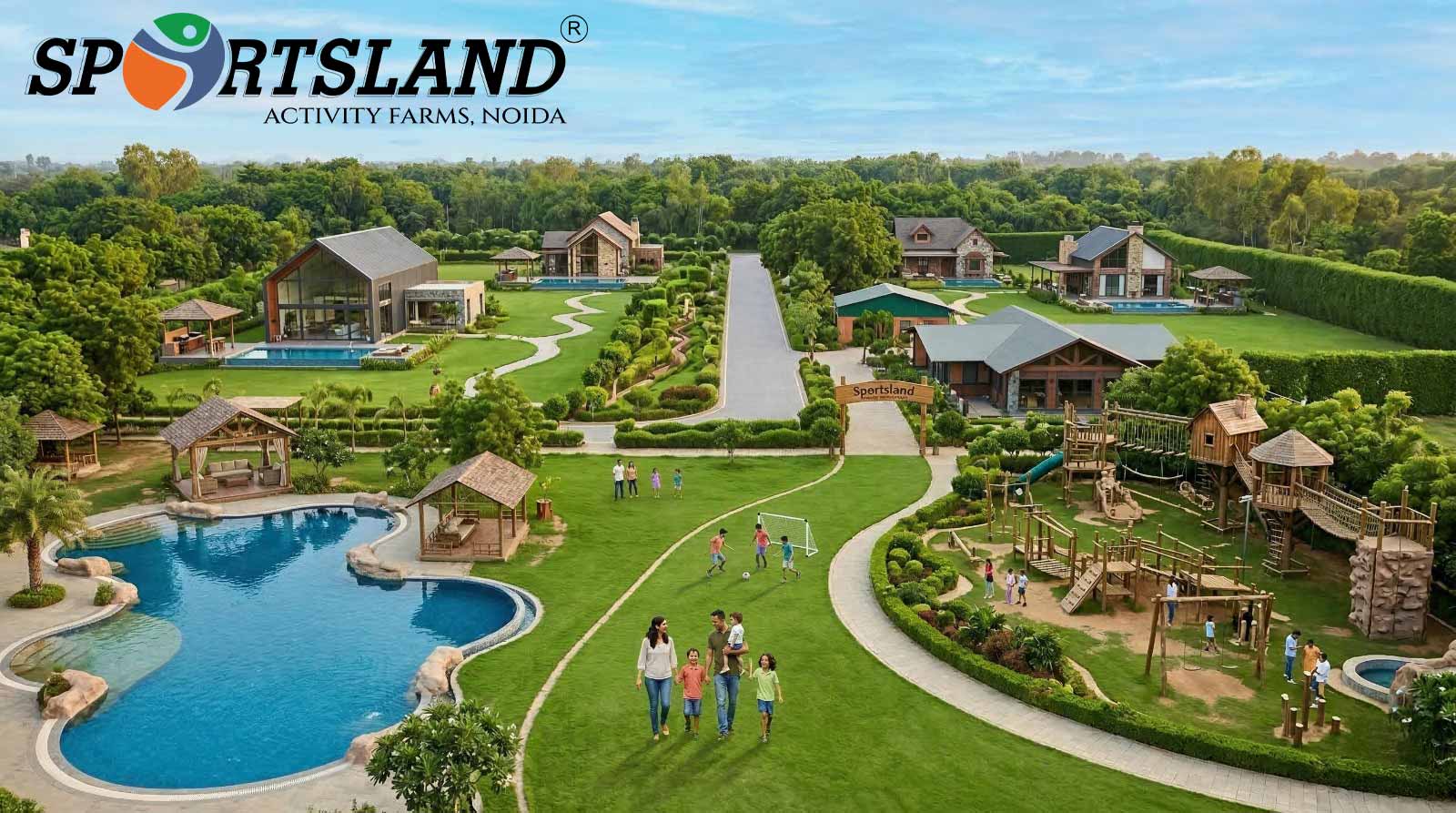
Midway through this evolving narrative, environments that are consciously designed around movement, openness, and community begin to stand out. Spaces like Sportsland emerge in this context—not as isolated developments, but as part of a larger shift toward integrating land, lifestyle, and long-term wellness.
And as cities like Noida continue to expand, the role of such environments will only become more central.
Because ultimately, the future of urban living will not be defined by how efficiently we build cities—
It will be defined by how thoughtfully we live within them.
And in that future, the best open green space in Noida will not just be a destination.
It will be a way of life.