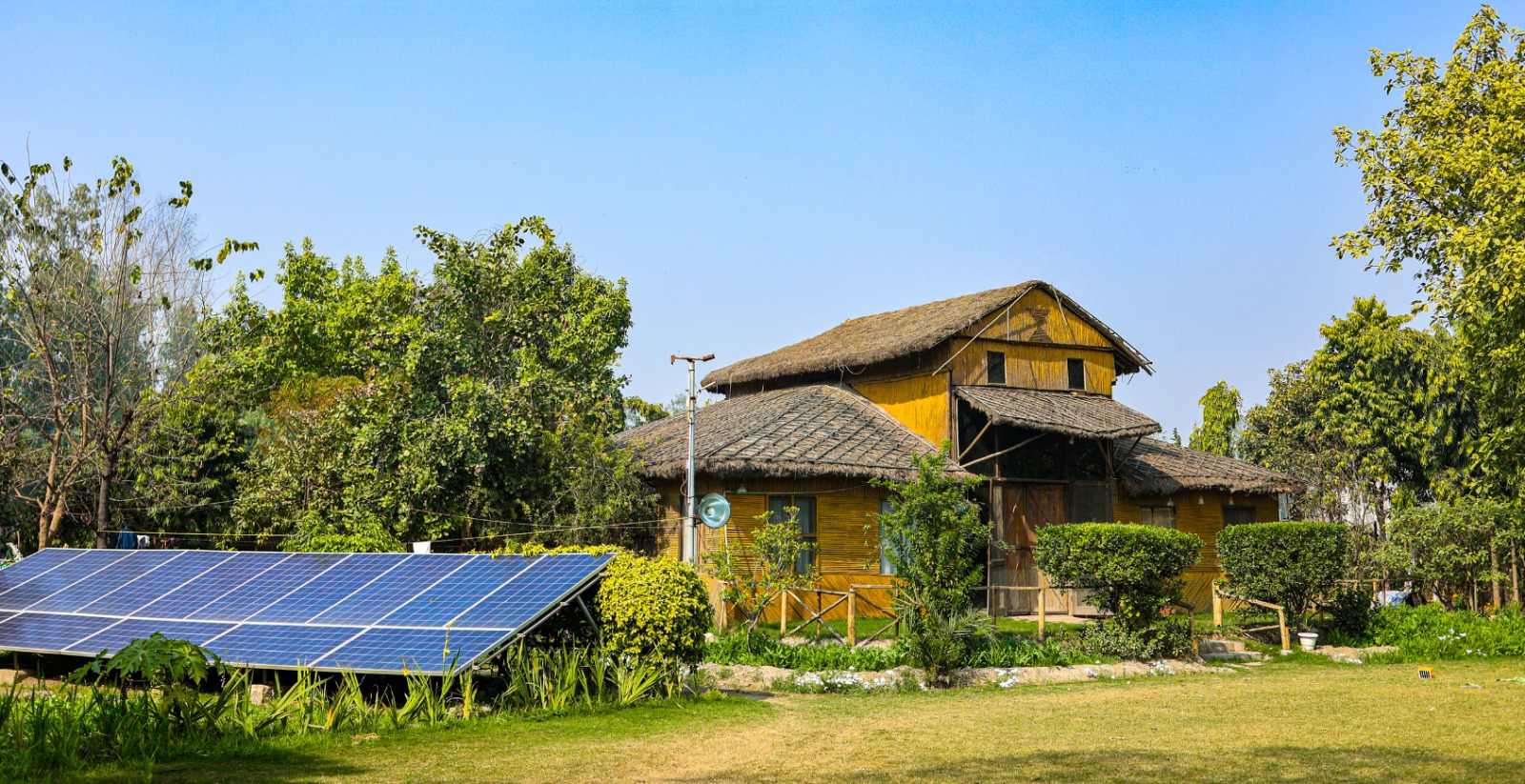
From 2.2 Hours of Screens to Acres of Green: Why Parents Now Prefer a Farmhouse Near Noida for Kids’ Health Over Cramped Flats in Delhi-NCR
Indian parents are facing a crisis they never imagined a decade ago.
Their children—many under just five years old—are addicted to screens. They wake up and instantly reach for a phone. They eat meals with TV playing in the background. They spend evenings with tablets instead of playgrounds, and they wind down not with stories but with YouTube.
And the numbers aren’t just worrying—they’re shocking.
A 2025 meta-analysis published by Cureus found that Indian kids under 5 spend 2.22 hours of screen time every day—that’s double the safe limit recommended by WHO.
WHO guidelines are crystal clear:
- Under 1 year: ZERO screen time
- Ages 1–2: Not recommended
- Ages 2–5: Max 1 hour, and even that should be monitored
Yet Indian children are now consuming twice that. And in Delhi-NCR—one of the world’s most polluted regions—screen dependency is even worse. Why? Because kids are forced indoors due to toxic air, lack of playgrounds, dangerous traffic, and overbuilt urban spaces.
Delhi-NCR’s children are growing up in an environment where:
- They cannot safely play outside
- They cannot breathe clean air
- They cannot explore nature
- They do not interact with real soil, animals, or trees
- And they depend on screens for stimulation and entertainment
This is exactly why thousands of NCR parents are now choosing something radically different: a farmhouse near Noida for kids’ health—a space where their children can grow up the way nature intended: free, active, healthy, and deeply connected to the earth.
Communities like Sportsland Activity Farms have become “childhood sanctuaries,” offering acres of organic green, pollution-free air, real soil experiences, pet interactions, farming activities, and everything urban flats fail to provide.
This blog will explain—factually, emotionally, and scientifically—why this shift is happening and why it’s the most important lifestyle decision for any parent in NCR today.
1. The Digital Childhood Crisis: 2.2 Hours of Screens & Rising
Ten years ago, parents worried about too much TV.
Today, they are battling:
- YouTube
- Instagram Reels
- Gaming apps
- OTT shows
- Tablets
- Educational apps
- Influencer-driven content
- Mobile games
- And even AI companions
Indian children under 5 now average 2.22 hours/day of screen time.
India Today called the situation “alarming”.
Economic Times wrote:
“Indian kids spend twice the limit. Developmental damage is real.”
This explosion in screen usage is coming at the cost of:
❌ Speech development
❌ Concentration
❌ Cognitive abilities
❌ Emotional regulation
❌ Social skills
❌ Physical fitness
And the worst part?
These damages don’t reverse easily.
Every hour a young child spends on a device creates long-term changes in how the brain grows. A PLOS One study found that excess screen time is directly linked to developmental delays across multiple domains.
A BMC Pediatrics study reported that children with higher screen time show cognitive delays, speech delays, and slower learning patterns.
Experts call it “a silent developmental epidemic.”
2. Why Delhi-NCR Kids Are the Most Screen-Exposed Children in India
Parents aren’t choosing screens voluntarily. They’re forced to.
Delhi-NCR’s environment leaves no choice.
2.1 Pollution Traps Children Indoors
UNICEF India states that air pollution is one of the biggest threats to children’s health, damaging their lungs, immunity, and brain development.
A CAPHER-India study found Delhi has the highest under-5 mortality due to air pollution.
When AQI hits 400–800, parents simply cannot send their kids outdoors.
Screens become babysitters by default.
2.2 Flats Offer No Real Outdoor Space
WHO recommends:
- Minimum 9 m² green space per person
- A park within 300 m walking distance
Most Delhi-NCR high-rises fail these guidelines dramatically.
They offer:
- Tiny artificial play corners
- One park for 500 families
- Safe areas only for toddlers
- No organic soil
- No trees
- No open movement spaces
- No biodiversity
- No petting zones
- No real exploration grounds
There is no place for real childhood.
2.3 Traffic Makes Neighbourhood Streets Unsafe
Between honking, speeding, and pollution-belching vehicles, even stepping out becomes a safety hazard.
Kids stay inside → parents hand them screens → dependency grows.
2.4 Overpopulation in Societies Limits Playtime
Even if there’s a park:
- It gets overcrowded
- Kids fight for swings
- Timings are regulated
- Playtime becomes restricted
Children need free movement, not fixed motion.
This is why parents are now seeking a farmhouse near Noida for kids’ health, where wide-open land replaces cramped balconies and crowded podiums.
3. What 2.2 Hours of Screen Time Is Doing to NCR’s Kids — According to Science
Parents see the behavioral changes every day:
- Irritability
- Tantrums
- Aggression
- Social withdrawal
- Hyperactivity
- Reduced attention
- Emotional instability
- Forgetfulness
- Slow speech development
Scientific studies confirm all of this.
3.1 Cognitive Damage
Screens change how the developing brain wires itself.
Children who spend more time in nature show stronger cognitive function.
Children who spend more time on screens show weaker cognitive and memory performance.
3.2 Emotional Dysregulation
Screens overstimulate dopamine pathways → emotional instability.
India Today reported that Delhi kids are experiencing:
- Higher anxiety
- More irritability
- Poor emotional balance
- Slow mental development
3.3 “Virtual Autism” Rising
TOI reported an increase in “virtual autism”—a condition where excessive screen exposure mimics autism-like symptoms.
3.4 Physical Health Decline
WHO confirms excess screen time leads to:
- Obesity
- Weak muscles
- Poor posture
- Eye strain
- Sleep problems
Screens aren’t harmless. They’re reshaping an entire generation.

4. Outdoor Play Is the Only Antidote — And It’s Disappearing From Urban Life
UNICEF emphasizes that outdoor play is essential for healthy brain development, emotional stability, fitness, and social skills.
A systematic review proved that outdoor play improves:
- Motor skills
- Immunity
- Creativity
- Attention span
- Memory
- Happiness
- Resilience
WHO states that green spaces:
- Reduce stress
- Improve mental health
- Support physical activity
- Reduce pollution exposure
But ask any Delhi parent:
“Where will my child play outdoors safely?”
There’s silence.
Because NCR’s urban infrastructure has simply failed children.
This is why families are turning to nature-rich communities like a farmhouse near Noida for kids’ health, where outdoor living is guaranteed—not limited.
5. The Rise of Farmhouse Living: Parents Choosing Nature Over Towers
Farmhouse living isn’t a luxury anymore.
It’s a health necessity.
Parents are realizing that private green land is not about lifestyle—it’s about survival, sanity, and saving their child’s childhood.
Here’s why.
5.1 Acres of Natural Playground = Automatic Screen Reduction
When kids get:
- Open fields
- Trees
- Mud
- Water bodies
- Animals
- Bicycles
- Gardens
- Farm tools
- Outdoor chores
…screens become irrelevant.
Nature becomes the default mode.
A child raised in a farmhouse environment automatically experiences:
- More physical activity
- Better creativity
- Sharper senses
- Lower screen dependency
- Higher emotional grounding
5.2 Clean Air = Healthier Body & Sharper Brain
Delhi-NCR AQI ranges between 300–800 in winter.
Sportsland Activity Farms maintains 99% pure air, surrounded by thick green cover.
Clean air leads to:
- Better lung development
- Higher immunity
- Better sleep
- Improved cognitive function
5.3 Interaction with Animals Builds Emotional Intelligence
Studies show that kids who interact with animals develop:
- Empathy
- Care
- Responsibility
- Emotional balance
Pets become therapy.
At Sportsland, children interact with:
- Dogs
- Rabbits
- Ducks
- Cows
- Turtles
- Birds
They feel nature, not just watch it on a screen.
5.4 Organic Farming Makes Kids Smarter & Healthier
UNICEF confirms that nature-based learning improves holistic development.
At a farmhouse near Noida for kids’ health, children learn:
- Where food comes from
- Soil science basics
- Planting
- Composting
- Water cycles
- Sustainable living principles
This is education you cannot buy in a classroom.
6. Why Flats Can Never Replace a Farmhouse—Even Premium Ones
Even the most luxurious towers can’t offer:
- Private farming space
- Organic green surroundings
- 100% vehicle-free safe open areas
- Animal interaction
- 360° nature exposure
- Fresh air
- Silence
- Clean environment
- Connection to soil
High-rises are engineered for convenience.
Farmhouses are engineered for wellness.
That’s why more parents are investing in a farmhouse near Noida for kids’ health—to gift their children an environment flats simply cannot provide.
7. A Day in the Life of a Child Living in a Farmhouse Near Noida for Kids’ Health
Imagine this.
6 AM — Feeding animals
Your child wakes up excited—not for a mobile game, but to feed ducks and rabbits.
7 AM — Running barefoot on grass
Their feet touch real earth, not tiles. Their lungs breathe pure air, not pollution.
9 AM — Organic breakfast
Milk from your own cattle shed. Vegetables from your own garden.
11 AM — Learning outdoors
Studying science by observing butterflies. Learning math through farming.
4 PM — Cycling on private trails
No traffic. No vehicles. No fear.
6 PM — Sunset playtime
Mud pies, football, or climbing trees.
8 PM — Digital detox evenings
Stories around a fire pit. Stargazing. Not a single screen needed.
This is not a dream.
This is daily life at Sportsland Activity Farms.
8. Why Sportsland Activity Farms Is NCR’s Healthiest Community for Children
Sportsland is not a real estate project.
It is a childhood restoration project.
Here’s why it’s unmatched:
✔ 14+ years of legacy
✔ 99% pure air quality
✔ Private backyards with every farmhouse plot
✔ Organic farming lifestyle
✔ Pet-friendly paradise
✔ Acres of open space
✔ Zero congestion
✔ Safe environment for children
✔ Sustainable & eco-friendly living
✔ Community built around values, not concrete
Parents don’t just live here.
They rediscover what life was meant to feel like.
FAQs
1. Why are NCR parents shifting from flats to a farmhouse near Noida for kids’ health?
Parents in Delhi-NCR are increasingly prioritizing healthier childhood environments over compact urban apartments. Flats restrict outdoor play, offer limited green space, and expose children to high pollution levels—especially dangerous for developing lungs. In contrast, a farmhouse near Noida for kids’ health provides acres of safe open land, pure air, natural play zones, and a lifestyle rooted in nature. With rising screen addiction and AQI emergencies in cities, parents prefer spaces where children can actually grow—not just live.
2. How does excessive screen time harm children, and how does farmhouse living reduce it?
Studies show that Indian kids under 5 spend 2.22 hours/day on screens—twice the WHO safe limit. This leads to speech delays, irritability, emotional dysregulation, obesity, attention issues, and even “virtual autism.”
Farmhouse living naturally reduces screen dependence because children are surrounded by real-world stimulation: soil, farms, animals, trees, cycling paths, and open play zones. When there’s so much to explore, screens simply lose their appeal.
3. Is the air quality better in a farmhouse near Noida for kids’ health compared to Delhi-NCR flats?
Yes. Delhi-NCR regularly crosses AQI 300–800, making outdoor play almost impossible. Farmhouse communities like Sportsland maintain 99% pure air quality due to dense green coverage, organic farms, low traffic, and natural wind flow. Cleaner air directly improves lung health, immunity, sleep quality, and cognitive performance in children, making it the safest environment for long-term growth.
4. Can a farmhouse near Noida for kids’ health help reduce childhood anxiety and behavioral issues?
Absolutely. Outdoor play in natural environments has been proven to lower stress, stabilize emotions, and enhance confidence in children. When children interact with animals, plants, and open landscapes, their sensory systems develop more healthily. Nature-based living reduces irritability, improves sleep cycles, encourages social bonding, and offers emotional grounding that flats and screen-heavy lifestyles simply cannot provide.
5. Is a farmhouse community safe for children compared to urban high-rises?
Farmhouse communities like Sportsland are built with children’s safety in mind. There is:
- No traffic inside the community
- Dedicated cycling paths
- Open land for safe play
- Pet-friendly zones
- Zero-congestion spaces
- Guarded entrances and surveillance
Unlike high-rise societies where kids must be supervised constantly, farmhouses offer freedom with safety, allowing children to explore responsibly and independently.
6. How does nature-based living improve learning and creativity in children?
Nature stimulates the brain in ways screens never can. UNICEF and WHO confirm that nature-based learning improves:
- Cognitive skills
- Memory retention
- Creativity
- Problem-solving
- Motor skills
- Emotional intelligence
A farmhouse near Noida for kids’ health gives children real-world classrooms—gardens, farms, animals, ponds, trees—making learning hands-on, interactive, and deeply enriching.
7. What kind of activities can children enjoy in a farmhouse lifestyle?
Children can enjoy a wide range of enriching activities, such as:
- Cycling on open trails
- Feeding ducks, cows, rabbits, and turtles
- Gardening & organic farming
- Running barefoot on grass
- Mud play & sensory exploration
- Outdoor learning
- Playing with pets
- Stargazing
- Nature walks
These experiences nurture confidence, mindfulness, physical strength, and curiosity—things missing in screen-dominated urban life.
8. Are farmhouse communities sustainable and eco-friendly for long-term living?
Yes. Modern farmhouse communities like Sportsland are designed around sustainability. They include:
- Organic farming zones
- Rainwater harvesting
- Dense green landscapes
- Private backyards
- Minimal vehicular movement
- Eco-friendly waste management
This ensures children grow up learning sustainability firsthand while living in a naturally balanced ecosystem.
9. Do farmhouses near Noida offer comfort and modern amenities for families?
Absolutely. A farmhouse near Noida for kids’ health combines rural greenery with urban convenience. Families enjoy:
- Private lawns
- Security systems
- Clubhouse areas
- Walking trails
- Cattle sheds for organic milk
- Modern infrastructure
- Easy access to Noida Expressway
This offers the perfect balance between nature-rich living and city-level comfort.
10. Why is investing in a farmhouse near Noida for kids’ health considered a “legacy decision”?
Because it transforms not just lifestyle—but generational health. Parents invest in farmhouses to give their children:
- A pure childhood
- A healthier upbringing
- Emotional stability
- Organic living
- Screen-free experiences
- Space to grow physically and mentally
This is not a temporary trend—it’s a long-term shift toward sustainable, nature-connected living. A farmhouse becomes a family legacy, a place where children grow up closer to nature and parents reconnect with their own childhood.
Childhood Is Not Replaceable. Environment Is.
Your child will not remember the iPad model you bought.
They will remember:
- The mud on their feet
- The animals they raised
- The vegetables they grew
- The trees they climbed
- The sunsets they chased
- The peace they lived in
A farmhouse near Noida for kids’ health isn’t a second home.
It’s a second chance at real childhood.
If you want your child to grow up healthy, grounded, emotionally strong, socially intelligent, and connected to nature—this is the lifestyle that will shape them forever.
Explore Sportsland Activity Farms