From Screen-Time to Green-Time: Why Up to 50% of Indian Kids Need a Sustainable Farmhouse in Noida Sector 151
Delhi-NCR parents have silently been fighting a battle no previous generation ever faced — trying to raise healthy children in the world’s most polluted urban zone, inside shrinking apartments, with screens replacing swings and digital noise replacing childhood.
Every parent you speak to has the same story:
“My child doesn’t go outside,”
“My daughter is glued to screens all day,”
“My son doesn’t have a safe place to play,”
“My kids fall sick every winter,”
“There is no real childhood left.”
The truth is harsher than the complaints — almost 50% of Indian children are not getting the minimum daily movement required for healthy growth, and in urban clusters like Delhi-NCR, the number is even worse.
According to the WHO Global Status Report on Physical Activity 2022, 74% of Indian adolescents aged 11–17 are insufficiently active, far above the global average.
Source: https://www.who.int/publications/i/item/9789240059157
That statistic alone should scare us.
But for Delhi-NCR kids, there is another villain in the picture — toxic outdoor air, which makes even basic outdoor play unsafe for developing lungs.
This is why families across the capital region are making a dramatic shift — moving towards nature-based living spaces, choosing communities built around health, clean air, outdoor play, and organic farming. And leading this transformation is the sustainable farmhouse in Noida Sector 151, a new category of residential living offering a childhood that feels real again — not manufactured indoors.
This is not just a real estate trend.
This is a childhood revival movement, powered by science, necessity, and survival.
1. The Crisis No One Predicted: Indian Kids Are Becoming the Least Active Generation in History
1.1 WHO: 74% Indian adolescents don’t meet movement guidelines
The WHO’s physical activity benchmark recommends a minimum of 60 minutes of moderate-to-vigorous activity per day for kids aged 5–17.
But in India, 74% fail to meet this benchmark, making our children among the least physically active in Asia.
Source: https://www.who.int/publications/i/item/9789240059157
1.2 India’s Official Report Card: Only Half the Kids Move Enough
The Active Healthy Kids India Report Card (2022) paints a disturbing picture:
- Grade C for overall physical activity (≈ 50% meet recommended guidelines)
- Grade D for sedentary behaviour (screens > outdoor play)
- Grade D for community & built environment (lack of safe, accessible play spaces)
Meaning:
Every second child in India is missing healthy development milestones.
1.3 Government Guidelines Confirm the Problem
The Government’s Fit India Movement mandates:
- 60 minutes daily physical activity
- Introduction of fitness protocols in all schools
- Strong emphasis on outdoor play
Yet, Delhi-NCR children barely get 15–20 minutes of outdoor time on average — if at all.
Why?
Two reasons:
- There is no space.
- There is no clean air.
Which brings us to the real emergency.
2. Delhi’s Air Pollution Makes Play Dangerous — Literally
2.1 Breathing Delhi air = smoking cigarettes? Yes.
Multiple studies, including reports cited by Lung Care Foundation and global media, compare breathing Delhi winter air to smoking 20–25 cigarettes a day.
Source: https://www.lungcarefoundation.org
Children, with faster breathing rates and smaller lungs, inhale three times more polluted air per kilogram of body weight.
2.2 Delhi pollution cuts 10–12 years of life expectancy
Research across major Indian metros shows:
- Delhi residents lose up to 12 years of life due to air pollution.
- Childhood exposure leads to permanent lung damage.
2.3 Doctors: 40% of NCR kids have impaired lung function
Paediatric pulmonologists across top hospitals (AIIMS, Gangaram, Max) report:
- Chronic wheezing
- Reduced lung capacity
- Exercise intolerance
- Increased asthma cases
Meaning:
Even if parents WANT kids to play outside, the air won’t allow it.
So what’s the alternative?
Families are realizing they need a clean-air escape, not a once-in-a-while vacation spot…
but a permanent lifestyle solution.
3. The Urban Childhood Collapse: No Parks, No Play, No Real Childhood
3.1 India Today: Children have lost access to safe outdoor spaces
Metro cities, especially Delhi-NCR, offer barely any child-safe green zones.
Reports highlight:
- Broken swings
- Unmaintained parks
- Poor lighting
- Stray animals
- Encroachment
- Zero security
3.2 ABP: Kids need 30–60 mins outdoor play, but cities fail to offer it
ABP’s coverage emphasizes how urban overdevelopment has squeezed children’s playgrounds.
3.3 Real incidents create real fears
A shocking case from Delhi:
A 9-year-old was electrocuted in a public park due to faulty wiring.
Parents are now forced to ask:
“How do I let my child play freely without fear?”
This is exactly why NCR families are expanding their weekend getaways into everyday living solutions — nature-led communities that guarantee safety + space + clean air.

4. What Science Says: Green-Time Is Medicine for Childhood
4.1 Outdoor play improves mood, immunity, and cognitive development
A global meta-analysis confirms:
Children exposed to green spaces show better emotional resilience, concentration, and creativity.
4.2 AIIMS Bhopal: More outdoor time = better eyesight
A study at AIIMS Bhopal (500 children sample size) found:
- Kids with 1+ hour outdoors daily had significantly slower myopia progression
- Screen-heavy children showed rapid eyesight deterioration
4.3 Nature decreases anxiety & behavioural issues
Scientific research shows:
- Lower cortisol levels
- Reduced ADHD symptoms
- Higher serotonin and dopamine
- Better sleep patterns
Meaning:
Kids don’t just LIKE outdoor play — their biology NEEDS it.
This is why parents today are demanding more than clubs, balconies, gyms, and society parks.
They want acres. Animals. Trees. Soil. Fresh food. Clean air. Real freedom.
Which brings us to the lifestyle transformation shaping Delhi-NCR…
5. Why Parents Are Choosing a Sustainable Farmhouse in Noida Sector 151 Instead of Another Flat
5.1 Flats = delays, pollution, cramped spaces
Nearly 3–5 lakh homebuyers across India are stuck in possession delays.
NCR is the worst affected.
Parents today don’t just want “more rooms” — they want more life.
Flats offer:
- Overbuilt societies
- Artificial play areas
- Zero real greenery
- Zero nature exposure
- High EMFs, high pollution, low ventilation
- Increased screen addiction
5.2 The rise of wellness-led real estate: Post-2020 shift
COVID permanently rewired buyer psychology.
Families realized:
- Health > proximity to malls
- Space > luxury interiors
- Outdoor time > indoor entertainment
- Organic lifestyle > packaged living
Reports from Square Yards, ET Real Estate, and Knight Frank confirm the shift:
Farmhouses & low-density green communities in Noida have seen a surge in demand since 2021.
This is where the sustainable farmhouse in Noida Sector 151 becomes the perfect answer — not as a luxury escape, but as a necessity.
6. Why Sector 151 Noida Is the Healthiest Investment You Can Make Today
6.1 Delhi-NCR’s clean-air pocket
Sector 151 sits near:
- A natural green belt
- Open farmlands
- Low traffic congestion
- Low construction density
Meaning:
Air quality is significantly cleaner than central Delhi.
6.2 Fastest-growing green zone in Noida
Sector 151 is strategically located:
- 5 mins from Noida–Greater Noida Expressway
- Close to top international schools
- Near upcoming IT corridors
- Easy access to Delhi, Noida City Center, and Jewar Airport Road
It is NOT a remote, disconnected area.
It’s the closest nature-based living zone near Noida’s mainstream infrastructure.
7. The Sustainable Farmhouse in Noida Sector 151 — Where Real Childhood Returns
This is where Sportsland Activity Farms transforms into the hero Delhi-NCR needed.
7.1 An organic, eco-friendly, health-first living concept
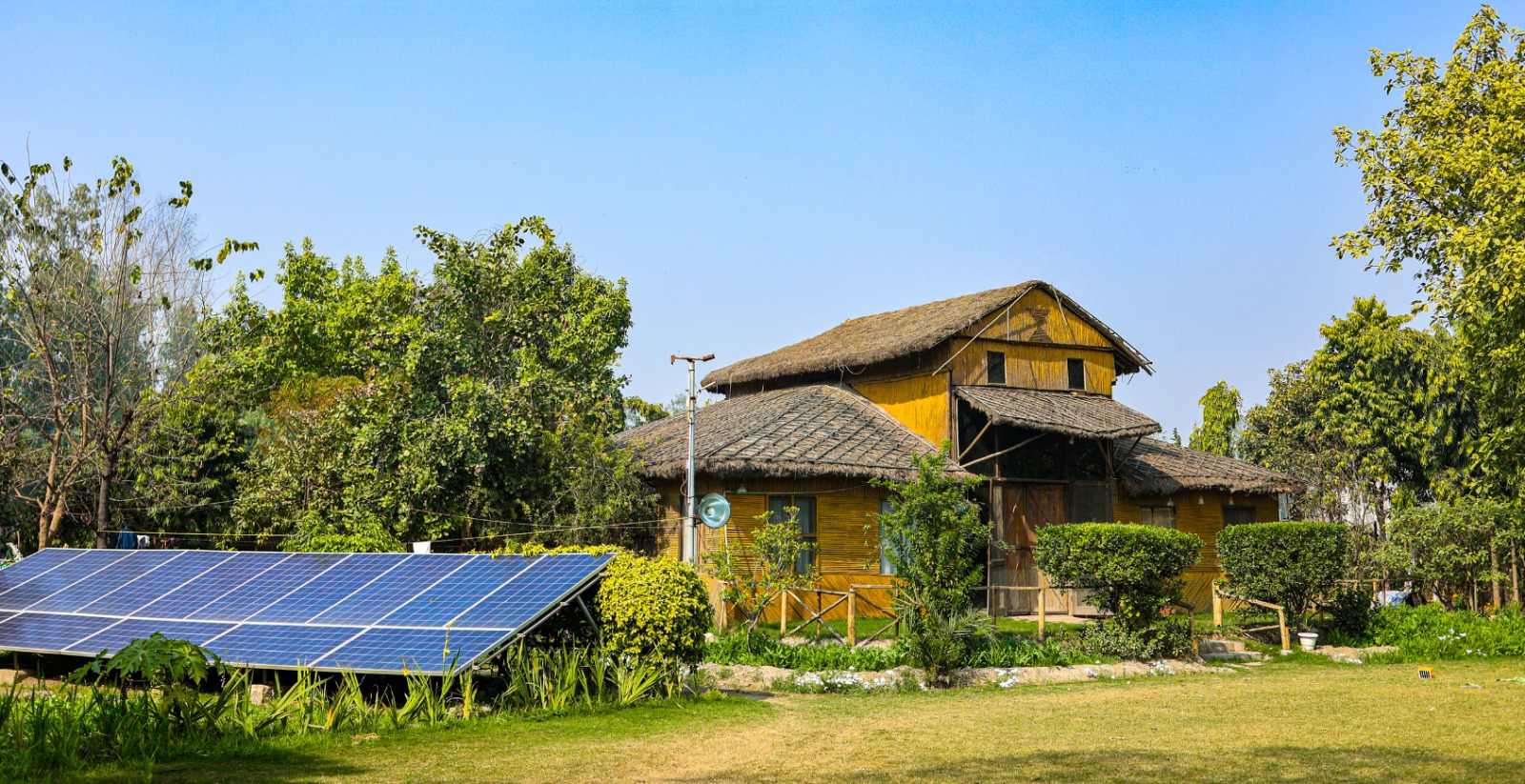
A sustainable farmhouse in Noida Sector 151 at Sportsland allows:
- Daily open-air play
- Cycling tracks
- Farm animals
- Zero pollution environment
- Organic farming
- Low-density living
- 99% clean air pockets
This is not a typical “weekend home.”
It is a child-development habitat.
7.2 Every child gets a backyard — the dream flats can NEVER deliver
Imagine your child:
- Growing vegetables
- Touching soil daily
- Learning where food comes from
- Running freely across acres
- Playing with animals
- Living in fresh air, not AQI 400
- Sleeping better
- Eating healthier
- Growing stronger
This is not fantasy.
This is a daily routine here.
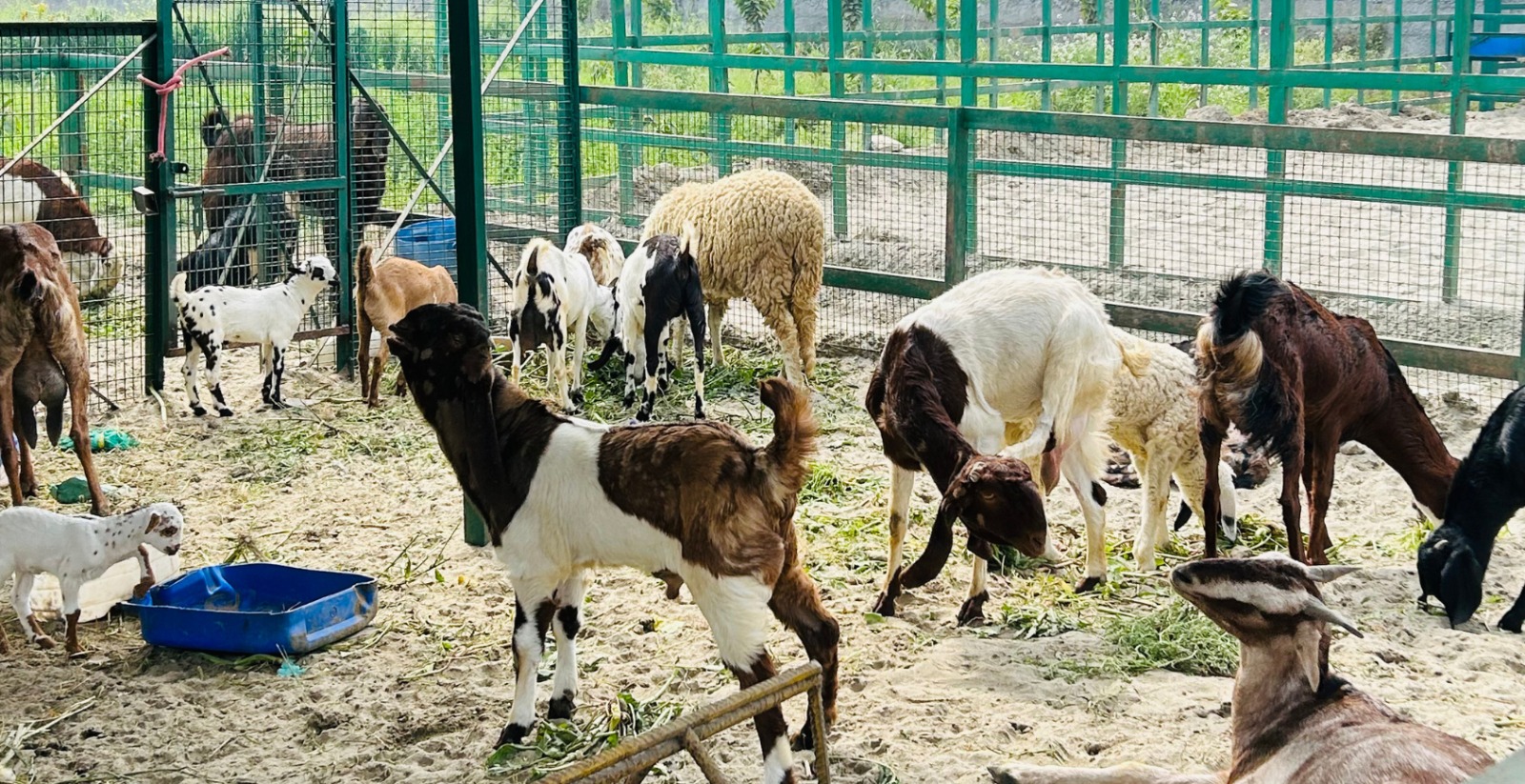
7.3 Pet-friendly environment = emotional development for kids
Sportsland encourages interaction with:
- Rabbits
- Birds
- Ducks
- Turtles
- Cows
- Dogs
Studies show children who grow up with animals develop:
- Higher empathy
- Lower anxiety
- Stronger emotional stability
7.4 A 14-year legacy of trust
Sportsland is NOT a new startup idea or a pre-launch pitch.
It is a 14-year established community, stretching across hundreds of acres.
Parents invest here because it offers:
- Stability
- Clean air
- Safe environment
- Legacy value
It’s not just property.
It is inheritance for future generations.
8. Why This Lifestyle Is Better Than Any Luxury Flat in Delhi or Noida
8.1 Flats are conveniences. Farmhouses are experiences.
A flat gives:
- A club
- A gym
- A pool
- A park (sometimes)
A sustainable farmhouse in Noida Sector 151 gives:
- Green lungs
- Space
- Freedom
- Silence
- Sunlight
- Better immunity
- Organic food
- Nature learning
- Real playtime
- Holistic childhood
8.2 Families are choosing future health over present convenience
Parents today want:
- Less pollution
- Less stress
- Less noise
- Less screen addiction
And:
- More trees
- More soil
- More oxygen
- More farm-fresh food
- More bonding
- More memories
In short:
More life.
This is why farmhouse living isn’t luxury —
it’s becoming the new wellness standard.
9. Your Child Doesn’t Need More Screens — They Need More Green
We stand at a generational crossroads:
- Our kids breathe toxic air
- Their eyesight is worsening
- Their physical strength is declining
- Their mental health is affected
- Their outdoor time is shrinking
- Their screen-time is rising
And this is entirely preventable if we redesign their environment.
A sustainable farmhouse in Noida Sector 151 is not a real estate decision —
It is a parenting decision.
A health decision.
A future-proof decision.
It is a commitment to giving your child:
- The freedom you had
- The childhood you miss
- The health they deserve
- The nature their body is designed for
Childhood cannot be downloaded.
It must be experienced.
FAQs
1. Why are more Delhi-NCR families choosing a sustainable farmhouse in Noida Sector 151 over traditional flats?
Families today are choosing a sustainable farmhouse in Noida Sector 151 because flats in Delhi-NCR no longer support healthy childhood development. Most apartments offer limited green spaces, heavily polluted surroundings, and rising screen-time addiction due to lack of outdoor play options. In contrast, a farmhouse community provides acres of clean, green, open land, lower AQI levels, organic farming spaces, pet-friendly zones, and safe internal roads for cycling and outdoor activities. Post-Covid, families now prioritise health, immunity, clean air, and nature exposure, making farmhouse living a long-term lifestyle investment rather than a luxury.
2. Is a sustainable farmhouse in Noida Sector 151 safe for children?
Yes. One of the biggest advantages of living in a sustainable farmhouse in Noida Sector 151 is the unmatched level of safety. Gated communities like Sportsland offer:
- Secure internal roads with no heavy traffic
- 24/7 surveillance
- Clean, controlled environment
- Safe play zones far from city pollution
- Zero risk of overcrowded parks or unsafe public infrastructure
Children can run, cycle, explore nature, interact with animals, and learn farming within a secure, eco-friendly environment. Parents benefit from peace of mind knowing their kids are playing in a clean-air, low-pollution, private space.
3. How does farmhouse living help reduce a child’s screen time?
A modern child turns to screens because they lack access to safe outdoor environments. When families shift to a sustainable farmhouse in Noida Sector 151, screen dependency drops naturally because kids suddenly have:
- Daily access to big backyards
- Cycling tracks
- Animals to interact with
- Organically grown farms
- Open fields for free play
- Nature-based learning activities
Scientific research shows that green-time competes directly with screen-time — children prefer real-world stimulation when it is easily available. With natural spaces inviting them outdoors, screens no longer remain their only entertainment source.
4. How does clean air around Sector 151 benefit children compared to central Delhi or Noida flats?
Delhi’s AQI frequently crosses 400–500 (hazardous), making outdoor time risky for kids. Sector 151, by contrast, benefits from:
- Low-density green cover
- Surrounding farmlands
- Fewer industrial emissions
- Reduced traffic corridors
A sustainable farmhouse in Noida Sector 151 is surrounded by 99% pure air pockets, giving kids the ability to play outdoors without risking lung damage. Reduced exposure to PM2.5 and PM10 particles leads to:
- Better lung development
- Lower risk of asthma
- Improved immunity
- Higher energy levels
- Better sleep cycles
Clean air is the Number 1 reason parents choose farmhouse living.
5. What makes a sustainable farmhouse different from a regular farmhouse?
A sustainable farmhouse is designed with ecology, health and long-term environmental balance in mind. Key elements include:
- Rainwater harvesting
- Organic farming and kitchen gardens
- Low-carbon development planning
- Soil regeneration practices
- Sustainable building materials
- Large green open spaces for natural filtration
- Energy-efficient design
A sustainable farmhouse in Noida Sector 151 is not just a luxury retreat; it is a future-ready eco-lifestyle aligned with global wellness and nature-based living standards.
6. Can a sustainable farmhouse in Noida Sector 151 be used as a primary residence?
Absolutely. Many families are now living full-time in their farmhouses due to benefits such as:
- Cleaner environment for kids
- Work-from-home flexibility
- Lower stress levels
- Proximity to Noida Expressway (making travel easy)
- Space for pets and farming activities
- A quieter, healthier lifestyle
Sector 151 is exceptionally well-connected, making it ideal for permanent residence while still being minutes away from top schools, Noida IT hubs, and essential services.
7. Is buying a farmhouse in Noida Sector 151 a good long-term investment?
Yes — it is one of the most stable and appreciating real estate categories in Delhi-NCR. Reasons:
- Limited supply of legally compliant farmhouse plots
- High demand from HNIs, parents, wellness-focused buyers, and entrepreneurs
- Rapid development around the Noida–Greater Noida Expressway
- Increasing preference for low-density living post-Covid
- Value appreciation linked to clean-air zones and sustainable communities
A sustainable farmhouse in Noida Sector 151 offers dual returns:
emotional + financial.
8. What activities can kids enjoy daily in a sustainable farmhouse in Noida Sector 151?
Children enjoy a rich, nature-driven lifestyle that flats can never offer:
- Cycling on internal pathways
- Organic farming
- Outdoor sports (football, badminton, cricket)
- Mud play and nature exploration
- Caring for animals (dogs, cows, ducks, rabbits, birds)
- Picnics within private green areas
- Stargazing at night due to low pollution
- Longer, healthier playtime in pure air
This environment fosters creativity, resilience, physical strength, and emotional wellbeing.
9. How does nature-based living at Sportsland help improve children’s mental and emotional health?
Global studies (including PubMed research) confirm that daily exposure to nature:
- Lowers cortisol (stress hormone)
- Improves focus and attention
- Enhances memory and learning
- Builds emotional stability
- Reduces anxiety and depression
- Supports healthy sleep patterns
By choosing a sustainable farmhouse in Noida Sector 151, parents give their children access to nature therapy every single day — not just on weekends or vacations.
10. What makes Sportsland Activity Farms unique among other farmhouse communities?
Sportsland stands out because:
- It has a 14+ year legacy — not a new or untested concept
- It offers acres of green cover, organic farming, and eco-friendly planning
- Every resident gets a private backyard for farming and outdoor use
- It supports pet-friendly, child-friendly, senior-friendly living
- It is located in the most strategic clean-air belt of Noida
- Community is built around wellness, sustainability, childhood development, and long-term value
For families searching for a sustainable farmhouse in Noida Sector 151, Sportsland offers the safest, healthiest, most future-ready lifestyle in the region.
Give Your Child Their Green-Time Back
If you want your child to grow in:
- Cleaner air
- Organic surroundings
- Acres of safe green play
- A nature-connected lifestyle
- A community built on wellness
Then you need to experience Sportsland Activity Farms firsthand.
Schedule your Family Green-Time Visit today.
See how a sustainable farmhouse in Noida Sector 151 can transform your child’s life, your family’s lifestyle, and your future generations.