What 2025 Taught NCR About Water: Why a Sustainable Farmhouse in Noida Sector 151 Is the Smarter Way to Begin 2026
2025 will not be remembered as an ordinary year.
It will be remembered as a year that quietly humbled NCR.
Not through one dramatic event, but through a series of small, persistent reminders—unpredictable summers, anxious monsoons, tanker queues, water quality concerns, and the growing realization that something as basic as water was no longer guaranteed.
For decades, urban India believed that infrastructure would always keep up. That population growth, construction, and consumption could expand endlessly, while resources would somehow adjust.
2025 dismantled that illusion.
It taught NCR families fifty shades of humility—that nature does not negotiate, that convenience has limits, and that resilience is not built overnight.
As the year closes, 2026 opens like a new diary—fresh pages, waiting not just for hope, but for better decisions. One of the most important of those decisions is how and where we choose to live.
This is why conversations around water-secure living have moved from policy rooms into drawing rooms—and why a sustainable farmhouse in Noida Sector 151 is emerging as a serious, future-ready choice for families planning long-term stability.
NCR’s Water Reality: Not Opinion, Not Fear — Documented Fact
Water stress in NCR is not a social media narrative.
It is officially recorded, monitored, and acknowledged by India’s highest water authorities.
The Central Ground Water Board (CGWB)—the Government of India’s apex groundwater body—publishes periodic groundwater level bulletins for Delhi and surrounding regions. These reports consistently show heavy dependence on groundwater, declining trends in several monitoring locations, and rising pressure due to urban demand.
At a national policy level, NITI Aayog’s Composite Water Management Index (CWMI) clearly states that water scarcity is one of India’s most serious long-term risks, with urban agglomerations facing the highest vulnerability.
The takeaway from these government-backed assessments is simple but unsettling:
Water stress is no longer a “future challenge.”
It is a present condition.
And when a resource becomes uncertain, lifestyles built on heavy dependence begin to feel fragile.
2025: The Year Water Became Personal
What made 2025 different was not just the data—it was the lived experience.
Water issues stopped being abstract and became personal.
Families noticed:
- Inconsistent water pressure
- Rising tanker dependency
- Concerns about water quality for children and elders
- Daily routines quietly adjusting around availability
For senior citizens, uncertainty brought anxiety.
For parents, it raised questions about health and safety.
For homeowners, it exposed how little control they actually had.
This shift triggered a deeper reflection:
Is convenience enough if resilience is missing?
That question alone has reshaped buyer behaviour across NCR—and explains the growing interest in a sustainable farmhouse in Noida Sector 151, where control over resources becomes possible again.
Why High-Density Apartments Struggle With Water Security
Apartments are efficient for urban density—but water resilience is not their strength.
This is not about poor management or lack of intent. It is about structural limitations.
1. Limited Rainwater Catchment
High-rise structures have constrained roof and ground areas relative to the number of residents. Rainwater harvesting, when implemented, gets divided across hundreds of households.
2. Shared Storage Systems
Water storage is collective. Individual families cannot decide capacity, upgrades, or prioritization.
3. Minimal Recharge Possibility
Artificial groundwater recharge requires open land, percolation zones, and soil access—luxuries most apartment complexes do not possess.
4. Total Dependence on External Supply
Apartments rely on municipal pipelines and tankers. When these systems face stress, residents have no fallback.
Even well-intentioned sustainability measures often become symbolic rather than impactful.
This is where families begin to reassess whether long-term security lies in shared dependency or individual preparedness—and why a sustainable farmhouse in Noida Sector 151 begins to look less like an indulgence and more like a safeguard.
Understanding Water-Secure Living
Water security is not about excess.
It is about planning, capture, storage, and recharge.
The Government of India has repeatedly emphasized a simple framework through initiatives like the National Water Mission and Jal Shakti Abhiyan – Catch the Rain:
Capture → Store → Recharge
Jal Shakti Abhiyan – Catch the Rain
These initiatives highlight that the most effective water solutions happen at local and household levels, especially where land and flexibility exist.
This is precisely where a sustainable farmhouse in Noida Sector 151 becomes relevant.

Why a Sustainable Farmhouse in Noida Sector 151 Is Naturally Water-Resilient
A sustainable farmhouse in Noida Sector 151 offers something increasingly rare in NCR: control.
Land Enables Action
Land is not just space—it is opportunity.
With sufficient plot area, homeowners can:
- Install efficient rooftop rainwater harvesting systems
- Create storage tanks based on household needs
- Build recharge pits and percolation trenches
- Design landscapes that absorb water instead of rejecting it
These practices are directly aligned with government-recommended water conservation methods.
Rainwater Harvesting That Actually Works
In apartments, rainwater harvesting often exists on paper.
In a sustainable farmhouse in Noida Sector 151, it becomes functional.
Collected rainwater can be:
- Filtered for non-potable use
- Stored for dry months
- Directed to recharge groundwater reserves
Groundwater Recharge as a Long-Term Investment
Artificial recharge structures allow rainwater to seep back into the earth, replenishing aquifers instead of draining them.
This approach aligns with both central and state groundwater advisories, including those from Uttar Pradesh’s Ground Water Department.
Low-Density Living Reduces Resource Stress
Lower population density means:
- Reduced pressure on water systems
- Easier monitoring and maintenance
- Higher per-capita availability
This is not luxury—it is logic.
Government Signals Are Clear: “Catch the Rain” Is Policy, Not Poetry
When the government launches nationwide campaigns, it reflects urgency.
The Catch the Rain campaign focuses on:
- Rainwater harvesting
- Water body restoration
- Artificial recharge
- Community participation
This indicates a shift in thinking:
water resilience is now a shared responsibility.
Choosing a sustainable farmhouse in Noida Sector 151 aligns personal lifestyle choices with national sustainability priorities.
2026 Buyer’s Water-Smart Checklist
As buyers enter 2026 wiser than before, the smartest questions are water-related:
- Can rainwater harvesting be implemented effectively?
- Is there space for recharge pits or trenches?
- Is storage capacity adaptable to seasonal needs?
- Can greywater be reused for landscaping?
- Is irrigation efficient and low-waste?
- Does soil quality support infiltration?
- Are native trees encouraged?
- Is water quality testing accessible?
- Is maintenance manageable for a household?
- Does the community philosophy support sustainability?
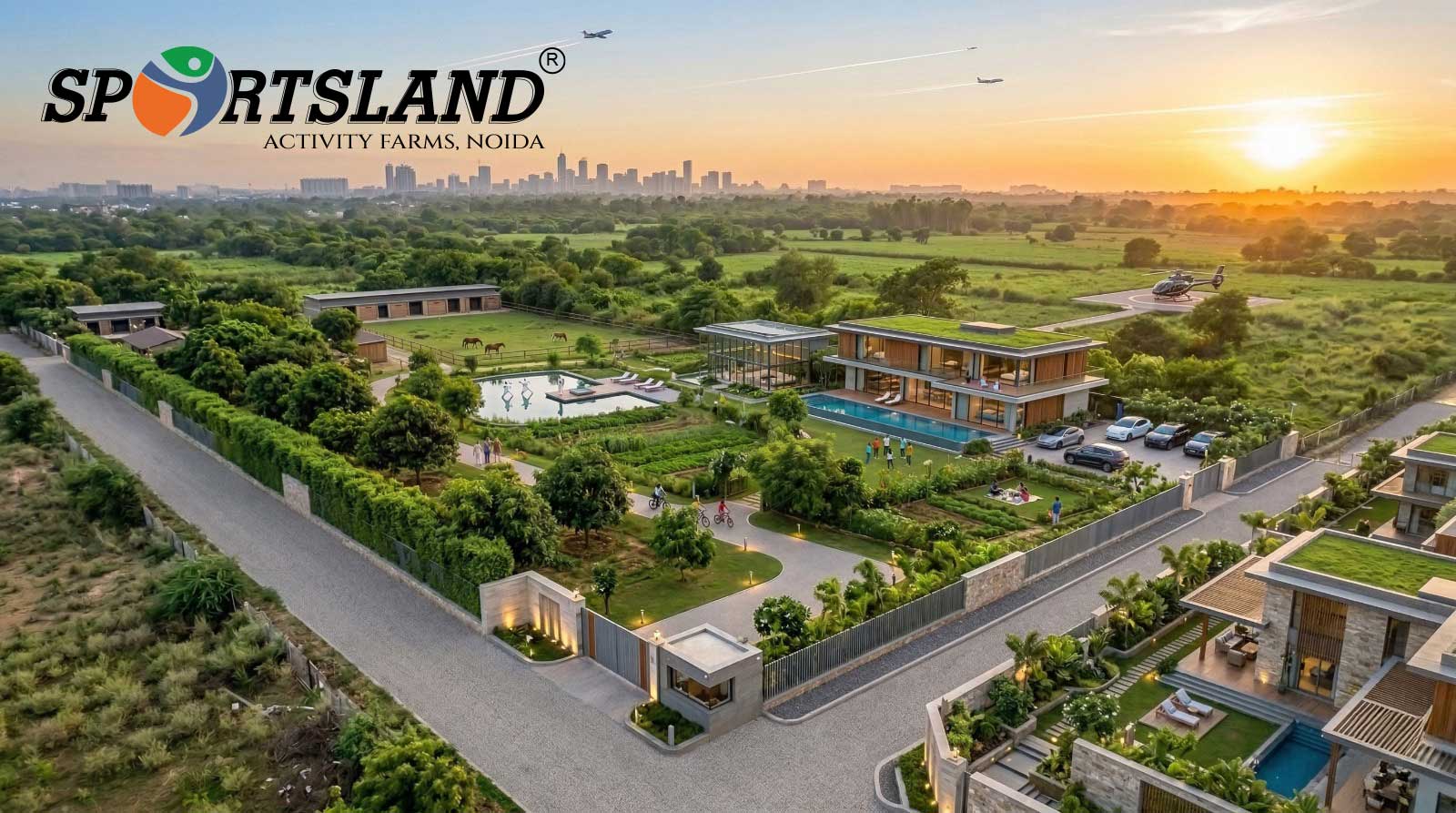
A sustainable farmhouse in Noida Sector 151 checks most of these boxes by design—especially within planned, eco-conscious communities like Sportsland.
Where Sportsland Fits Into the 2026 Mindset
Sportsland was built on principles that feel more relevant today than ever:
- Sustainability over speed
- Green living over concrete density
- Organic farming over chemical dependence
- Legacy over short-term returns
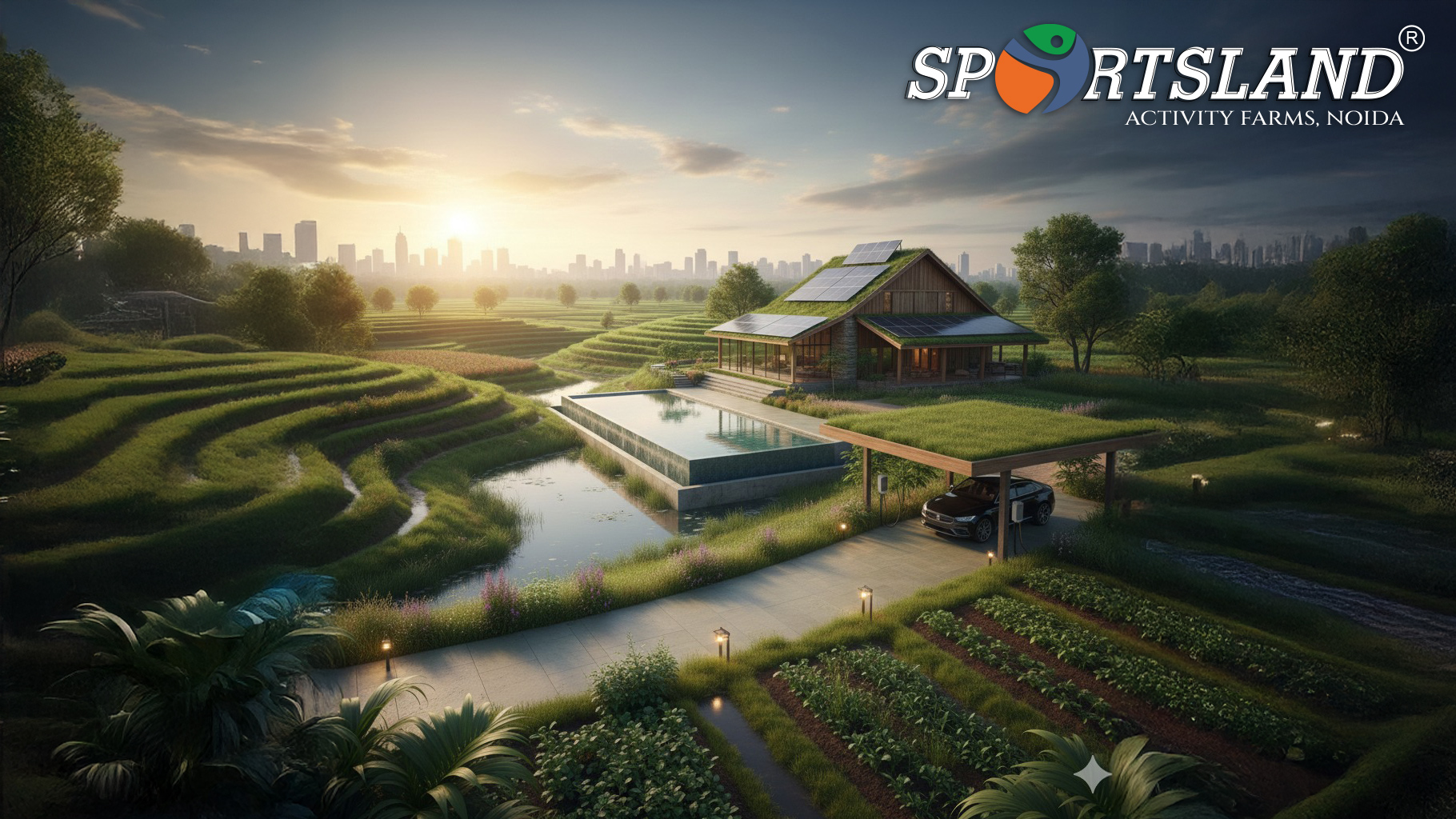
Within a sustainable farmhouse in Noida Sector 151, these principles translate into everyday life:
- Private backyards encouraging mindful water use
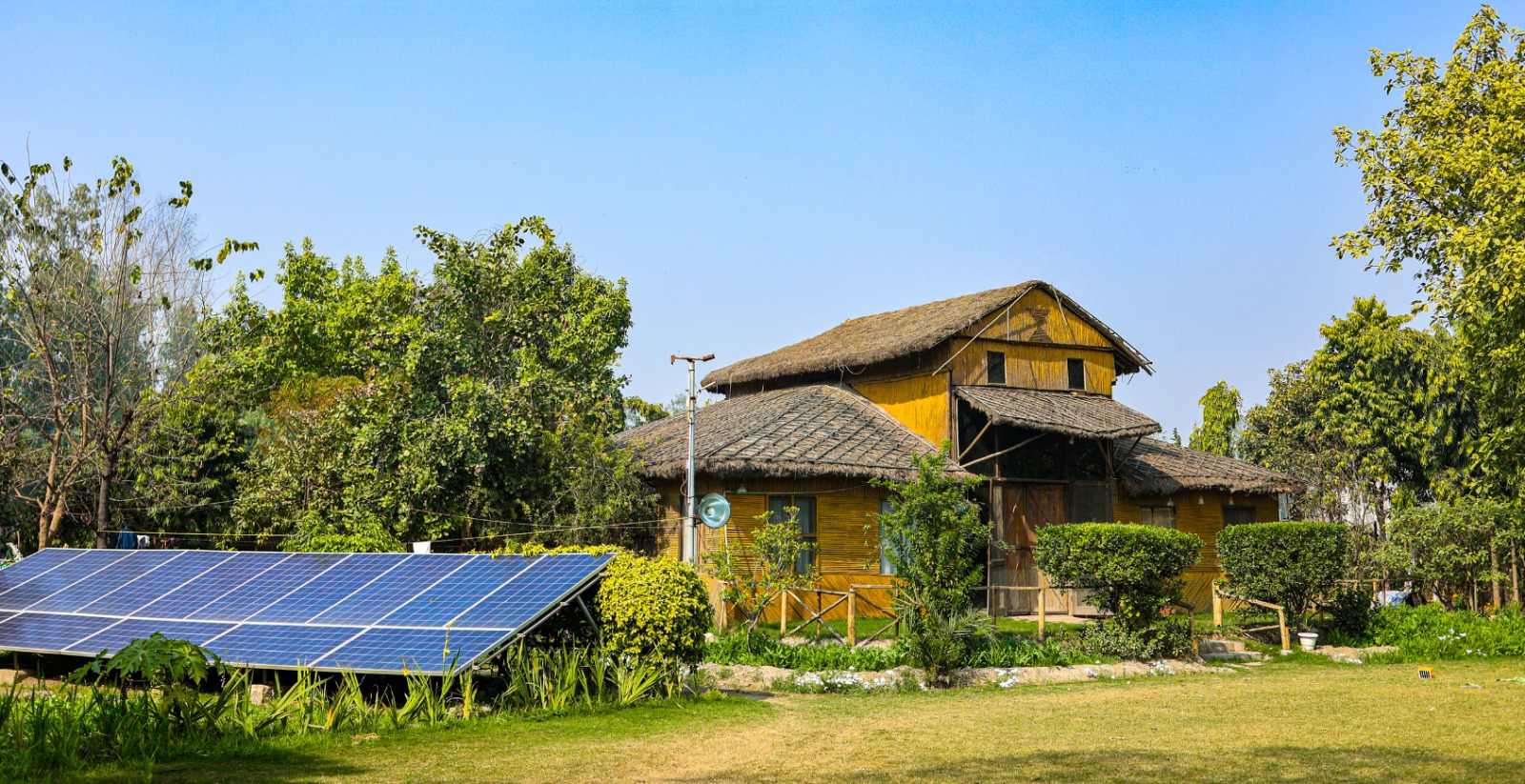
- Organic farming practices that naturally conserve water
- Open green spaces that support recharge
- A pet-friendly ecosystem that reflects environmental safety
This is not a second home mindset.
It is long-term, multi-generational thinking.
FAQ
1. Why is water security becoming a major concern for NCR homebuyers?
Water security has become a serious concern in NCR due to rising dependence on groundwater, urban population pressure, and seasonal variability. Government bodies like the Central Ground Water Board (CGWB) regularly monitor groundwater levels and have highlighted stress across urban regions.
Official CGWB monitoring shows that water availability can no longer be assumed to be stable or unlimited.
This growing awareness is why many families are exploring options like a sustainable farmhouse in Noida Sector 151, where water capture, storage, and recharge can be planned at the household level.
2. How does a sustainable farmhouse in Noida Sector 151 support better water management?
A sustainable farmhouse in Noida Sector 151 offers land, flexibility, and design freedom—three critical factors for effective water management. Unlike high-density apartments, farmhouses can implement rainwater harvesting systems, storage tanks, and groundwater recharge structures without structural constraints.
These practices align with government-recommended water conservation strategies under national missions.
3. What is rainwater harvesting, and why is it important for homes in NCR?
Rainwater harvesting involves collecting and storing rainwater from rooftops and open surfaces for reuse or groundwater recharge. The Government of India actively promotes rainwater harvesting through initiatives like Jal Shakti Abhiyan – Catch the Rain.
In a sustainable farmhouse in Noida Sector 151, rainwater harvesting can be effectively implemented due to adequate space and individual control, making it far more impactful than symbolic apartment systems.
4. How does groundwater recharge help in long-term water security?
Groundwater recharge allows rainwater to percolate back into the earth, replenishing aquifers and supporting long-term water availability. Government advisories strongly encourage artificial recharge structures such as recharge pits and trenches, especially in groundwater-dependent regions.
A sustainable farmhouse in Noida Sector 151 provides the land required to build such recharge systems, helping homeowners contribute to sustainability while securing future water needs.
5. Why are apartments less effective for water-secure living?
Apartments face inherent limitations when it comes to water security. Limited rooftop area, shared storage, lack of recharge space, and total dependence on municipal or tanker supply reduce individual control.
Government water conservation frameworks emphasize decentralised, local solutions—something apartments struggle to implement effectively.
This is why many buyers are shifting toward a sustainable farmhouse in Noida Sector 151, where water planning is proactive rather than reactive.
6. Is water scarcity officially recognised as a national issue in India?
Yes. NITI Aayog’s Composite Water Management Index (CWMI) officially recognises water scarcity as one of India’s most serious long-term challenges, especially for urban and peri-urban regions.
This national-level acknowledgement reinforces the importance of choosing water-resilient living options such as a sustainable farmhouse in Noida Sector 151.
7. How does low-density living improve water sustainability?
Low-density living reduces cumulative demand on shared resources, simplifies maintenance, and allows better monitoring of water usage. Government-backed sustainability frameworks consistently favour decentralised, community-level solutions.
A sustainable farmhouse in Noida Sector 151 benefits from lower population density, making water conservation measures more effective and manageable.
8. What role does landscaping play in water conservation?
Landscaping is a powerful yet often overlooked water conservation tool. Native trees, mulching, soil conditioning, and green buffers improve water absorption and reduce runoff. Government campaigns under Catch the Rain stress the importance of such interventions.
In a sustainable farmhouse in Noida Sector 151, landscaping becomes part of the water management system—not just aesthetics.
9. Is investing in a water-secure farmhouse relevant for 2026 and beyond?
Absolutely. Water security is no longer a short-term trend—it is a long-term planning parameter recognised by government institutions and urban policymakers. As water stress intensifies, properties that support self-sufficiency and resilience are expected to retain stronger long-term value.
A sustainable farmhouse in Noida Sector 151 aligns with this forward-looking mindset.
10. How does Sportsland integrate water sustainability into everyday living?
Sportsland is designed around eco-friendly, low-density, and sustainable living principles. Private backyards, organic farming, green spaces, and mindful planning naturally support water-efficient lifestyles within a sustainable farmhouse in Noida Sector 151.
Rather than treating sustainability as an add-on, Sportsland embeds it into daily life.
Goodbye 2025. Hello 2026.
2025 did not break us.
It educated us.
It taught us humility.
It taught us limits.
It taught us that preparedness is not pessimism—it is wisdom.
As 2026 begins, the blank pages ahead deserve better choices than the ones behind us.
For families seeking resilience, health, and stability, choosing a sustainable farmhouse in Noida Sector 151 is not just a real estate decision—it is a declaration of intent.
A brilliant goodbye to a demanding year.
A humble, thoughtful beginning to a wiser one.
Explore water-secure living at Sportsland.
Book a site visit. Start 2026 prepared